Get your free personalized podcast brief
We scan new podcasts and send you the top 5 insights daily.
Automation blindly executes predefined tasks, regardless of context or impact. True intelligence is goal-oriented; it dynamically makes decisions about copy, channels, and budget to achieve a specific outcome. Using AI for mere automation just produces more low-quality output, faster.

Related Insights
AI models, trained on historical data, are incapable of inventing a novel future for your customers—a core task of strategic marketing. Winning marketers use AI to automate tactical execution, thereby freeing up more time and mental capacity for uniquely human strategic thinking.

Beyond content generation, AI's most transformative marketing capability is its ability to codify learnings and automatically update operational systems. Instead of a marketer manually tweaking campaigns based on monthly reports, AI can identify insights and instantly adjust workflows, creating a compounding effect of continuous improvement and delivering massively better results over time.

A marketing 'agent' is more than just automation. It's a system comprising three parts: the code to execute tasks, a thinking loop (LLM) to make decisions like qualifying a lead, and a live data stream (e.g., new social media engagements) to act upon. This trio performs a complete job-to-be-done.

The primary role of AI in marketing isn't to replace creative work but to automate the complex process of understanding customer behavior. AI systems continuously analyze data to answer critical questions about conversion, value, and budget waste, freeing up humans for strategic tasks.
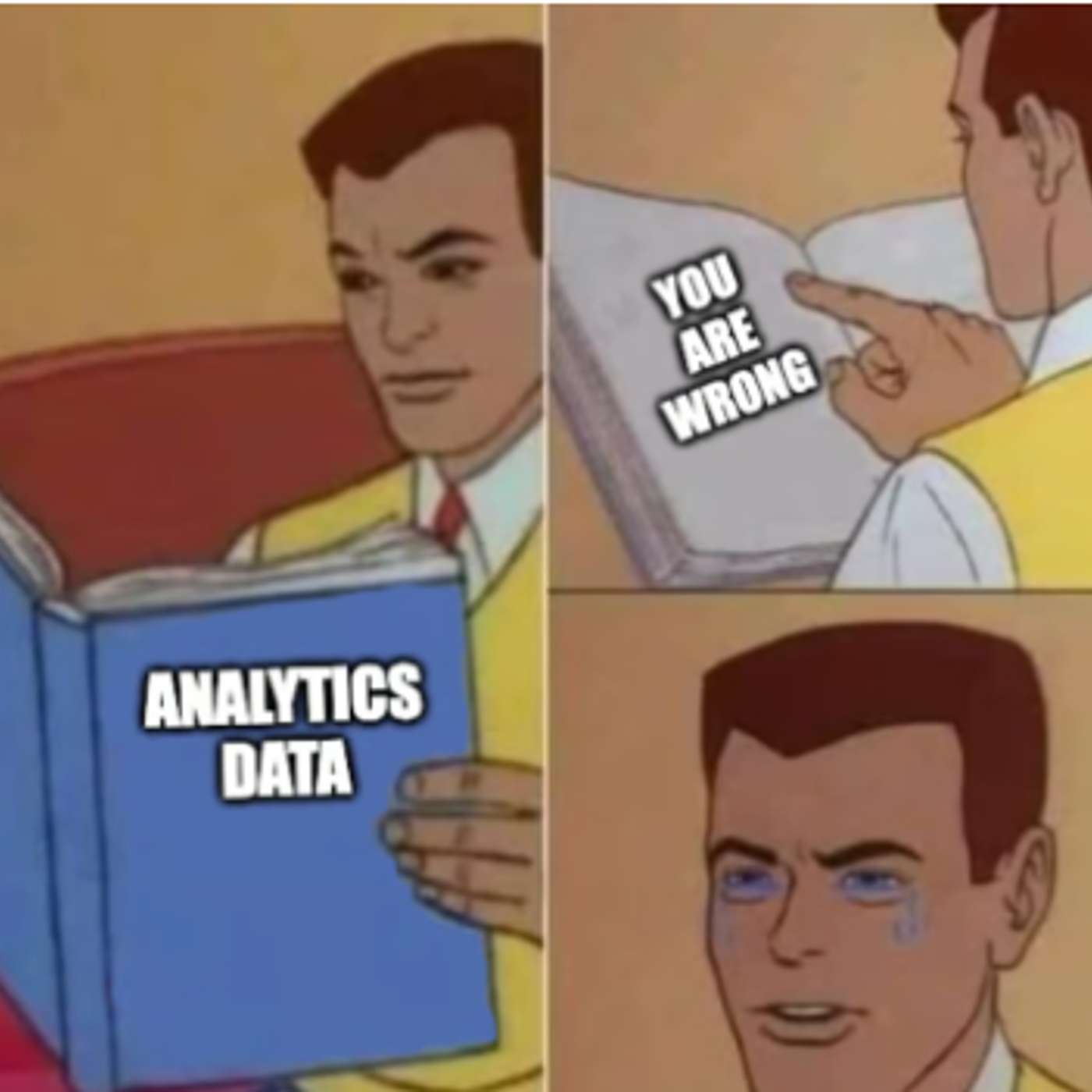
The initial impulse with AI is to use it for efficiency, which often leads to producing more low-impact work faster. The true value is unlocked by focusing AI on achieving a specific, high-value outcome, with productivity becoming a secondary benefit rather than the primary goal.
Most AI tools focus on automation, which often produces more average, noisy content. The superior approach is augmentation—designing AI to enhance a marketer's abilities and produce exceptional, not average, work. This shifts the goal from creating "more" to creating "better."

While autonomous AI agents generate significant hype, their real-world business value is currently limited and unreliable. Marketers should instead focus on building deterministic AI automations—workflows with a clear, predefined sequence of steps—which deliver consistent and valuable results for specific marketing tasks today.

The best teams use AI to automate repetitive work, not to fix bad strategy or magically write great copy. This frees them up for high-value strategic and creative tasks, making marketing feel more human.

AI automation doesn't create an "autopilot" for marketing. Instead of enabling laziness, it empowers skilled marketers to produce a higher volume of superior, more personalized content. The human orchestrator remains essential for quality output.
AI should handle repetitive, automated tasks like setup and orchestration. This frees up marketers to focus on high-value work like strategy and creativity, making marketing feel more human, not less.