Get your free personalized podcast brief
We scan new podcasts and send you the top 5 insights daily.
Instead of reinventing the wheel, the Toolhive project repurposes battle-tested cloud-native technologies. It packages MCP servers into standard OCI container images, allowing enterprises to use their existing security scanning, hardening, and deployment pipelines for AI infrastructure.
Related Insights
MCP, like Docker, solves an immediate developer problem (interfacing with tools) while also hinting at the next-generation architecture for orchestrating complex, multi-tier AI-native applications.
To encourage safe experimentation, Sendbird provides an app template with pre-built security, authentication, and infrastructure. This 'happy path' allows any employee, like marketers or CSMs, to build and deploy AI tools without needing to be a security or infrastructure expert.

Cloud development environments like Replit offer inherent security benefits that local development lacks. Features like sandboxing, blocking post-install scripts, and package age limits prevent supply chain attacks, which is a primary driver for enterprise adoption.

The current AI landscape, with its many single-purpose tools for inference, vector storage, and training, mirrors the early days of cloud computing. Just as S3 and EC2 were primitives that AWS bundled into a comprehensive cloud, these disparate AI tools will eventually be integrated into a new, cohesive "AI Cloud" platform.

Instead of customers sending sensitive data to its cloud, Mistral deploys its entire technology stack—training and data processing tools—directly onto the customer's own servers. This ensures proprietary data never leaves the client's environment, solving security and compliance challenges.

A key barrier to enterprise AI adoption is security and control. AWS's Bedrock Managed Agents provides each agent with its own dedicated compute environment and unique identity. This allows security teams to create specific governance policies for each agent, balancing enablement with necessary guardrails.

As autonomous agents become prevalent, they'll need a sandboxed environment to access, store, and collaborate on enterprise data. This core infrastructure must manage permissions, security, and governance, creating a new market opportunity for platforms that can serve as this trusted container.
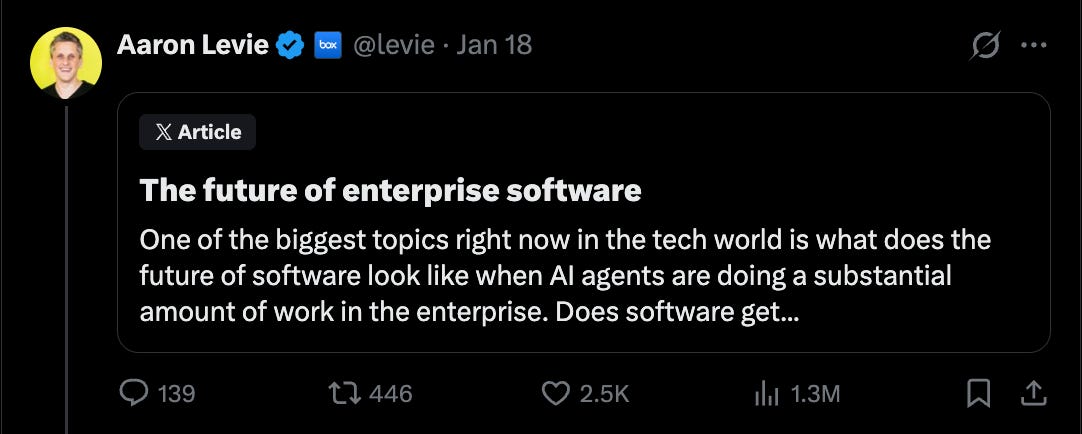
Standalone AI tools often lack enterprise-grade compliance like HIPAA and GDPR. A central orchestration platform provides a crucial layer for access control, observability, and compliance management, protecting the business from risks associated with passing sensitive data to unvetted AI services.
The excitement around AI capabilities often masks the real hurdle to enterprise adoption: infrastructure. Success is not determined by the model's sophistication, but by first solving foundational problems of security, cost control, and data integration. This requires a shift from an application-centric to an infrastructure-first mindset.

Dell's CTO acknowledges the Model Context Protocol (MCP) is powerful for agent tool access but isn't yet enterprise-grade. To manage this risk, Dell centralizes all its MCP servers into a single controlled environment, allowing them to wrap the immature protocol with robust security controls.
