Get your free personalized podcast brief
We scan new podcasts and send you the top 5 insights daily.
Jack Dorsey's practice of using generative AI to summarize weekly emails from thousands of Block employees represents a novel management technique. While potentially offering CEOs an unparalleled real-time view of their company, it risks creating a culture of performance anxiety and replacing genuine interaction with automation.

Related Insights
AI's current strength lies in enhancing efficiency by handling tasks like summarization and data categorization. It is not suited for big-picture thinking or complex processes. The goal should be to make existing teams more effective—augmenting their abilities rather than pursuing wholesale replacement, which is a common misconception among business leaders.

By publicly attributing massive layoffs to AI-driven efficiency gains, Block CEO Jack Dorsey is providing cover for other tech leaders. This narrative could trigger a wave of downsizing across the industry, framed not as a response to over-hiring but as a necessary technological evolution.
A CEO overseeing 40 general managers replaced monthly operating reviews with 20-minute video updates. He feeds the transcripts into a custom AI agent trained on the company playbook to instantly identify key issues and revenue shortfalls. This transforms the review process from data gathering to rapid problem-solving.

An AI agent with access to work product can serve as an impartial manager. It can analyze performance quantitatively, like a sports coach reviewing game tape, and deliver feedback without the human biases, office politics, or emotional friction that complicates traditional performance reviews.
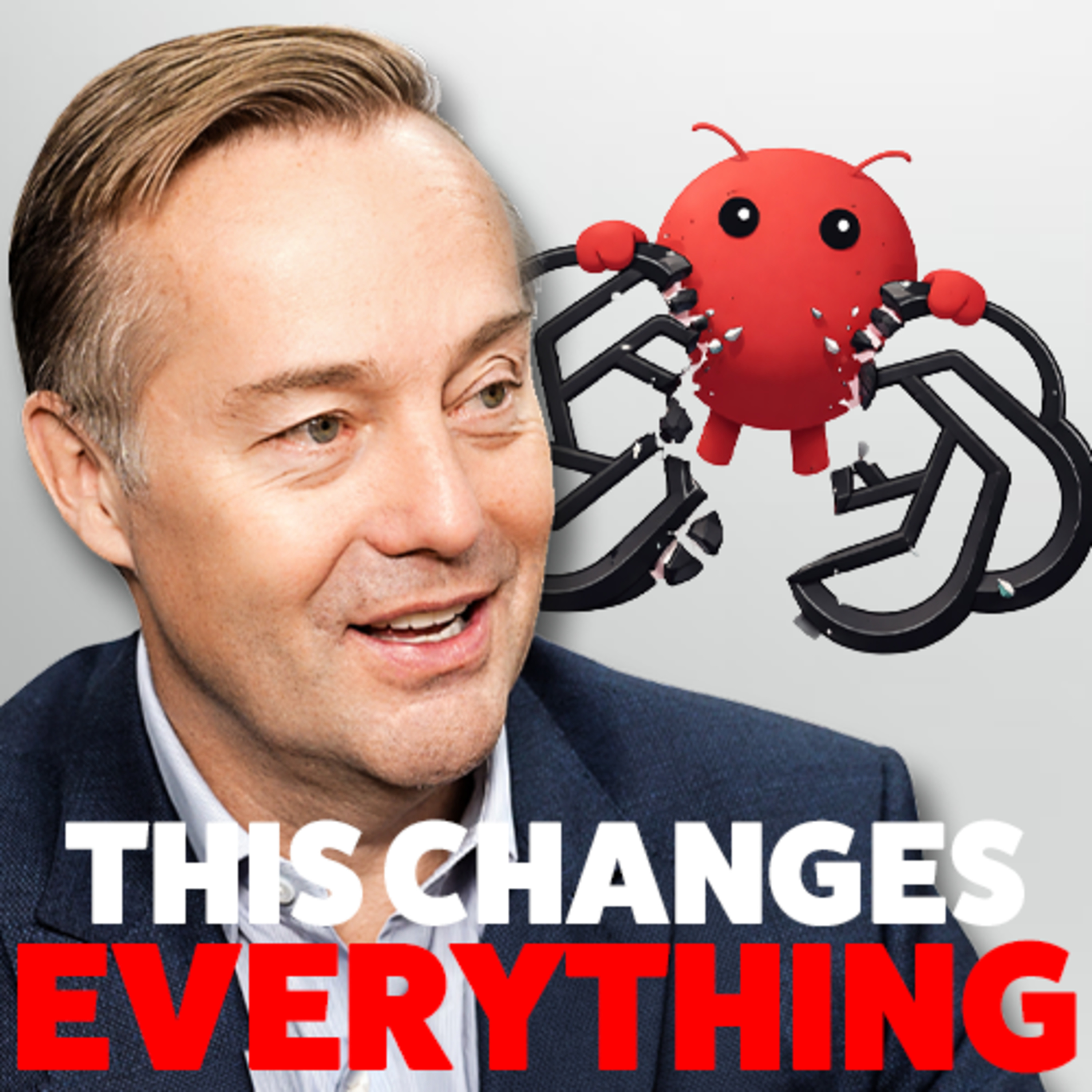
Jack Dorsey's decision to cut Block's workforce by 40% is being framed as the first major "AI cut." The stated rationale wasn't poor performance but the increased efficiency from AI tools enabling smaller teams. This move signals to the tech industry that drastic restructuring is now on the table to adapt to new AI capabilities.

Power dynamics often prevent leaders from receiving truly honest feedback. By implementing AI "coaching bots" in meetings, executives can get objective critiques of their performance. The AI acts as an "infinitely patient coach," providing valuable insights that colleagues might be hesitant to share directly.
Brian Armstrong uses an AI connected to all company data (Slack, G-Docs) as a C-suite coach. He asks it questions like "What should I be aware of?" or "What did I change my mind on most?" to surface hidden issues and get objective feedback, treating the AI as a mentor.

A concerning trend is using AI to expand brief thoughts into verbose content, which then forces recipients to use AI to summarize it. This creates a wasteful cycle that amplifies digital noise and exhaustion without adding real value, drowning organizations in synthetic content.

The key to driving AI adoption at Block was leadership by example. CEO Jack Dorsey and CTO Danji Prasana use their internal AI tool, Goose, daily. They argue this hands-on approach provides more insight into organizational workflow changes than any top-down mandate or analysis of industry reports.

Professionals are using AI to write detailed reports, while their managers use AI to summarize them. This creates a feedback loop where AI generates content for other AIs to consume, with humans acting merely as conduits. This "AI slop" replaces deep thought with inefficient, automated communication.