Get your free personalized podcast brief
We scan new podcasts and send you the top 5 insights daily.
Economic growth is a direct function of the reduction in the price of energy. Nations with access to cheap, locally available energy are almost uniformly wealthy, regardless of their system of governance, while those without it are almost uniformly poor.

Related Insights
Driven by U.S. shale, Brazilian and Guyanese oil, and Canadian pipelines, the Western Hemisphere's importance in global fossil fuel production has surged to levels not seen in nearly a century. This geographic shift fundamentally alters global energy dependencies and geopolitical focus.

China's investment in green technology is driven less by environmentalism and more by strategic goals. By dominating renewables and EVs, China reduces its dependence on foreign oil—a key vulnerability in a potential conflict with the US—while building global soft power and boosting its GDP through green tech exports.
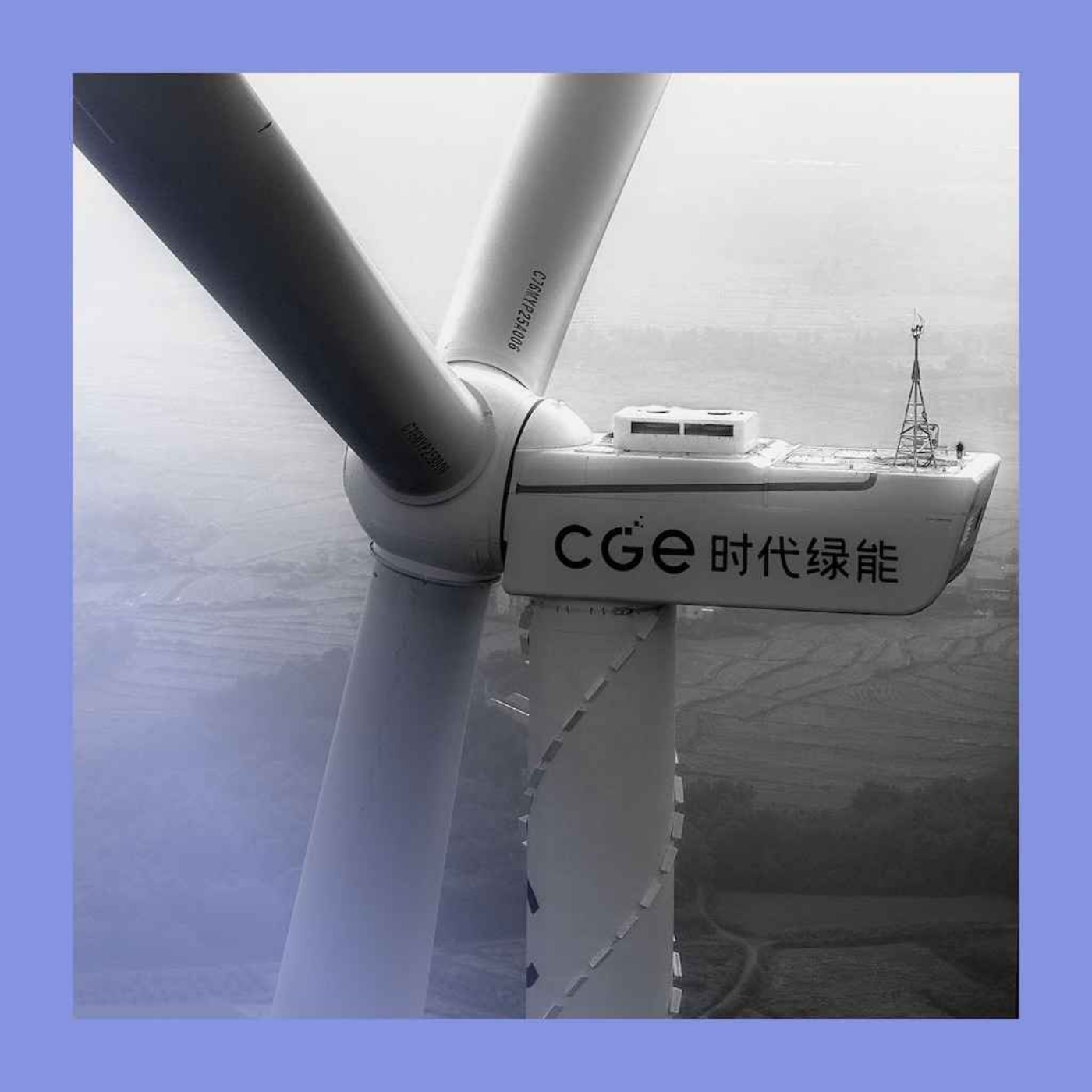
Poorer countries, unburdened by legacy fossil fuel infrastructure, have a unique advantage. They can bypass the dirty development path of wealthy nations and build their energy systems directly on cheaper, more efficient renewable technologies, potentially achieving energy security and economic growth faster.

For many individuals in the developed world, energy functions like Wi-Fi: it "comes out of the wall" for a fixed monthly cost that is a small fraction of their income. The marginal cost of consumption is so low that it is effectively a post-scarcity resource for personal use cases.
Contrary to political narratives, US red states have been leaders in renewable energy deployment. The motivation is not climate ideology but practical, local benefits: landowner income, energy independence, and reducing local air pollution. This suggests a powerful, non-partisan path for the energy transition.
For a country dependent on a powerful neighbor like the U.S., the path to a fairer relationship is creating leverage. This is achieved by developing independent infrastructure, like pipelines and LNG terminals, to sell resources to other world markets. With viable alternatives, the country can negotiate from a position of strength, not desperation.

Based on its energy (BTU) equivalent, the price of natural gas has historically been about one-sixth the price of a barrel of oil. Currently, it trades at a much steeper discount (around 1/20th), making it arguably the most undervalued commodity in the last 50 years.

The economic model for renewable energy is the inverse of fossil fuels. While building wind or solar farms requires significant initial capital investment, their ongoing operational costs are minimal. This suggests that as Europe advances its green transition, its long-term energy cost competitiveness will dramatically improve.

The political challenge of climate action has fundamentally changed. Renewables like solar and wind are no longer expensive sacrifices but the cheapest energy sources available. This aligns short-term economic incentives with long-term environmental goals, making the transition politically and financially viable.
Regional stability is an economic necessity for oil-rich nations. Peace allows them to accelerate monetization of their finite oil reserves and reinvest the capital into diversified, future-proof economies like AI and tourism before alternative energy devalues their primary asset.