Get your free personalized podcast brief
We scan new podcasts and send you the top 5 insights daily.
High-throughput biology uses techniques like PerturbSeq to run thousands of genetic perturbation experiments simultaneously in a single "pool" of cells. This method is highly scalable and, crucially, avoids the batch effects that plague traditional experiments, creating clean, uniform data essential for training large-scale AI models.
Related Insights
Generating millions of data points for AI requires industrializing lab workflows. To avoid data degradation from cell stress during long experiments, the Xaira team introduced chemical fixation to preserve cell states and re-engineered processes for time-shifted operations, ensuring consistent, high-quality training data.
To mitigate data variations caused by running experiments on different days (batch effects), Noetik employs a sophisticated arraying strategy. They take dozens of samples from a single tumor and distribute them across multiple, randomized arrays, ensuring each patient is represented in different batches for robust calibration and model training.

The next leap in biotech moves beyond applying AI to existing data. CZI pioneers a model where 'frontier biology' and 'frontier AI' are developed in tandem. Experiments are now designed specifically to generate novel data that will ground and improve future AI models, creating a virtuous feedback loop.

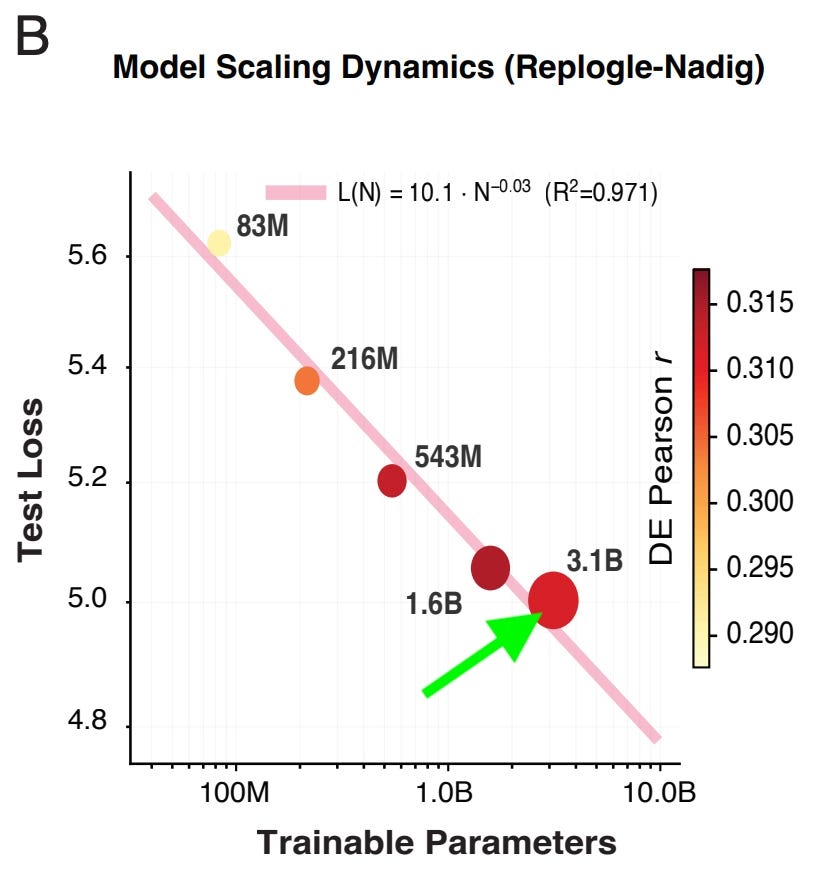
The primary bottleneck for creating powerful foundation models in biology is the lack of clean, large-scale experimental data—orders of magnitude less than what's available for LLMs. This creates a major opportunity for "data foundries" that use robotic labs to generate high-quality biological data at scale.

To create a predictive "virtual cell," data collection must shift from passive observation to active intervention. The strategy is to massively scale perturbation experiments (like Perturb-seq) across countless contexts and measure multi-modal responses, teaching the model cause and effect.

Xaira's core strategy involves creating massive, proprietary datasets that reveal causal biology. By systematically perturbing every gene in a cell to observe its effects, they generate unique training data for their models, quadrupling the world's supply of such information with a single publication.

AI models trained on descriptive data (e.g., RNA-seq) can classify cell states but fail to predict how to transition a diseased cell to a healthy one. True progress requires generating massive "causal" datasets that show the effects of specific genetic perturbations.

The primary obstacle to creating sophisticated AI models of cells isn't the AI itself, but the data. Existing datasets often perturb only one cellular variable at a time, failing to capture the complex interactions that arise from simultaneous changes. New platforms are needed to generate this multi-dimensional data.
Instead of one massive experiment, split numerous factors into smaller, biologically-themed groups. Running these focused experiments in parallel is superior to both one-factor-at-a-time and large DOE approaches, as it maintains the breadth of a large screen while providing the high-quality signal of a small one.

Patrick Collison believes we can finally cure complex diseases because biology now has a complete 'Turing loop': advanced sequencing to 'read' biological data, neural networks to 'think' about it, and CRISPR to 'write' changes by perturbing cells. This combination provides the necessary toolset for breakthroughs.
