Get your free personalized podcast brief
We scan new podcasts and send you the top 5 insights daily.
Anne Griffin onboarded a hotel owner and social media manager to Claude and saw they did not know the project feature existed. For people outside tech, even a tool that feels simple can create too much friction, so they never reach the value product leaders assume is obvious.

Related Insights
Despite the hype, AI usage remains low (e.g., single-digit millions for developer tools) because the products are not user-friendly. The critical barrier to mass adoption isn't the underlying technology's power but the lack of well-designed, intuitive user experiences that integrate AI into daily workflows.

Polly Allen points out that OpenAI and Anthropic hire consultants to help non-tech businesses adopt AI because the products still require too much setup and context. Anne Griffin agrees this is a product problem temporarily solved by human hand-holding rather than a lasting adoption strategy.
The adoption of advanced AI tools like Claude Code is hindered by a calibration gap. Technical users perceive them as easy, while non-technical individuals face significant friction with fundamental concepts like using the terminal, understanding local vs. cloud environments, and interpreting permission requests.

Anthropic's Cowork isn't a technological leap over Claude Code; it's a UI and marketing shift. This demonstrates that the primary barrier to mass AI adoption isn't model power, but productization. An intuitive UI is critical to unlock powerful tools for the 99% of users who won't use a command line.

A major hurdle in AI adoption is not the technology's capability but the user's inability to prompt effectively. When presented with a natural language interface, many users don't know how to ask for what they want, leading to poor results and abandonment, highlighting the need for prompt guidance.

The primary hurdle for potential AI agent users isn't the technical setup; it's the inability to imagine what to do with the tool. Even technically proficient individuals get stuck on the "what can I do with this?" question, indicating that mainstream adoption requires clear, relatable examples and blueprints, not just easier installation.
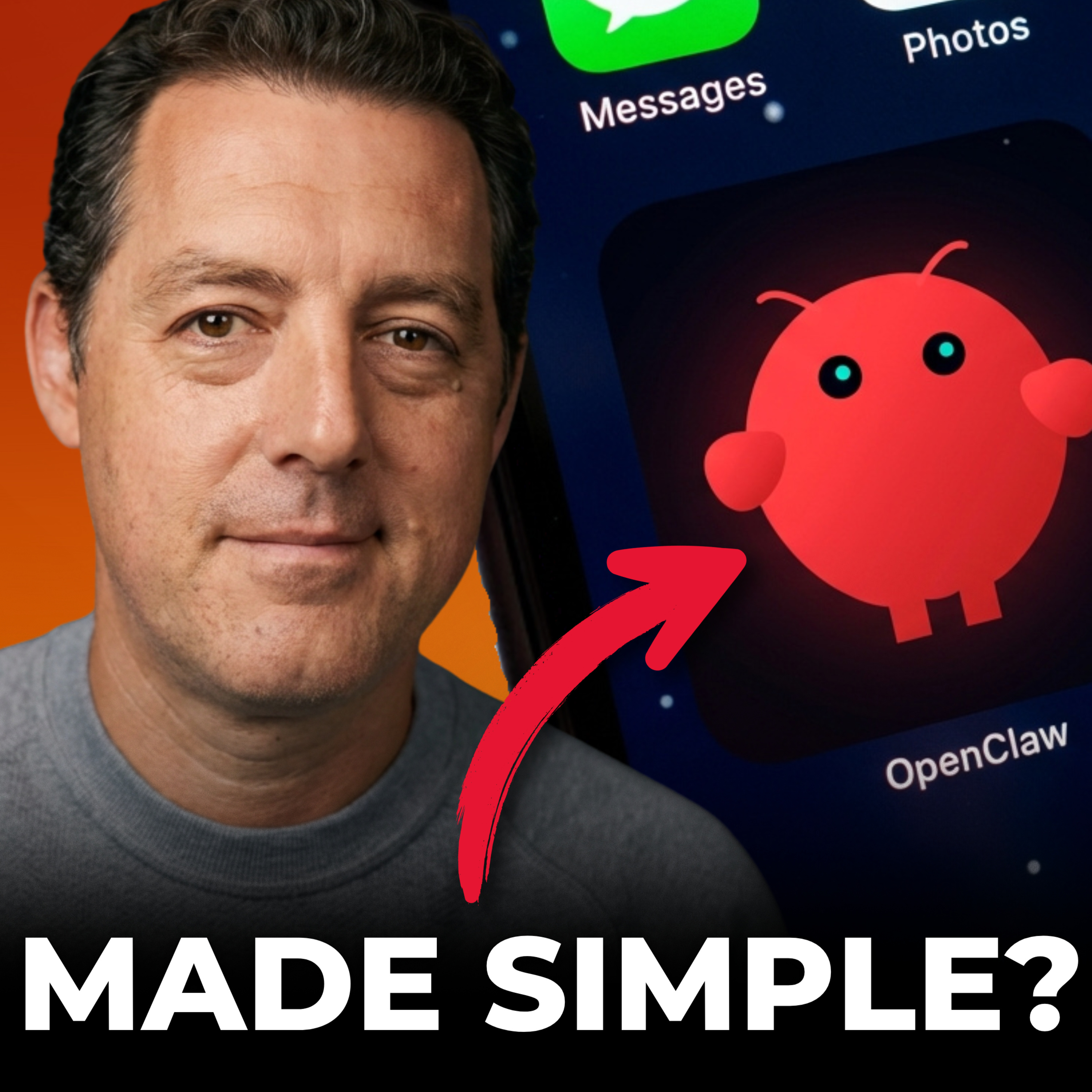
AI currently fails at simple, automated, multi-step tasks for non-technical users because it requires iterative debugging. Until AI can handle these processes without forcing users to think like programmers, its utility for complex business workflows will remain limited to technical experts.

A common AI implementation failure is assuming users think like technologists. Trivial technical details can be huge adoption blockers. To succeed, focus on building user trust and actively partner with customers to operationalize the technology, rather than simply delivering it and expecting them to figure it out.

While generating significant online buzz, Claude Bot's installation requires comfort with terminals and API keys, creating a high barrier for the average consumer. Its current product-market fit is limited to developers and technical users, not the mass market.
Despite powerful capabilities, AI tools remain largely inaccessible to non-technical users due to complex interfaces and frustrating setup processes. The industry's focus on technical prowess over user-centric design is the primary obstacle to widespread adoption in business workflows.