Get your free personalized podcast brief
We scan new podcasts and send you the top 5 insights daily.
Anthropic leverages the low cost of execution in the AI era by building multiple potential product versions simultaneously. This "build all candidates" approach replaces lengthy spec-writing and low-bandwidth customer research, allowing them to pick the best functioning prototype directly.
Related Insights
AI tools democratize prototyping, but their true power is in rapidly exploring multiple ideas (divergence) and then testing and refining them (convergence). This dramatically accelerates the creative and validation process before significant engineering resources are committed.
Jay Parikh, Microsoft's EVP of Core AI, champions a culture of 'more demos, less memos.' He argues that AI tools enable teams to produce 15 product iterations in 15 minutes, making showing a working demo far more effective and creative than writing a planning memo.

Traditional "writing-first" cultures create communication gaps and translation errors. With modern AI tools, product managers can now build working prototypes in hours. This "show, don't tell" approach gets ideas validated faster, secures project leadership, and overcomes language and team barriers.
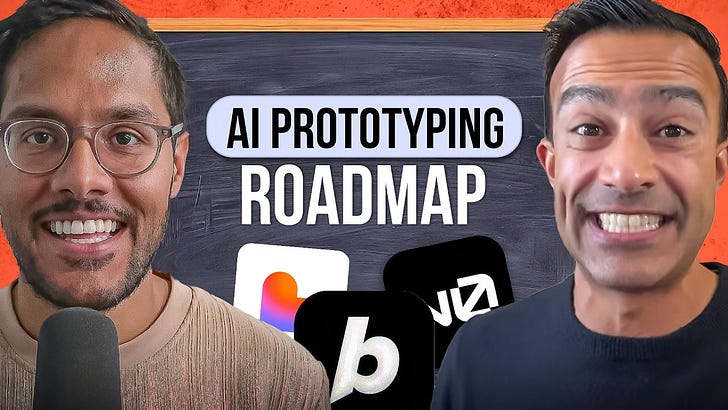
The goal isn't to build one perfect prototype quickly. The real strategic advantage of AI tools is the ability to generate three or four distinct variations of a feature in a short time. This allows teams to explore a wider solution space and make better decisions after hands-on testing.

Capable AI coding assistants allow PMs to build and test functional prototypes or "skills" in a single day. This changes the product development philosophy, prioritizing quick validation with users over creating detailed UI mockups and specifications upfront.

The traditional product management workflow (spec -> engineer build) is obsolete. The modern AI PM uses agentic tools to build, test, and iterate on the initial product, handing a working, validated prototype to engineering for productionalization.
![Building a Personal AI Model Map [AI Operators Bonus Episode] thumbnail](https://d3t3ozftmdmh3i.cloudfront.net/staging/podcast_uploaded_nologo/41472609/41472609-1752234663609-8665756a468e5.jpg)
In AI, low prototyping costs and customer uncertainty make the traditional research-first PM model obsolete. The new approach is to build a prototype quickly, show it to customers to discover possibilities, and then iterate based on their reactions, effectively building the solution before the problem is fully defined.

Instead of prioritizing a problem and then designing a solution, leading companies build prototypes for multiple problems simultaneously. They then productionize the problem-solution pair that proves most effective through internal testing, a concept called "product shaping."
The product development cycle has shifted. Instead of writing a spec, Product Managers use AI coding tools like Bolt.new to build the initial working version of a product. They then hand this functional prototype to engineers for hardening, security, and scaling, dramatically accelerating the process.
To quickly clarify a product idea, create multiple versions in parallel using different inputs for each: a simple brain dump, a structured prompt, a visual design reference, and an existing code snippet. This process rapidly reveals the best direction and saves significant time on later refinement cycles.