Get your free personalized podcast brief
We scan new podcasts and send you the top 5 insights daily.
The company initially aimed to beam solar power from space to Earth but pivoted to data centers in orbit. This was driven by a first-principles economic analysis: using power in space for high-margin compute avoids massive energy transmission losses and targets a more valuable market (AI), making the business viable.

Related Insights
The biggest limiting factor for AI growth is energy production, which faces regulatory hurdles and physical limits on Earth. By moving data centers to space with solar power, Elon Musk aims to create an 'N of one' advantage, escaping terrestrial constraints to build a near-infinite compute infrastructure.

Tom Mueller argues that moving data centers to space is an inevitable solution to AI's crushing energy demand on Earth. With compute power needs growing over 15% annually, space offers unlimited solar power as an input, with data as the only output beamed back via laser.

The two largest physical costs for AI data centers—power and cooling—are essentially free and unlimited in space. A satellite can receive constant, intense solar power without needing batteries and use the near-absolute zero of space for cost-free cooling. This fundamentally changes the economic and physical limits of large-scale computation.

The company initially explored space-based solar but realized beaming power to Earth is highly inefficient. Since most new energy powers data centers anyway, they pivoted to moving the data centers to the power source in space, eliminating the massive energy loss from transmission.

Elon Musk's xAI initially appeared to lag, but the real victory was building massive supercomputers. By leasing this compute power to rivals like Google and Anthropic, SpaceX's 'Neo Cloud' became its primary revenue source, revealing a highly profitable infrastructure-first AI strategy.

The merger leverages SpaceX's heavy launch capabilities to deploy space-based data centers for xAI, capitalizing on abundant solar power and the vacuum of space for cooling. This creates a massive competitive advantage by eliminating terrestrial energy and real estate costs.
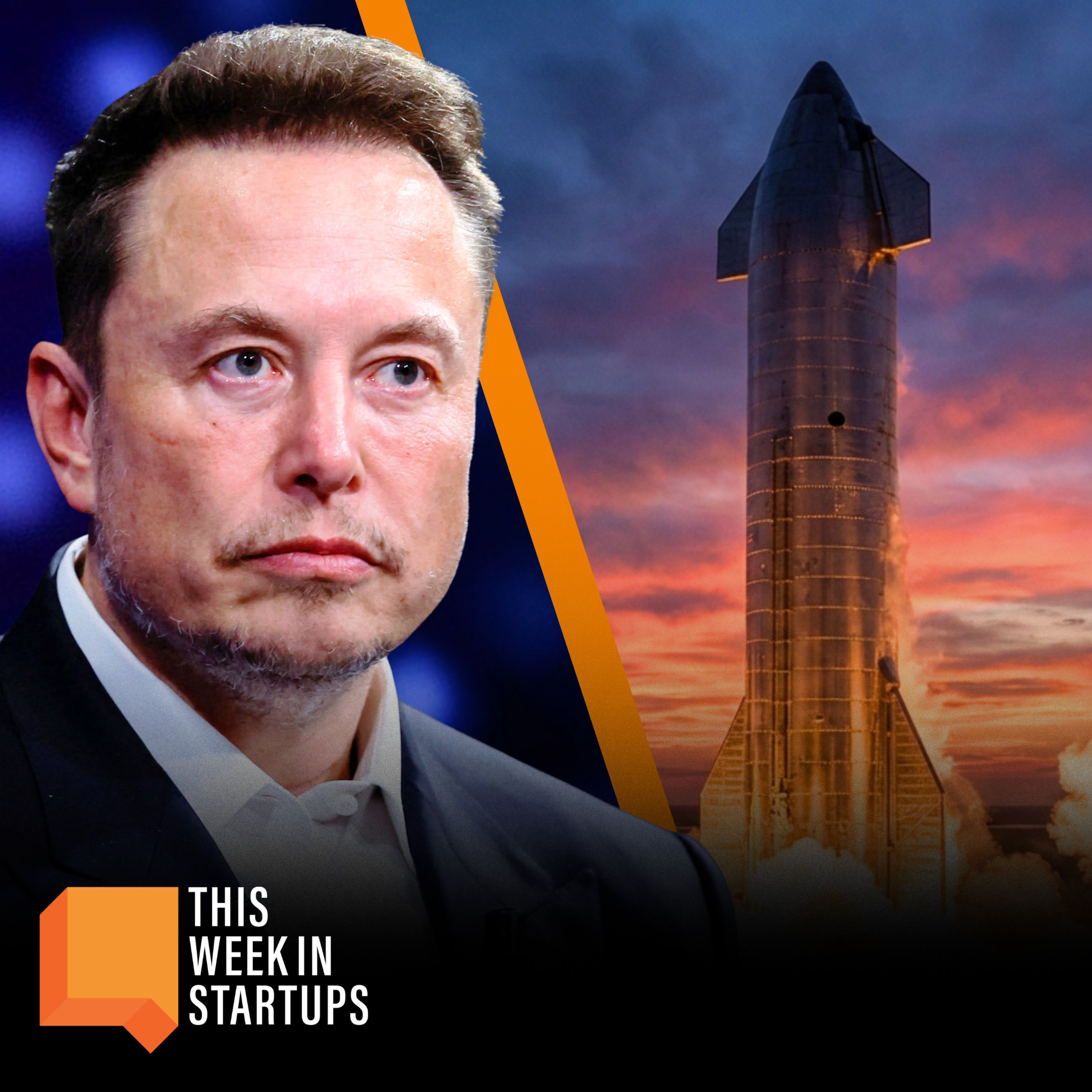
The exponential growth of AI is fundamentally constrained by Earth's land, water, and power. By moving data centers to space, companies can access near-limitless solar energy and physical area, making off-planet compute a necessary step to overcome terrestrial bottlenecks and continue scaling.

To solve the massive cost of launching a heat radiator, Cowboy Space's core architectural innovation is to use the rocket's upper stage as the data center's heatsink. This system-level thinking, integrating the delivery vehicle with the product, is what unlocks commercially competitive unit economics from orbit.
The astronomical power and cooling needs of AI are pushing major players like SpaceX, Amazon, and Google toward space-based data centers. These leverage constant, intense solar power and near-absolute zero temperatures for cooling, solving the biggest physical limitations of scaling AI on Earth.
The world's economy will increasingly run on AI compute, similar to how it ran on oil. By pursuing data centers in space, SpaceX is positioning itself to become the lowest-cost producer of AI tokens, aiming for a strategic dominance analogous to Saudi Arabia's control over global energy markets.
