Get your free personalized podcast brief
We scan new podcasts and send you the top 5 insights daily.
Spotify's "Wrapped," an end-of-year summary of listening habits, is a "Surface Delight" feature with little functional value. Its emotional appeal (curiosity, self-expression) led to over 20% of app downloads in 2020, proving that purely emotional features can be powerful acquisition engines.

Related Insights
Spotify leveraged its brand love to successfully expand from music streaming into podcasts and audiobooks. This emotional equity provides the necessary consumer trust for diversification, turning brand into a strategic asset for growth beyond the core product.
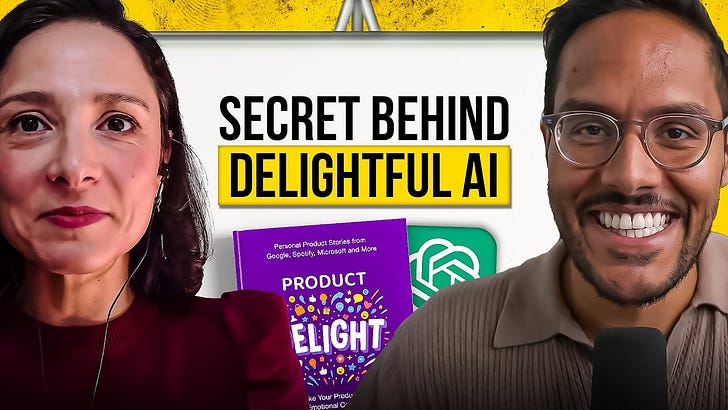
True differentiation comes from "deep delight," where emotional needs are addressed within the core functional solution. This is distinct from "surface delight" like animations or confetti, which are nice but fail to build the strong emotional connections that drive loyalty.
Companies can use AI to generate unique, 'ephemeral software' experiences for marketing campaigns. Instead of a generic Spotify Wrapped-style review, businesses can now affordably create a custom, interactive 'unwrapped' summary for each user based on their specific product usage data, costing just cents in tokens.

The most effective user segmentation is based on underlying motivations. Identifying both functional ("inspire me with new music") and emotional ("help me feel less lonely") drivers is the crucial first step to engineering meaningful product delight that resonates deeply with users.
Investing in "product delight" isn't a soft initiative; it has hard ROI. Studies show that emotionally connected users are twice as likely to stay with a product and twice as likely to buy more services. They are also 60% more likely to provide referrals, creating a powerful business case.
Instead of relying solely on demographic or behavioral data, use motivational segmentation to understand *why* users choose your product. Grouping users by their core emotional drivers (e.g., to feel productive, to feel connected) uncovers deeper needs and informs emotionally resonant features.
At the end of the year, audiences are psychologically primed for reflection and catching up on what they missed, similar to the appeal of Spotify Wrapped. Marketers should lean into this by providing "best of" roundups that help consumers feel informed, connected, and up-to-date.

Teams often solve the wrong problem. Spotify's growth challenge wasn't podcast discovery for existing listeners but convincing non-listeners of the medium's value. This required reframing the core user question from a tactical "how?" to a fundamental "why should I care?"

The end of the year creates a specific consumer mindset focused on reflection and catching up, popularized by Spotify Wrapped. Brands can capitalize on this by creating their own 'best of' content, meeting a pre-existing audience expectation and leveraging a cultural moment for higher engagement.

Capitalize on the cultural moment of Spotify Wrapped by creating a personalized, year-in-review summary for customers. This tactic, when timed correctly, significantly boosts engagement by demonstrating the value users derived from your product or service throughout the year.