Get your free personalized podcast brief
We scan new podcasts and send you the top 5 insights daily.
Despite the trial protocol specifying day 1 and day 8 dosing for the ADC Sacituzumab Govitecan (SG), community practitioners are frequently using a day 1 and day 15 schedule. This real-world adaptation is happening anecdotally to manage toxicity, with formal prospective studies still ongoing to validate the approach.

Related Insights
Unlike immunotherapy, where re-challenge after progression is dubious, there is an emerging clinical practice of re-challenging patients with the same antibody-drug conjugate (ADC), such as enfortumab vedotin (EV), after a treatment break forced by toxicity. Anecdotally, patients are showing great responses, highlighting a key area for prospective data generation.

Despite targeting the same protein (Trope-2), different ADCs like sacituzumab govitecan (SG) and sacituzumab tirumotecan (sac-TMT) exhibit unique toxicity profiles due to their different linker-payloads. Clinicians must be prepared for diarrhea with SG versus oral mucositis with sac-TMT, requiring distinct mitigation strategies for drugs that otherwise seem very similar.

TAMP is delivered once every two weeks, but crucially, patients generally do not receive other treatments concurrently. This regimen provides significant breaks from therapy, helping to preserve pre-procedural quality of life—a major advantage over the continuous burden of systemic chemotherapy.

With multiple ADCs available, an emerging sequencing strategy is to alternate between different mechanisms of action, such as following a microtubule toxin-based ADC with a topoisomerase-1 inhibitor payload. This approach aims to avoid compounding specific toxicities, like neuropathy, and potentially circumvent resistance, though it is a strategy born from logic rather than clinical trial data.
The SURE-01 trial experienced two early deaths, leading to mandatory dose reductions and growth factor support. While this made the ADC sacituzumab govitecan more manageable, it highlights its narrow therapeutic window and the critical need for proactive toxicity management protocols from the outset.

Though ADCs like Sacituzumab Govitekan cause notable side effects like diarrhea and neutropenia, patient-reported outcome data shows they provide a meaningful and sustained improvement in quality of life compared to standard chemotherapy. This was observed even with longer treatment durations and lower discontinuation rates.
When efficacy and safety profiles are comparable between ADCs like sacituzumab and datopotamab, the final choice can be guided by patient logistics. Factors include infusion frequency (Day 1 & 8 vs. every 3 weeks) and total time spent at the infusion center.
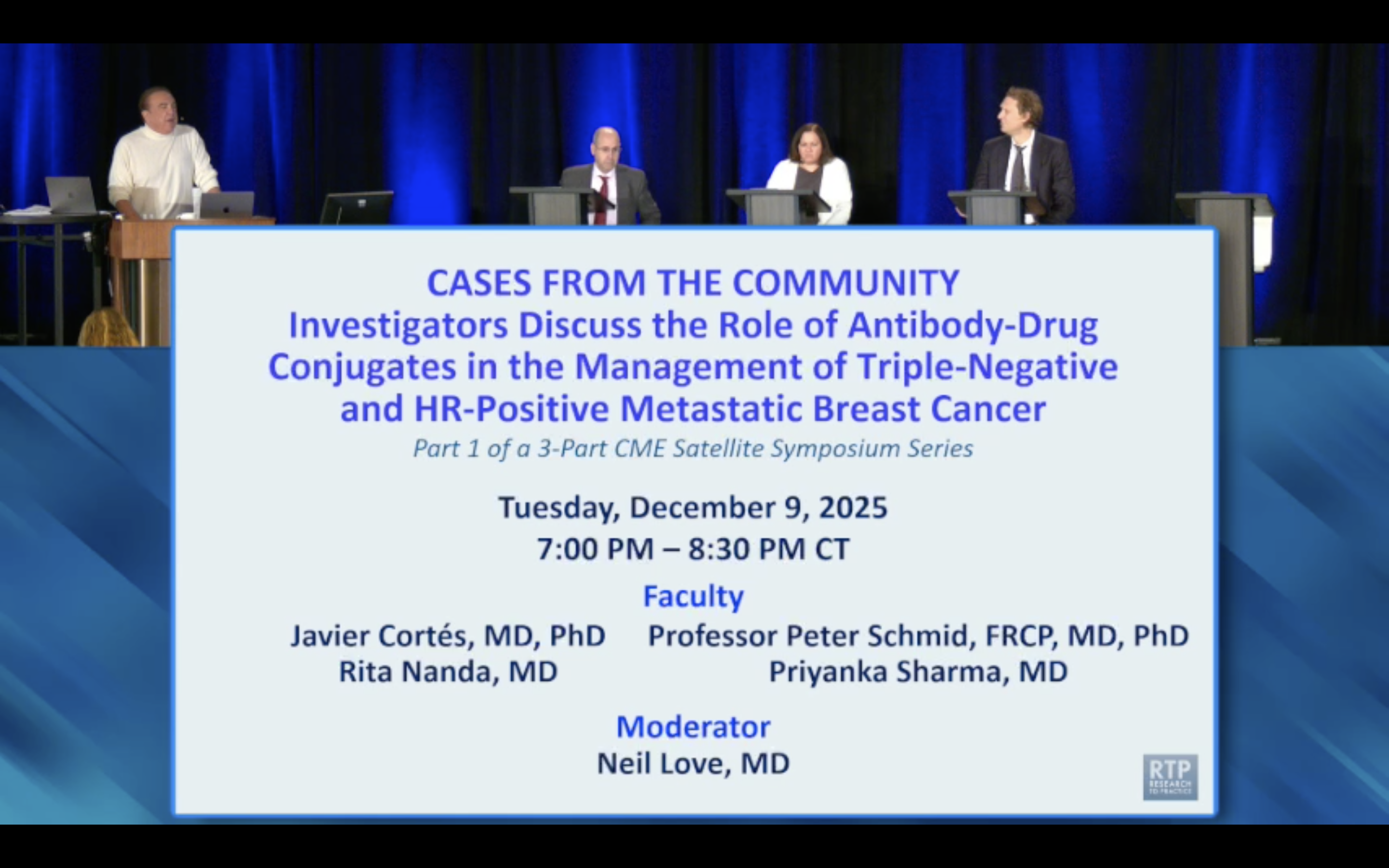
As multiple effective Antibody-Drug Conjugates (ADCs) become available, the primary clinical challenge is no longer *if* they work, but *how* to use them best. Key unanswered questions involve optimal sequencing, dosing for treatment versus maintenance, and overall length of therapy, mirroring issues already seen in breast cancer.
For the ADC belantamab mafodotin, clinicians should not feel rigidly bound to the initial every-three-week schedule. Data shows that spreading doses out to every 8 or 12 weeks is a viable strategy, as most patients stabilize or even improve their depth of response despite holding the drug, allowing for better toxicity management.
Clinical trial data shows that despite specific toxicities, antibody-drug conjugates (ADCs) can be better tolerated overall than standard chemotherapy. For example, trials for both sacituzumab govitecan and dato-DXd reported fewer patients discontinuing treatment in the ADC arm compared to the chemotherapy arm.