Get your free personalized podcast brief
We scan new podcasts and send you the top 5 insights daily.
Winston Churchill famously said he had 'nothing to give but blood, sweat, toil, and tears.' However, the public mind has collectively edited out 'toil' because the rhythm and memorability of a three-part list is far more powerful. This shows how rhetorical structure can override historical fact in collective memory.

Related Insights
Salient emotional events feel vivid and true, boosting our confidence in the memory. However, this confidence is often misleading. Each time we recall and "reconstruct" these memories, we create more opportunities for errors to creep in, making them factually less reliable than we believe.

Citing behavioral expert Chase Hughes, Hunter Biden explains that memory is not a static recording. Each time a memory is recalled, it is effectively taped over and altered. The most recent version of the recollection becomes the new 'truth,' rather than an accurate replay of the original event.

The brain doesn't strive for objective, verbatim recall. Instead, it constantly updates and modifies memories, infusing them with emotional context and takeaways. This process isn't a bug; its purpose is to create useful models to guide future decisions and ensure survival.

Leaders create simplified, emotionally resonant narratives for public consumption that mask the messy, complex, and often ugly truths behind their actions. The real "why" is rarely present in the official story.

Propaganda is effective because it leverages a cognitive bias called the "availability heuristic." By repeating a phrase like "weapons of mass destruction," it becomes the most easily recalled information, causing people—even highly educated ones—to subconsciously accept it as true, regardless of countervailing evidence.

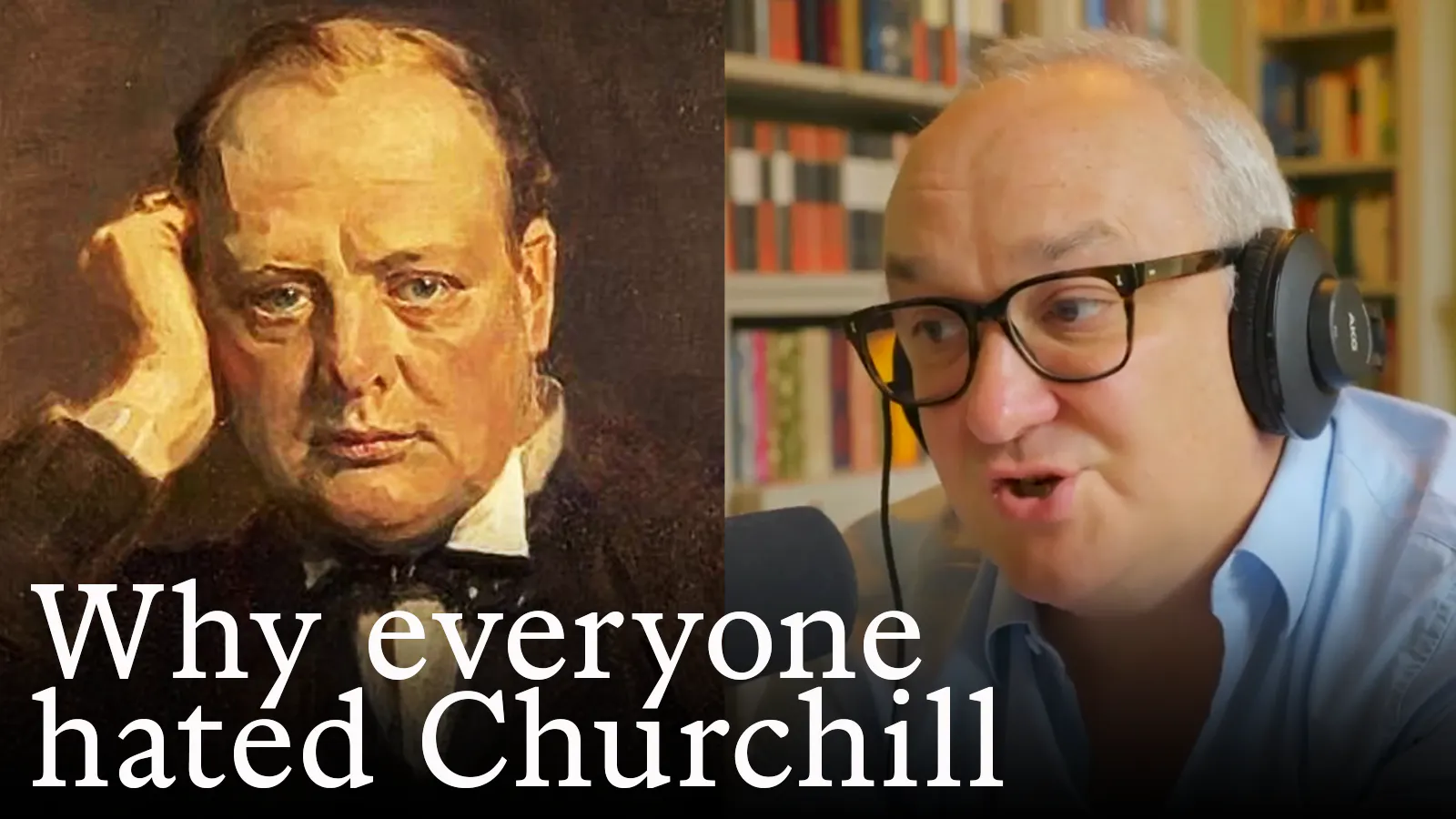
Even after being demoted, Churchill publicly championed the Gallipoli campaign with soaring, optimistic language. This rhetoric, promising a "triumphant peace," was completely detached from the reality of the stalemate and slaughter, substituting oratory for viable strategy.
Effective political propaganda isn't about outright lies; it's about controlling the frame of reference. By providing a simple, powerful lens through which to view a complex situation, leaders can dictate the terms of the debate and trap audiences within their desired narrative, limiting alternative interpretations.

The human brain is a deletion system, not a storage system. To make your message stick, use cognitive devices like rhyme, alliteration, or analogies. These patterns bypass the brain's natural filtering process, making key phrases more memorable and effective.

The persuasive power of JFK's famous line comes from rhetorical devices like contrast and symmetry. The same structure is found in the popular phrase, "AI won't replace you. Someone who uses AI will." This shows that ancient persuasion techniques are timeless and effective in the digital age because the human brain hasn't changed.

Known as the "Keats Heuristic," we conflate beauty and ease of processing with truth. In an experiment, people rated rhyming aphorisms ("Woes unite foes") as 17% more believable than non-rhyming counterparts ("Woes unite enemies"), even though they contained the same information. The fluency of the rhyme makes it feel more true.