Get your free personalized podcast brief
We scan new podcasts and send you the top 5 insights daily.
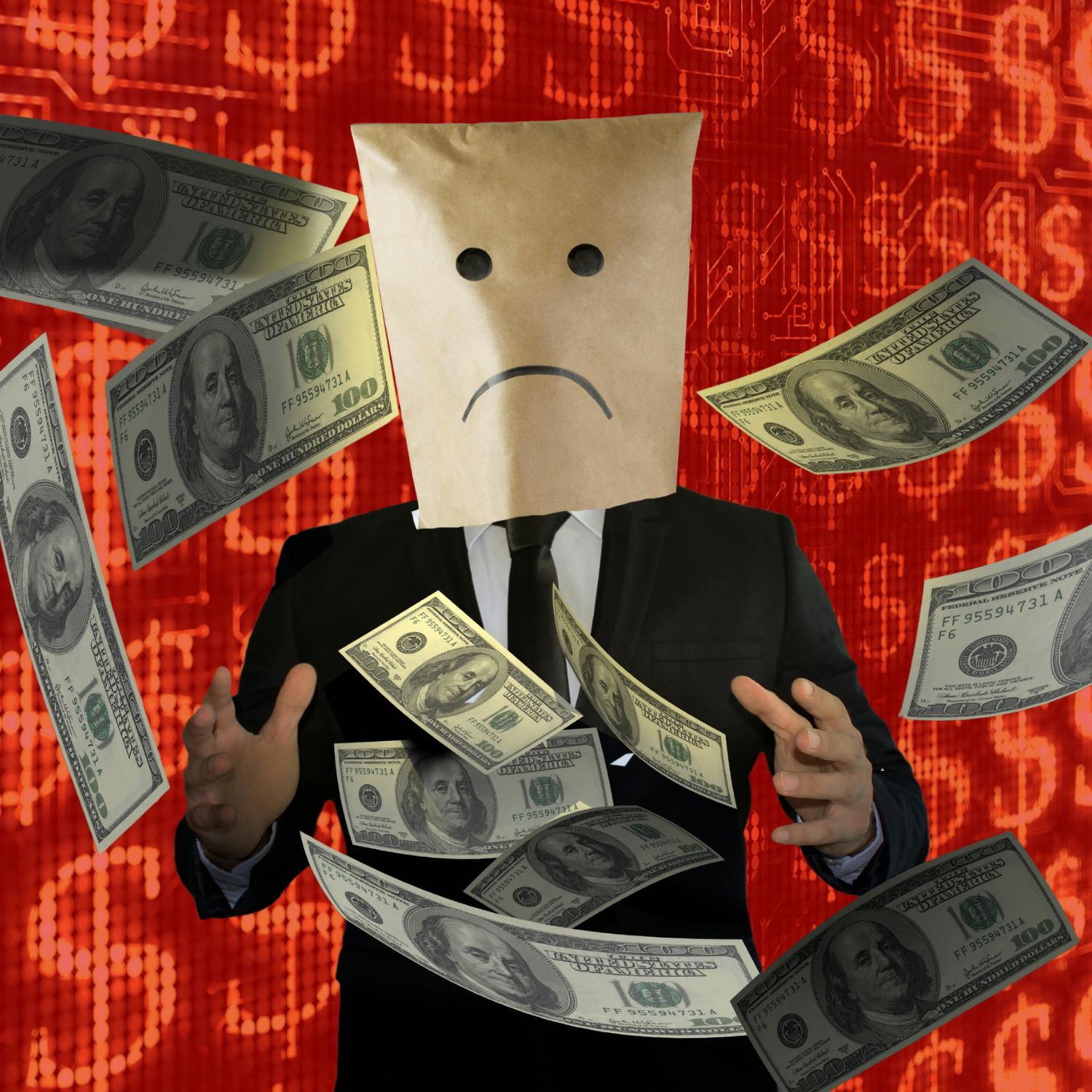
A U.S. Bank survey reveals a "crisis of confidence" where individuals feel good about their personal financial habits but are paralyzed by external economic factors they can't control. This fear-induced "freezing" causes them to miss significant financial opportunities.

Related Insights
Claiming to have too many ideas is not an intellectual problem but an emotional one. It is a common excuse to avoid taking action, rooted in a deep-seated fear of failure and social judgment. The solution isn't better analysis, but simply taking action—flipping a coin or throwing a dart—to overcome the emotional barrier.

The market for financial forecasts is driven by a psychological need to reduce uncertainty, not a demand for accuracy. Pundits who offer confident, black-and-white predictions thrive because they soothe this anxiety. This is why the industry persists despite a terrible track record; it's selling a feeling, not a result.
![[REPLAY] Morgan Housel – Same as Ever (EP.359) thumbnail](https://static.libsyn.com/p/assets/f/b/7/6/fb76e1c8bfb69e8dd959afa2a1bf1c87/CA_Square_logo_light_background_6.26.24.jpg)
Molly observed that extremely wealthy players reacted to losses with disproportionate fear and anger, despite the amounts being trivial to their net worth. This reveals that for high-achievers, losing triggers a deep-seated fear of losing control, making it a powerful psychological threat, not just a financial one.

Conventional definitions of risk, like volatility, are flawed. True risk is an event you did not anticipate that forces you to abandon your strategy at a bad time. Foreseeable events, like a 50% market crash, are not risks but rather expected parts of the market cycle that a robust strategy should be built to withstand.
People often fail to act not because they fear negative consequences (cowardice), but because they believe their actions won't have a positive impact (futility). Recognizing this distinction is critical; overcoming futility requires demonstrating that change is possible, which is different from mitigating risk.

Historically, financial comparison was contained within socioeconomically similar neighborhoods. Social media removes these geographic and social barriers, constantly exposing individuals to global, hyper-affluent lifestyles. This distorts the perception of 'normal,' making luxury seem common and fueling widespread feelings of financial inadequacy.
Perfectionism isn't just a mindset; it's a tangible cost. It manifests as a 'time tax' through delayed projects, an 'opportunity tax' by missing market windows, and a 'confidence tax' where waiting longer erodes your self-belief instead of building it. Quantifying these costs reveals the high price of inaction.

The feeling that today's economy is uniquely precarious is misleading. While recessions and inflation have always existed, the 24/7 news cycle creates an unprecedented intensity of negative information, leading to paralysis. The solution is to manage information consumption and focus on long-term strategy.
Unprecedented global prosperity creates a vacuum of real adversity, leading people to invent anxieties and fixate on trivial problems. Lacking the perspective from genuine struggle, many complain about first-world issues while ignoring their immense privilege, leading to a state where things are 'so good, it's bad.'
Anxiety spikes when you mentally separate from your own capacity to handle future challenges. Instead of focusing on uncontrollable 'what ifs,' the antidote is to reconnect with your agency and ability to respond, regardless of the outcome. Doubling down on your capacity to handle things quiets the alarm.
