Get your free personalized podcast brief
We scan new podcasts and send you the top 5 insights daily.
Autoregressive models must complete an output before it can be evaluated against constraints. Diffusion's iterative, coarse-to-fine process allows for applying reward functions or constraints *during* generation, enabling more precise control and alignment.

Related Insights
Diffusion models were a breakthrough for protein generation because they reframe the problem. Instead of a one-shot generation, they learn to make many small, iterative refinements ("make it slightly better"). This "time to think" approach proved more effective for complex biological structures than previous methods like VAEs.

Diffusion models work on a continuous medium like an image by adding noise until it's unrecognizable, then training a model to reverse the process. This holistic, denoising method is fundamentally different from autoregressive models like large language models, which predict data one token at a time.
For professional adoption, generative AI tools must move beyond "slot machine" mechanics. The focus should be on deep creative control, such as precise 3D camera steering, allowing the user to act as a director who guides the model to a specific, intended outcome, rather than just hoping for a good result.

Flow matching is a technical evolution of diffusion that learns a 'flow map' which guides a noisy input toward the manifold of 'real images.' It's analogous to creating a wind map that directs a paper airplane to a specific house from anywhere in a city, resulting in a cleaner, more direct generation process.
Diffusion models naturally reconstruct images in layers. In early denoising stages with high noise, they focus on low-frequency information like overall composition and color. As noise decreases in later steps, they add high-frequency details like textures and sharp edges. This hierarchical process is key to understanding their behavior.

Autoregressive models like GPT are sequential at inference (one token at a time), creating a GPU bottleneck. Diffusion models process many tokens in parallel during inference, similar to how transformers parallelized training, leading to fundamental speed advantages.
Instead of AI writing code that then gets rendered, future interfaces will be generated directly by diffusion models. This "intention-to-pixel" paradigm allows for hyper-personalized, real-time UIs, effectively making the diffusion model the new front-end.

The quality of generative visuals has leaped from blurry blobs to near-photorealistic films in a few years. Yet, the core technology—a diffusion process of adding and then removing noise—has remained consistent. Progress stems from optimizations and architectural improvements, not a complete paradigm shift.
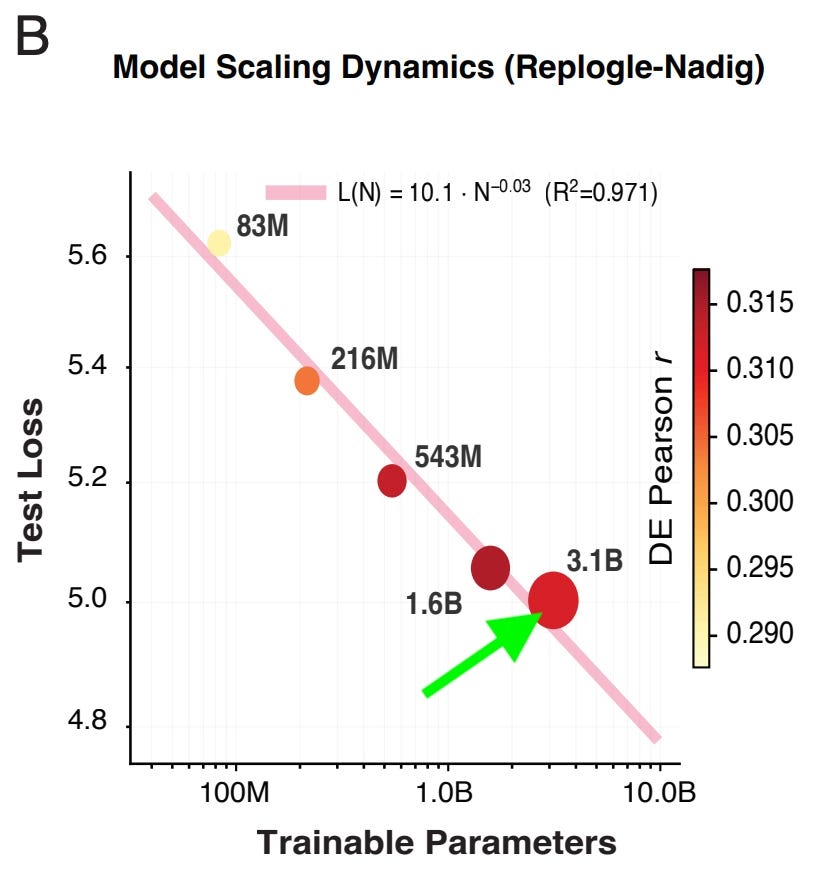
Unlike text, gene expression levels lack inherent order. Autoregressive models (like GPT) force an artificial sequence, limiting performance. Diffusion models, which operate on sets and iteratively refine predictions, are a more natural and effective architecture for modeling cellular responses to perturbations.
Programming is not a linear, left-to-right task; developers constantly check bidirectional dependencies. Transformers' sequential reasoning is a poor match. Diffusion models, which can refine different parts of code simultaneously, offer a more natural and potentially superior architecture for coding tasks.
