Get your free personalized podcast brief
We scan new podcasts and send you the top 5 insights daily.
In an ongoing confirmatory trial, investigators rarely re-challenge PD-1 refractory patients with another PD-1 inhibitor alone. This real-world clinical consensus, viewing the practice as futile, provides strong practical evidence that the nivolumab in the combination isn't the sole driver of efficacy, supporting RP1's significant contribution.

Related Insights
The NCI 9673 trial demonstrated that adding the CTLA-4 inhibitor ipilimumab to the PD-1 inhibitor nivolumab did not improve response rate, PFS, or overall survival in patients with previously treated anal cancer. This finding discourages this combination approach, avoiding unnecessary toxicity.
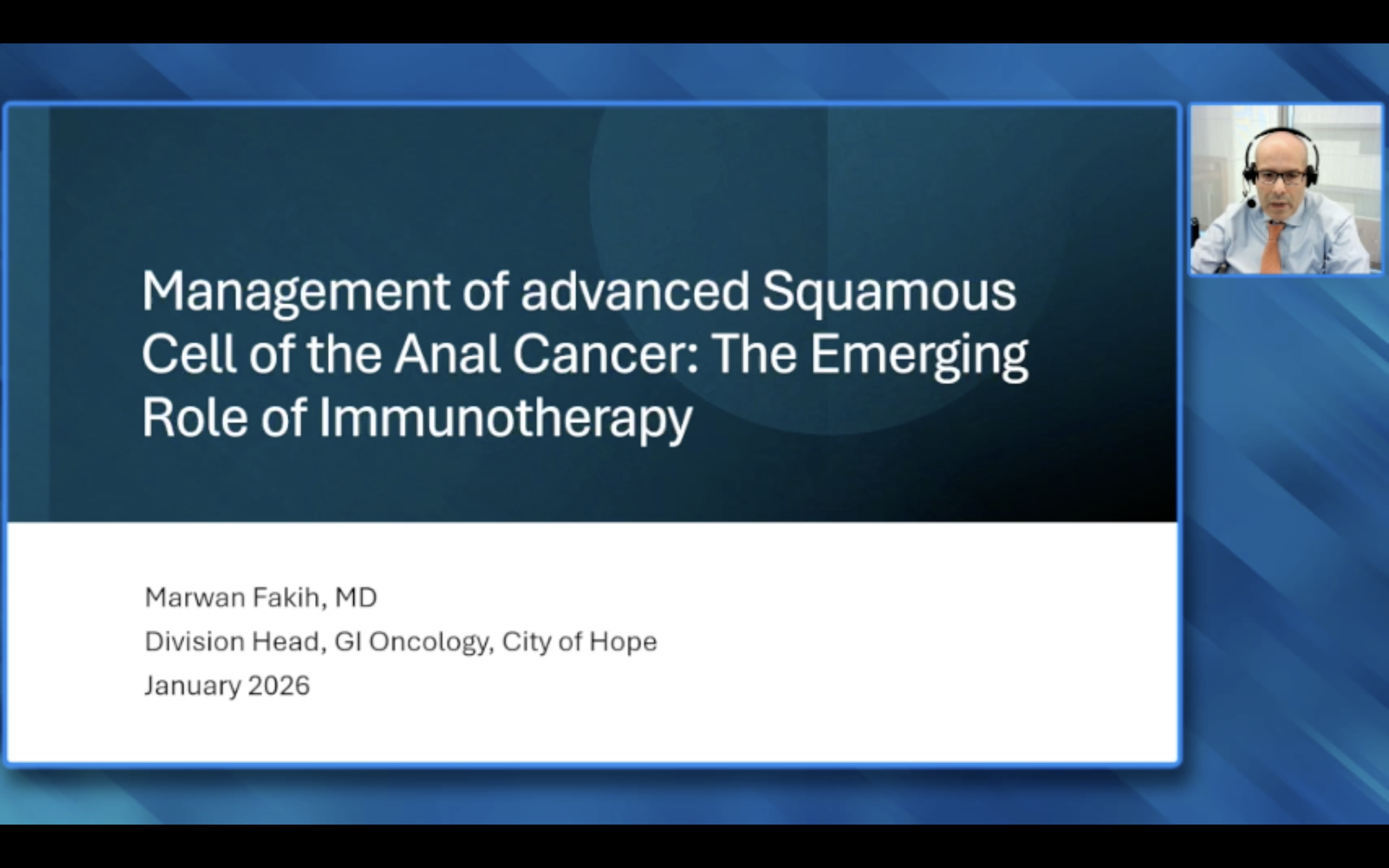
Data from the Podium-303 trial's crossover arm suggests that waiting to use a PD-1 inhibitor after progression on chemotherapy is less effective than using it concurrently from the start. This supports the synergistic effect of chemo-immunotherapy and favors the concurrent approach as the standard of care.
Despite lacking direct comparative trials in endometrial cancer, some oncologists prefer PD-1 inhibitors (like pembrolizumab) over PD-L1 inhibitors. This preference stems from observing higher single-agent activity in smaller studies and a clinical belief that PD-1s may be more potent for this specific cancer.

While both RP1+nivolumab and TIL therapy treat post-PD-1 melanoma, they serve different segments. RP1 is positioned for broad, universal appeal due to its simpler administration. This contrasts sharply with the complex, multi-step, high-toxicity process for TILs (harvesting, manufacturing, chemotherapy), which fits a more specific and robust patient profile.
The ATTRACTION-6 trial surprisingly found that adding combination immunotherapy (ipilimumab + nivolumab) to first-line chemotherapy did not improve overall survival over chemotherapy alone in metastatic gastric cancer. This negative result reinforces that adding a single-agent checkpoint inhibitor to chemotherapy remains the global standard of care.

Retrospective data shows that using one Antibody-Drug Conjugate (ADC) after another, particularly those with the same class of payload like TOP1 inhibitors, results in a low response rate of 10-20%. This creates a significant unmet need and a major clinical challenge for patients who progress on a first-line ADC.
The RP1 trial preempted regulatory concerns about its single-arm design by employing an unusually rigorous definition of PD-1 immunotherapy failure. This standard, which exceeded consensus guidelines, included mandatory scan confirmations and blinded independent reviews, ensuring the study population was truly refractory and bolstering the data's credibility.
Data shows that patients who permanently stopped ipilimumab due to immune-related side effects still had exceptionally good outcomes. This gives clinicians confidence to manage toxicity by discontinuing the CTLA-4 inhibitor portion of the regimen while continuing nivolumab, without fearing a loss of efficacy.
The trial showed combining a CTLA-4 inhibitor (Tremelimumab) with a PD-L1 inhibitor (Durvalumab) significantly increased toxicity without improving efficacy over monotherapy. This result, consistent with other trials, questions the benefit-risk profile of dual checkpoint inhibition in the adjuvant setting for renal cell carcinoma.

The dramatic efficacy boost from adding epcoritamab suggests it's the primary driver of patient benefit, not just an adjunct. This shifts the conceptual framework, positioning the bispecific antibody as the new therapeutic backbone, with rituximab and lenalidomide as supportive agents.