Get your free personalized podcast brief
We scan new podcasts and send you the top 5 insights daily.
Humans provide the irreplaceable 'sense' of the world—market conditions, political shifts, and creative taste. AI acts as the 'actuator,' executing on the specific instructions provided by the human sensor. This mental model clarifies the distinct roles in a human-machine synthesis.

Related Insights
Don't treat AI as a "cyborg" that automates your job. Instead, view it as a "centaur"—a hybrid where the human provides judgment and the AI provides speed and scale. AI handles the grunt work (data analysis, research), while the human makes the final, accountable decisions.

Delegate the mechanical "science" of innovation—data synthesis, pattern recognition, quantitative analysis—to AI. This frees up human innovators to focus on the irreplaceable "art" of innovation: providing the judgment, nuance, cultural context, and heart that machines lack.
An OpenAI engineer advised Cisco's team to stop thinking of their AI coder as a tool. Reframing it as a new teammate fundamentally changed how they interacted with it, improving collaboration and outcomes. This mental model shifts from command-giving to partnership.

The strategic narrative for AI integration is shifting from automation (replacement) to augmentation (collaboration). Augmentation positions AI as an assistant that enhances human skills, enabling teams to achieve outcomes that neither humans nor AI could accomplish independently. This fosters a more inclusive and productive environment.
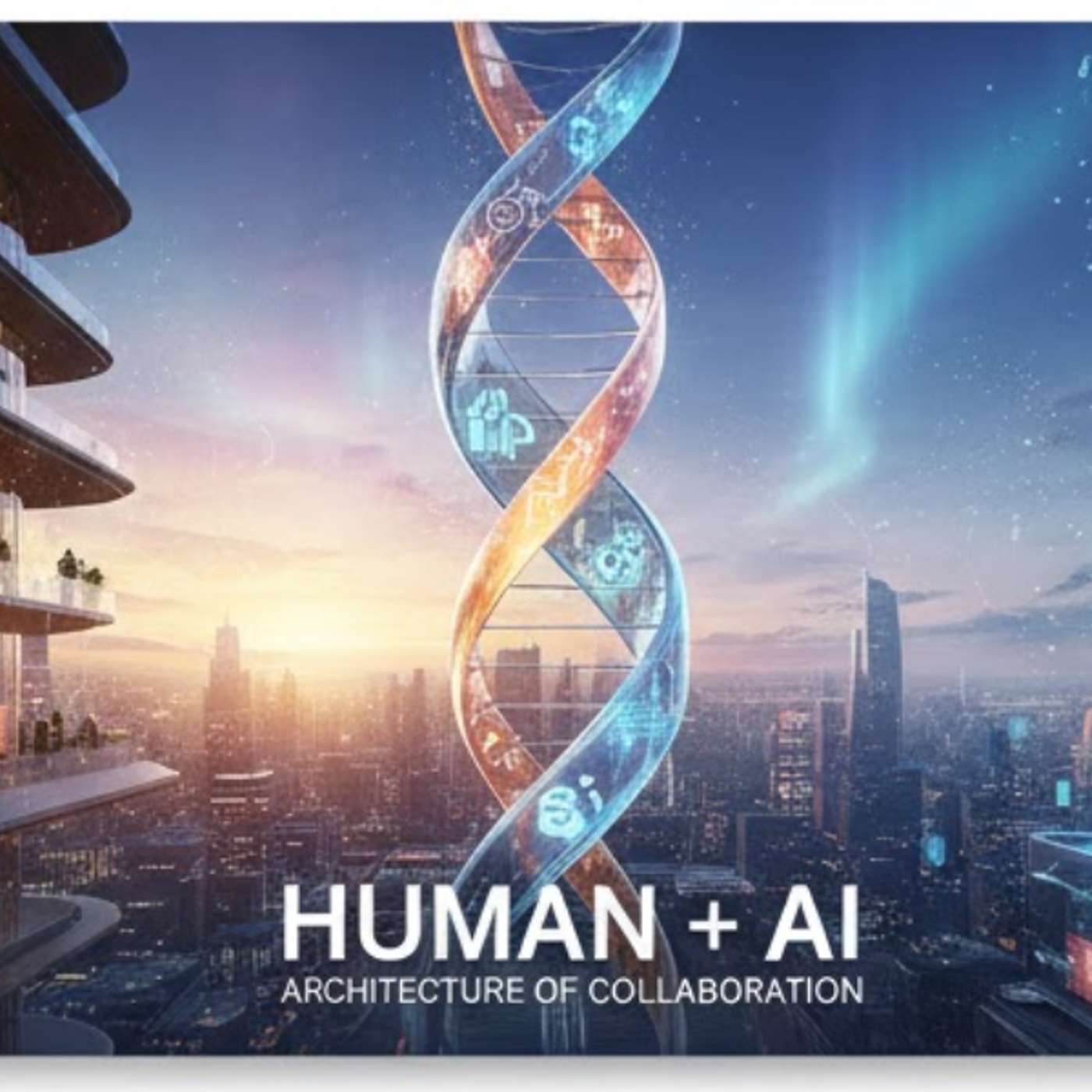
The most effective use of AI isn't full automation, but "hybrid intelligence." This framework ensures humans always remain central to the decision-making process, with AI serving in a complementary, supporting role to augment human intuition and strategy.

A powerful framework for the human-AI partnership: AI provides the "intellectual capacity" (data, options, research), but the salesperson must serve as the "intellectual activator." Their irreplaceable role is applying strategic judgment and critical thinking to activate the information AI provides.

Think of AI as an enthusiastic Golden Retriever: powerful and eager to please, but lacking direction. The human's critical role in this "hybrid intelligence" partnership is to impose constraints, provide specific goals, and funnel its vast potential toward a desired outcome.
While AI offers efficiency gains, its true marketing potential is as a collaborative partner. This "designed intelligence" approach uses AI for scale and data processing, freeing humans for creativity, connection, and building empathetic customer experiences, thus amplifying human imagination rather than just automating tasks.
The most powerful current use case for enterprise AI involves the system acting as an intelligent assistant. It synthesizes complex information and suggests actions, but a human remains in the loop to validate the final plan and carry out the action, combining AI speed with human judgment.

AI excels at intermediate process steps but requires human guidance at the beginning (setting goals) and validation at the end. This 'middle-to-middle' function makes AI a powerful tool for augmenting human productivity, not a wholesale replacement for end-to-end human-led work.