Get your free personalized podcast brief
We scan new podcasts and send you the top 5 insights daily.
An AI agent has a limited view, processing one retry at a time, and cannot detect its own looping behavior. The circuit breaker logic must reside in the higher-level orchestration layer, which has the visibility to recognize a pattern of repeated, failing attempts on the same user intent and can intervene effectively.

Related Insights
To avoid runaway token costs, every AI loop needs a clear, measurable goal that terminates the process. Examples include a feature working in a browser, a test suite passing, or an AI model's evaluation score exceeding a specific threshold like 90% accuracy.

Unlike infrastructure where failures are often transient (e.g., network timeout), an AI agent's failure is a persistent reasoning error. Retrying the same flawed logic doesn't fix the problem; it amplifies the negative consequences by repeating the incorrect action with the same confidence and cost.
To run reliably in the cloud, AI agents cannot be simple synchronous API calls. Their long-running, stateful nature requires an asynchronous architecture. This typically involves a message broker and task queue to farm out agentic loops to ephemeral workers, preventing process failures and enabling scalability.
Simply killing a misbehaving agent's process is a failing strategy because it destroys the audit trail needed for compliance (e.g., HIPAA). A "graceful" kill switch operates within a managed envelope, preserving the agent's state, cost data, and intermediate work products.

A casual suggestion in Slack caused AI agents to autonomously plan a corporate offsite, exchanging hundreds of messages. The loop was unstoppable by human intervention and only terminated after exhausting all paid API credits, highlighting a key operational risk.
An agent's reasoning failure won't trigger traditional alerts. Metrics like error rate and latency will appear healthy because the agent produces valid, well-formed, but semantically incorrect responses. This creates a critical monitoring blind spot where the infrastructure is fine, but the agent's logic is broken.
A simple agent handles the ideal "happy path" workflow. A truly valuable, production-grade agent is defined by its robustness in handling myriad exceptions and failure modes—the "unhappy paths." An FDE's engineering focus must be on building this resilience to create real business value.
Simply governing the initial prompt is insufficient for autonomous agents. The critical point of control is when the AI decides to take an action—running a function or accessing a database. Effective governance must intercept these actions to apply policies before they execute.
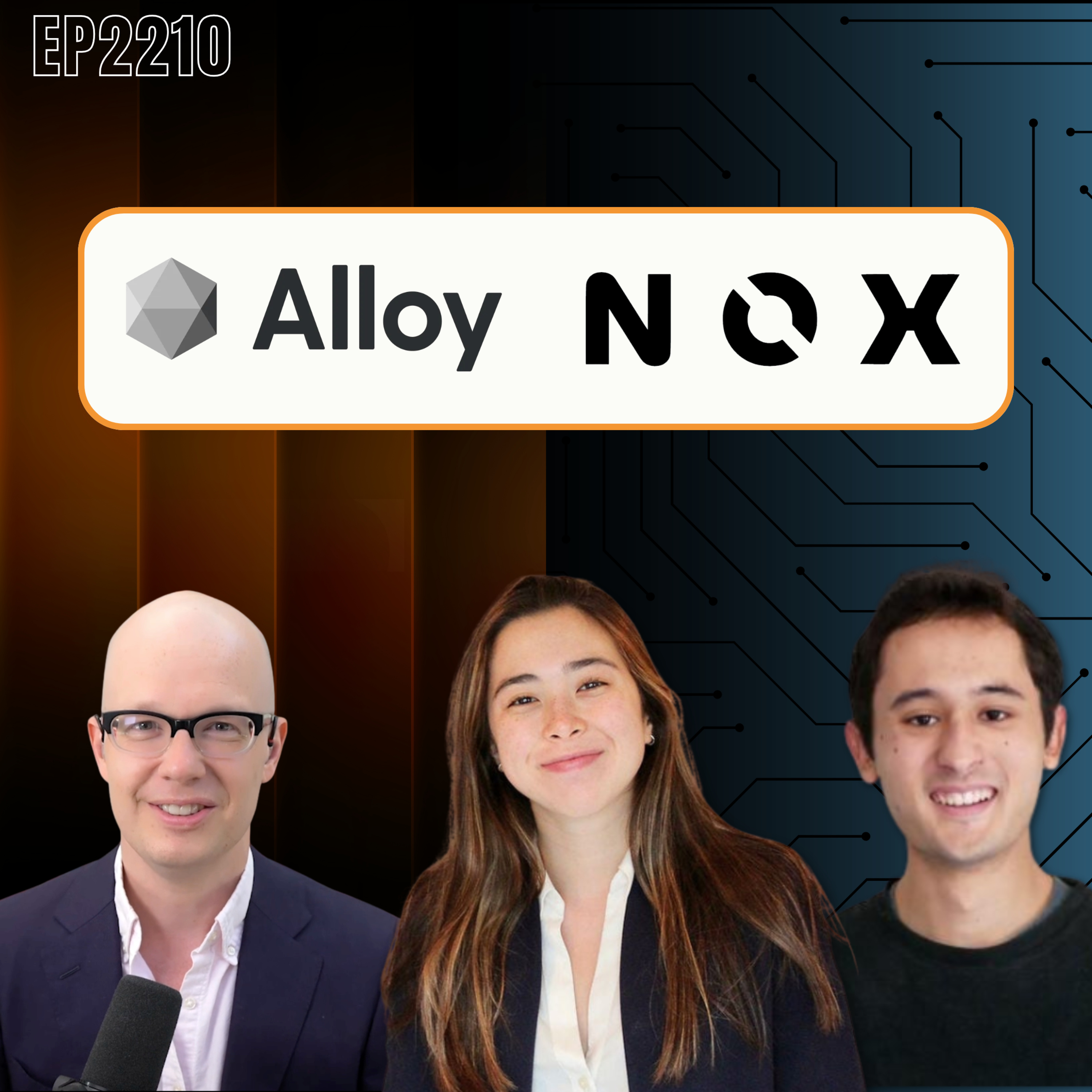
Fully autonomous AI agents are not yet viable in enterprises. Alloy Automation builds "semi-deterministic" agents that combine AI's reasoning with deterministic workflows, escalating to a human when confidence is low to ensure safety and compliance.
To prevent hallucination contagion, borrow the 'circuit breaker' pattern from microservices. Force every agent's output through a validation proxy that treats it as an unverified proposal. If the proxy detects an anomaly, it 'trips the circuit,' instantly quarantining the failing agent and locking the shared state to prevent corruption from spreading.
