Get your free personalized podcast brief
We scan new podcasts and send you the top 5 insights daily.
When planning for the business's future without you, prioritize the stability and job security of your team. Confident and secure employees are the best guarantee that your clients will be taken care of, creating a more resilient and sustainable legacy.

Related Insights
Due to demographic shifts and a post-pandemic re-evaluation of work, employees now hold more power. This requires a fundamental leadership mindset shift: from managing people and processes to enabling their success. High turnover and disengagement are no longer employee problems but leadership failures. A leader's success now depends entirely on the success of their team, meaning 'you work for them'.

Granting stock options is only half the battle. To make equity a powerful motivator, leaders must constantly communicate a clear and believable narrative for a future liquidity event, such as an acquisition. This vision is what transforms paper ownership into a tangible and valuable incentive in the minds of employees.

Frame employee training as an investment, not a cost, because 'growth follows people, not plans.' Train your team beyond the technical aspects of their job to focus on building genuine human connections. This approach transforms a transactional service into a loyal community, turning your staff into powerful growth multipliers.
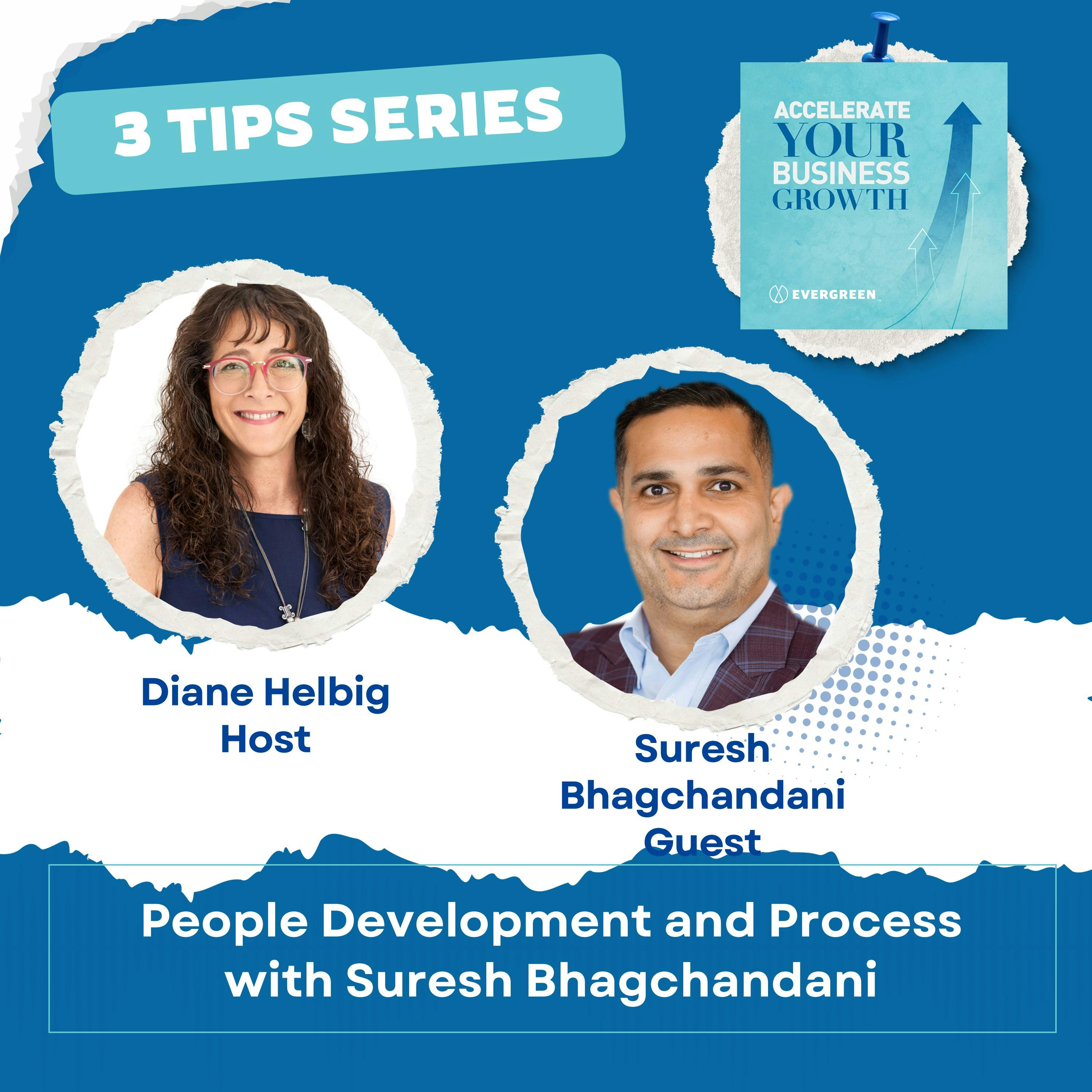
Organizational success depends less on high-profile 'superstars' and more on 'Sherpas'—generous, energetic team players who handle the essential, often invisible, support work. When hiring, actively screen for generosity and positive energy, as these are the people who enable collective achievement.

To motivate and retain employees, especially in a challenging market, leaders must shift their perspective from 'they work for me' to 'I work for them.' This servant-leadership approach involves genuinely caring about your team's well-being and success, which fosters loyalty and improves performance.

The complexity of long-term estate and succession planning often leads to indefinite postponement. A more effective approach is to create a plan based on the business's current state and set a recurring calendar reminder to review and update it every two years.
Most companies have a structured process for budgets and strategy but treat talent management as an afterthought. Implement a "people calendar" that systematically addresses attracting, developing, and engaging talent with the same discipline. This ensures people, your most critical asset, are managed proactively.
Unlike startups, institutions like CPPIB that must endure for 75+ years need to be the "exact opposite of a founder culture." The focus is on institutionalizing processes so the organization operates independently of any single individual, ensuring stability and succession over many generations of leadership.

To truly build a people-first culture, give the head of HR (rebranded as 'Chief Heart Officer' to change perception) more political clout and decision-making power than the Chief Financial Officer. This organizational structure ensures that employee retention and happiness are prioritized over pure financial metrics, leading to long-term stability and success.
When transitioning leadership, you must allow your successors to make mistakes. True learning comes from fixing failures, not just replicating successes. As the founder, your instinct is to prevent errors, but you must permit 'fuck ups' for the next generation to truly develop their own capabilities and own the business.
![Ari Emanuel - The Anti-AI Bet - [Invest Like the Best, EP.448] thumbnail](https://megaphone.imgix.net/podcasts/c5910280-c4dd-11f0-94be-ab6a7a5865b0/image/1e5a2263eb62fcde200846919e24419a.jpg?ixlib=rails-4.3.1&max-w=3000&max-h=3000&fit=crop&auto=format,compress)