Get your free personalized podcast brief
We scan new podcasts and send you the top 5 insights daily.
Jonathan Swift's intelligence is unique because he could masterfully argue a practical point—on coinage, war, or politics—in two distinct modes: direct, polemical non-fiction and ambivalent, complex fiction like *Gulliver's Travels*. This dual capability for both direct and indirect persuasion sets him apart.

Related Insights
Mark Twain saw humorists as having a critical role: to challenge authority and consensus. He argued that irreverence is the "champion of liberty" because despots fear a laughing public more than anything else. This frames satire not just as entertainment, but as a vital tool for maintaining a free society.

Major philosophical texts are not created in a vacuum; they are often direct products of the author's personal life and historical context. For example, Thomas Hobbes wrote 'Leviathan,' which argues for an authoritarian ruler, only after fleeing the chaos of the English Civil War as a Royalist. This personal context is crucial for understanding the work.

The measure of a truly great nonfiction book is its ability to distill and compress. The goal should be to synthesize the most useful ideas from many other sources into a single, high-signal work. If you succeed, the reader no longer needs to read the other 30 books on the subject.

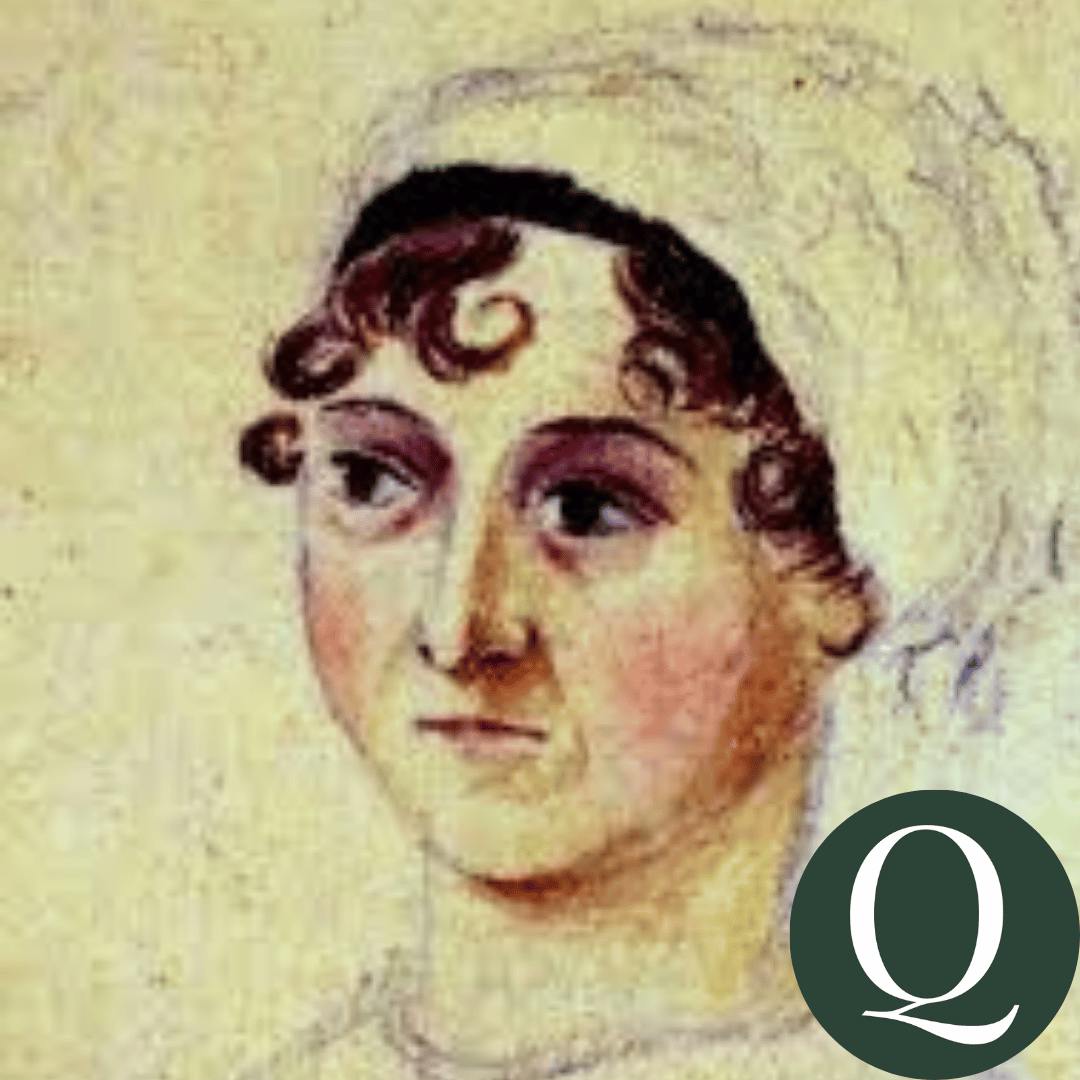
Austen pioneered the 'free indirect style,' where the third-person narrative adopts a character's thoughts, feelings, and—crucially—their delusions. This forces the reader to actively distinguish a character's biased perspective from reality, a technique used powerfully to show internal conflict in novels like 'Persuasion' and 'Emma.'
According to Lionel Shriver, a novelist's task is not to reinforce beliefs but to plant a seed of doubt. By presenting a compelling alternative reality, fiction can contaminate a reader's innocent assumptions and force them to contend with complexity, splitting their perspective.

Contrary to being escapist, the best fantasy literature, from Tolkien to L'Engle, uses imaginary worlds to explore complex real-world issues like war, environmentalism, and social conformity. This fictional distance allows authors to make profound statements and challenge readers' assumptions without being preachy.

When knowledgeable readers disagree on a novel's interpretation, the root cause is often a fundamental divergence in their innate temperaments. Authors deliberately leave ambiguity, which allows readers' pre-existing dispositions—such as a desire for controversial readings—to shape their conclusions.
Austen's work possesses a unique duality: it is accessible enough for a 13-year-old to enjoy, yet so layered with technical and psychological complexity that scholars can reread it for a lifetime and continually discover new nuances. This blend of superficial simplicity and deep sophistication is her singular achievement.
Jane Austen's work is deeply influenced by Adam Smith's *Theory of Moral Sentiments*. Her narrative techniques, particularly the management of character perspective, are designed to guide the reader in developing an "impartial spectator"—an internal moral compass—which is a central Smithian concept.
Salman Rushdie posits that humor is more than just entertainment; it is a potent tool against oppression. He observes that dictators and narrow-minded individuals are characteristically humorless and that satire can provoke them more effectively than direct criticism, making it a crucial element in the struggle for free expression.