Get your free personalized podcast brief
We scan new podcasts and send you the top 5 insights daily.
Nvidia invests broadly in AI startups because of its own origin story. Surviving as one of 63 graphics companies despite having a "precisely wrong" architecture taught CEO Jensen Huang the folly of trying to pick winners in a nascent market.

Related Insights
Nvidia's CEO Jensen Huang reveals the company's core strategic filter: it only takes on projects that are incredibly difficult, have never been done before, and leverage the company's unique superpowers. This ensures a defensible moat, as easier problems attract too many competitors. This strategy requires an organizational tolerance for "pain and suffering."

Jensen Huang's core strategy is to be a market creator, not a competitor. He actively avoids "red ocean" battles for existing market share, focusing instead on developing entirely new technologies and applications, like parallel processing for gaming and then AI, which established entirely new industries.

Despite powering the AI revolution, Jensen Huang's strategy of selling GPUs to everyone, rather than hoarding them to build a dominant AGI model himself, suggests he doesn't believe in a winner-take-all AGI future. True believers would keep the key resource for themselves.

NVIDIA's multi-billion dollar deals with AI labs like OpenAI and Anthropic are framed not just as financial investments, but as a form of R&D. By securing deep partnerships, NVIDIA gains invaluable proximity to its most advanced customers, allowing it to understand their future technological needs and ensure its hardware roadmap remains perfectly aligned with the industry's cutting edge.

Nvidia maintains partnerships with everyone, including rivals. By positioning itself as a neutral, essential supplier rather than a direct competitor, it has become central to every company's AI bet, securing its dominant and indispensable market position.

Despite being key backers of OpenAI, Microsoft and NVIDIA are investing heavily in its competitor, Anthropic. This signals a strategic shift by tech giants to diversify their AI investments, ensuring no single lab becomes dominant and fostering a more competitive ecosystem.

NVIDIA's financing and demand guarantees for its chips are not just to spur sales, which are already high. The strategic goal is to reduce customer concentration by helping smaller players and startups build compute capacity, ensuring NVIDIA isn't solely reliant on a few hyperscalers for revenue.

NVIDIA embraces the concept of "zero billion dollar markets," investing heavily in initiatives that have no immediate revenue potential. This long-term R&D strategy, like their decade-long work in autonomous driving, is key to creating and eventually dominating future markets.
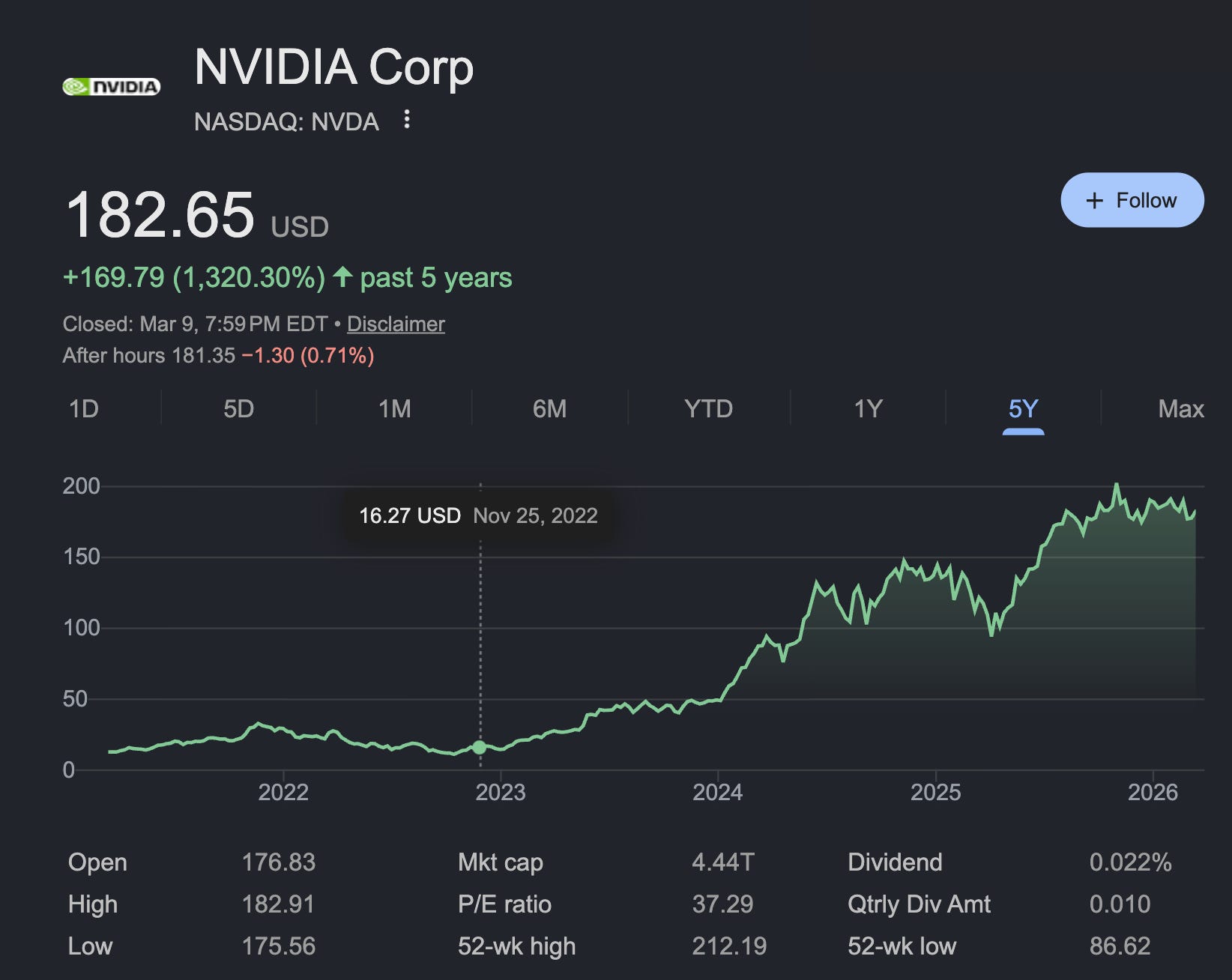
NVIDIA investing in startups that then buy its chips isn't a sign of a bubble but a rational competitive strategy. With Google bundling its TPUs with labs like Anthropic, NVIDIA must fund its own customer ecosystem to prevent being locked out of key accounts.

Despite rumors of CEO Jensen Huang's concerns over OpenAI's discipline, NVIDIA is still making its largest investment ever. This shows the AI market's scale, where a scaled-back, 'cautious' investment is still a record-breaking commitment. It reflects risk management at a level where even reduced confidence warrants an enormous capital allocation.
