Get your free personalized podcast brief
We scan new podcasts and send you the top 5 insights daily.
While legendary founders have vastly different personalities, they consistently share two qualities: they are true original thinkers who don't simply 'read the room,' and they have enough personal charisma or are compelling enough to make people want to follow them.
Related Insights
The most successful founders, like Koenigsegg, say the same things on day one as they do 20 years later. Their success comes not from pivoting, but from the relentless, decades-long execution of a single, powerful vision. This unwavering consistency compounds into a massive competitive advantage and defines the company's character.

A manufactured persona feels uncanny and creates a bait-and-switch for employees. Instead, identify a founder's true archetype and strategically amplify the authentic traits most useful for the business, like turning up the volume on a specific aspect of their personality.

Great companies survive not because of a founder's continued presence, but because the founder codified a culture and operational DNA that outlives them. Companies like Home Depot and Amazon continue to thrive because their core principles are deeply embedded and replicable.

Spotify's Daniel Ek argues against the myth of a single founder archetype. Instead of imitating famous entrepreneurs like Steve Jobs, founders should focus on self-discovery to build a company that is a natural extension of their unique personality and leadership style.

A successful startup often resembles a cult, requiring a leader who communicates their vision with unwavering, first-person conviction. Hiding the founder behind polished PR spokespeople is a mistake; it neuters the contagious belief required to recruit talent and build a movement against impossible odds.

Success stories like Notion's cannot be replicated because they are a direct result of their founder's unique personality and 'narrative violations.' Great companies succeed based on the specific, unrepeatable idiosyncrasies of their founders. The key is to embrace these unique traits, not follow a generic playbook.

Roughly 80% of a company's culture is a direct extension of its founder's personality. Facebook reflects Mark Zuckerberg's hacker mindset; Google reflects its founders' academic roots. As a leader, your role isn't to change the culture but to articulate it and build systems that scale the founder's natural way of operating.

Using a mythological framework, founders are not the dutiful, rule-following 'Ram' archetype. They are 'Krishnas': driven by strong core values but willing to bend or break conventional rules to achieve their mission. Dutiful 'Rams' are better for scaling a company, not starting one.
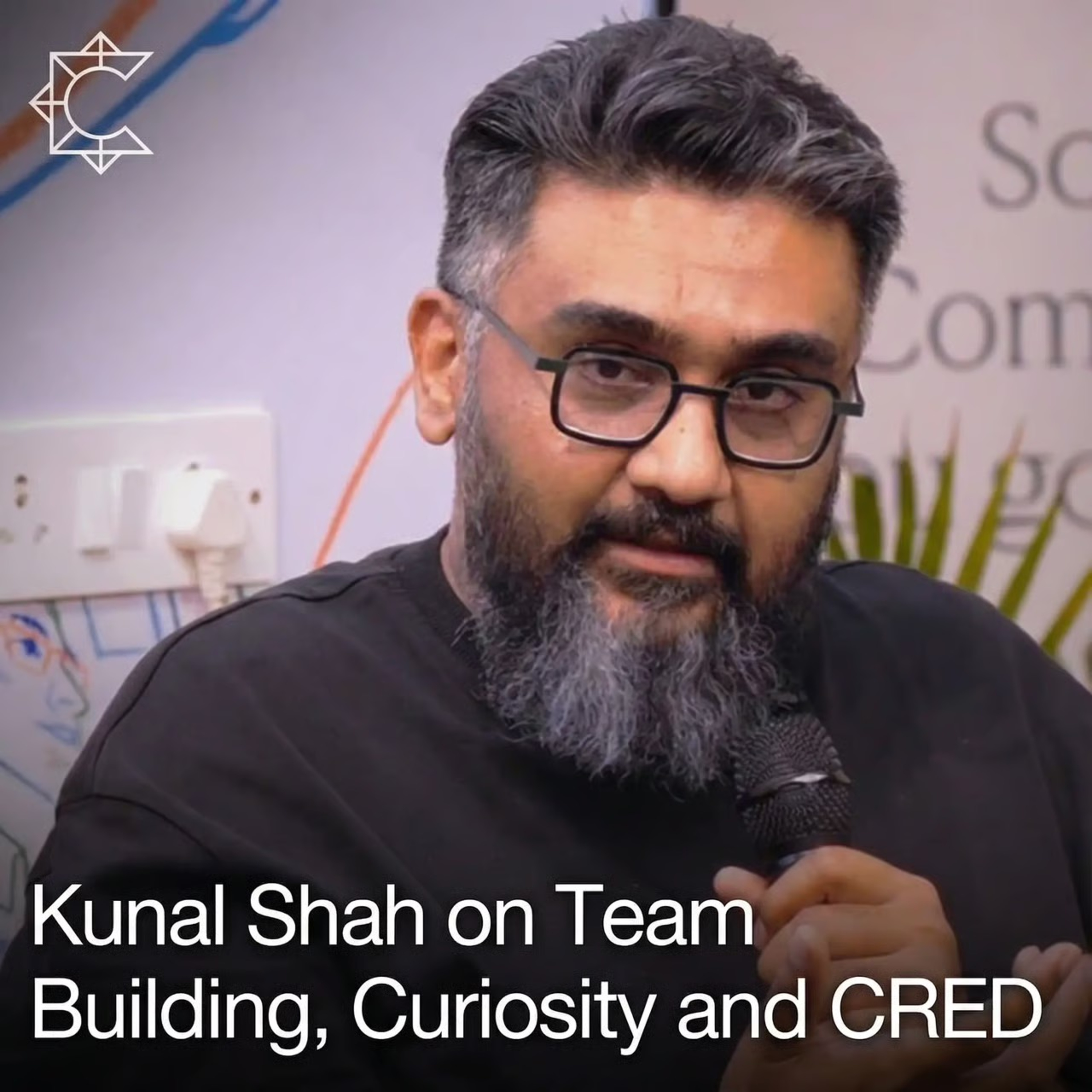
Beyond table stakes like hunger and vision, the most successful founders exhibit deep empathy ("people gene"), curiosity, and high emotional intelligence. They are secure, know their weaknesses, and often have a background in team sports, understanding that company building is a team effort.

There are no universal leadership traits; successful leaders can be introverts, extroverts, planners, or chaotic. What they share is the ability to make others feel that following them will lead to a better tomorrow. This emotional response is what creates followers, not a specific checklist of skills.
