Get your free personalized podcast brief
We scan new podcasts and send you the top 5 insights daily.
Pepsi’s use of self-driving trucks for Doritos and soda is a masterclass in deploying new technology. The cargo is non-perishable, naturally protected by "airbags" (chip bags), and a failure (a crash) has minimal negative PR. This provides a low-risk, real-world environment for testing and refining high-stakes innovation.

Related Insights
In contrast to the 'move fast' ethos of tech rivals, GM views its intense focus on safety as a core business strategy. The company believes that building and retaining customer trust is paramount for new technologies like autonomous driving. It sees a single major incident as catastrophic to public perception, making a slower, safer rollout a long-term competitive advantage.

Instead of building expensive, bespoke military hardware, the company retrofits commercially available vehicles like the Ford F-150 with autonomy. This strategy creates "affordable mass" for the military, deploying robust systems at a fraction of the cost without risking human lives in commercial-grade vehicles on the battlefield.
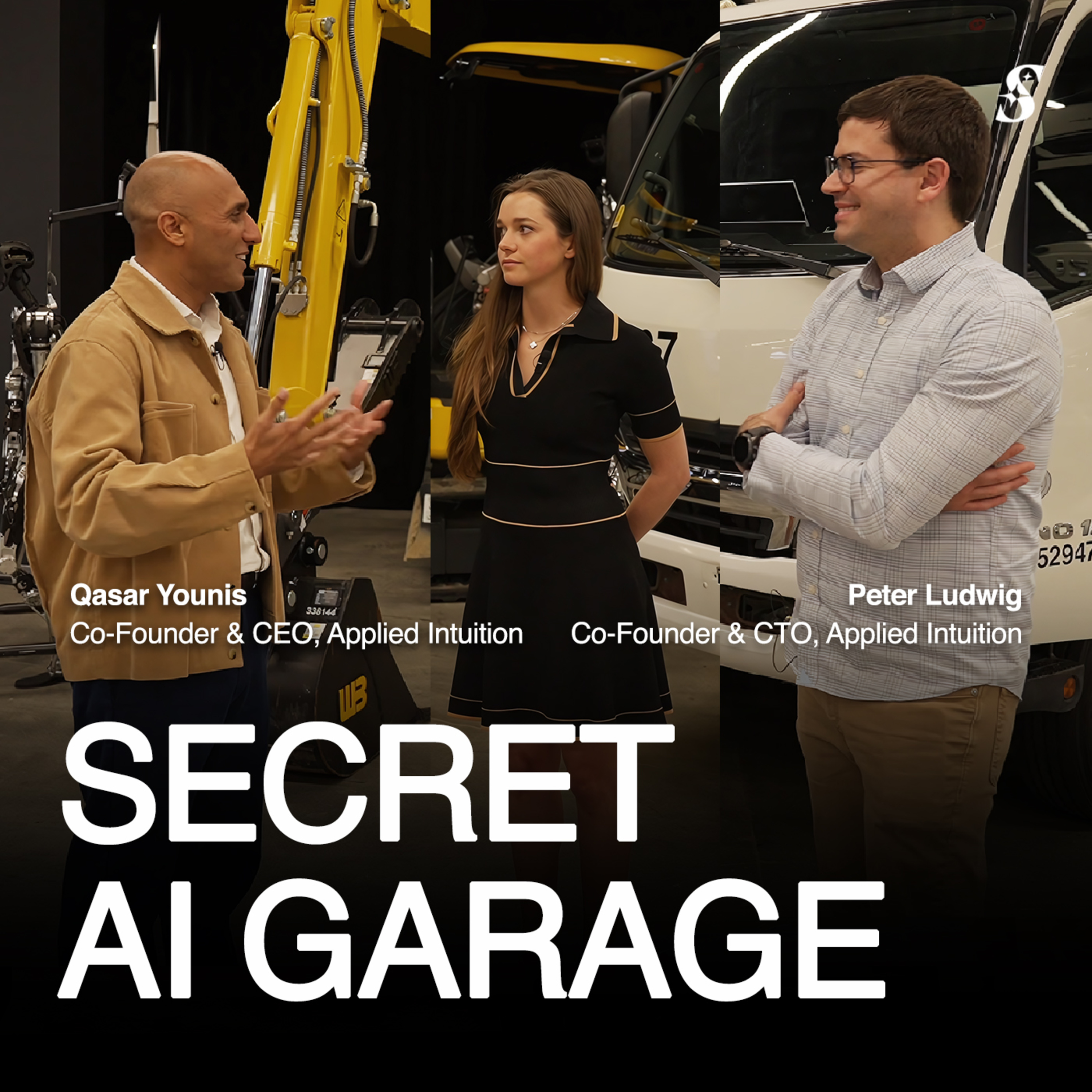
Uber is not developing its own self-driving cars. Instead, it's pursuing a 'Switzerland' strategy by partnering with and investing in multiple autonomous vehicle companies like Rivian. This allows Uber to be the dominant platform for robo-taxis without bearing the immense cost and risk of hardware R&D.

Anno Labs chose a vending machine to test AI autonomy because simple retail allows for partial success, creating a "smooth curve" for measurement. Unlike tasks like blogging where success is rare and binary, retail generates useful data even from mediocre performance, enabling clearer progress tracking for AI capabilities.

To achieve scalable autonomy, Flywheel AI avoids expensive, site-specific setups. Instead, they offer a valuable teleoperation service today. This service allows them to profitably collect the vast, diverse datasets required to train a generalizable autonomous system, mirroring Tesla's data collection strategy.

Wave's CEO asserts that the core scientific challenges of self-driving are solved. The remaining hurdles are engineering execution, product integration, and economic scaling. This marks a maturation point where the problem moves from a question of 'if' to 'how'—a predictable, albeit difficult, path of scaling data, compute, and validation.

AV companies use "Operational Design Domains" (ODDs) to define safe operating environments. They expand from a cleared city (e.g., Las Vegas) to a similar one (e.g., Los Angeles) to reuse core engineering solutions and only solve for marginal differences, accelerating rollout.
The public holds new technologies to a much higher safety standard than human performance. Waymo could deploy cars that are statistically safer than human drivers, but society would not accept them killing tens of thousands of people annually, even if it's an improvement. This demonstrates the need for near-perfection in high-stakes tech launches.

A high production rate is a core R&D tool for SpaceX, not just a manufacturing goal. By creating a "hardware rich" environment with abundant, cheaper prototypes, it enables an aggressive build-test-learn cycle. Failure becomes a low-cost data-gathering exercise, not a catastrophic setback.

For robotics companies, market dominance hinges on a data flywheel effect. This requires rapidly deploying robots into real-world environments, even at a financial loss, because each unit acts as a data source. A small lead in data collection today translates into a massive competitive advantage tomorrow.