Get your free personalized podcast brief
We scan new podcasts and send you the top 5 insights daily.
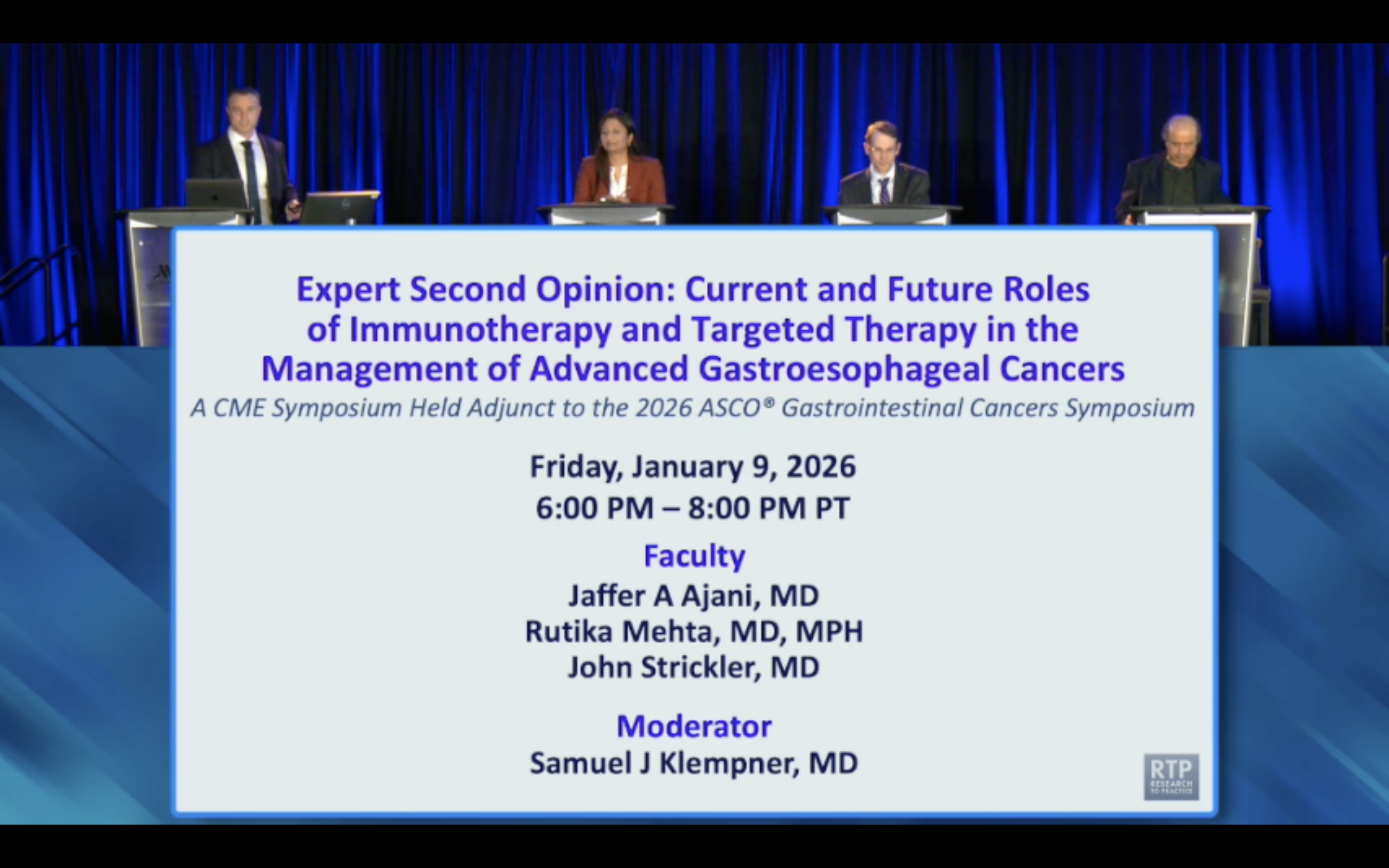
For patients over 75 with metastatic gastric cancer, a common practice is to reduce the oxaliplatin dose from 85 to 65 mg/m² and universally omit the 5-FU bolus from the FOLFOX regimen. This pragmatic approach aims to maintain efficacy while minimizing toxicity in a more vulnerable population.
Related Insights
The failure of an adjuvant trial for the TKI pazopanib was likely caused by a protocol change that reduced the dose to manage transaminitis. While well-intentioned to improve tolerability and adherence, the lower dose was sub-therapeutic. This serves as a critical lesson that managing side effects by compromising dose can nullify a drug's potential efficacy.

In the SPOTLIGHT trial, adding zolbituximab to FOLFOX for Claudin-18.2 positive patients improved progression-free and overall survival. However, it did not significantly increase the objective response rate, demonstrating that survival benefit can be decoupled from tumor shrinkage metrics.
For frail elderly patients with HER2+ gastric cancer, starting with targeted therapy and immunotherapy alone can gauge response and tolerance. Cytotoxic chemotherapy can be added later if the patient's performance status improves, distinguishing disease-related frailty from baseline comorbidities.
When treating elderly patients (e.g., age 80+) with metastatic breast cancer, clinicians may prioritize quality of life over marginal overall survival gains seen in clinical trials. This justifies using a better-tolerated CDK4/6 inhibitor like palbociclib, even though ribociclib has demonstrated a statistical survival benefit, especially when patients have comorbidities or a preference for fewer side effects.
The HORIZON-GEA-01 trial for zanidatumab in gastric cancer mandated prophylactic loperamide (4mg BID) for all patients. This was necessary to manage the high rates of diarrhea (up to 80% of patients), a significant GI toxicity associated with the drug's mechanism of action.

The development of PARP-1 selective inhibitors like seriparib signals a shift in drug innovation. Instead of only chasing higher efficacy, these new agents aim for a more favorable toxicity profile (less GI toxicity, fewer dose discontinuations) to improve patient quality of life and treatment adherence.
Clinicians are finding that forgoing the standard 800mg loading dose of zolbituximab and starting directly with the 600mg maintenance dose appears to mitigate acute gastrointestinal toxicity, particularly gastritis. This practical adjustment is being formally studied but is already used in practice to improve patient experience.
In a phase 2 trial, the combination of zanidatumab and FOLFOX achieved a remarkable 95% response rate after two key modifications were made: adding prophylactic loperamide and dropping the 5-FU bolus. This suggests the bolus adds toxicity without clear benefit in this specific, potent combination.
As survival times for metastatic gastric cancer patients extend, managing long-term toxicity is paramount. Clinicians typically administer only 6-8 cycles of oxaliplatin to prevent severe, cumulative peripheral neuropathy, allowing for longer, better-tolerated maintenance therapy with biologics.
Clinicians advise against continuing targeted agents like zolbituximab or trastuzumab after disease progression in gastroesophageal cancer. The biological heterogeneity of this cancer type means that if a targeted therapy isn't working, it's unlikely to provide benefit with a different chemotherapy backbone.