Get your free personalized podcast brief
We scan new podcasts and send you the top 5 insights daily.
By hiring only 300 people from 800,000 applications, Bending Spoons creates a super-concentrated talent pool. This high-agency team is then deployed to transform acquired companies, a key advantage over standalone businesses that struggle to attract top talent.

Related Insights
Bending Spoons views its company as its most important product, engineered to be the ideal place for the world's best inexperienced talent. The goal is to create an institution that acts as the ultimate training ground, enabling high-potential individuals to skyrocket their careers.
![Luca Ferrari - Building Bending Spoons - [Invest Like the Best, EP.446] thumbnail](https://megaphone.imgix.net/podcasts/b29cbd80-b93a-11f0-a1b7-2b977c9469a2/image/39f7864ea628f71a81b94662bd4a86df.jpg?ixlib=rails-4.3.1&max-w=3000&max-h=3000&fit=crop&auto=format,compress)
To credibly sell to the largest enterprises from day one, Sierra intentionally hired experienced executives. The crucial filter was selecting for "competitive intensity" and high agency, avoiding the political mindset often associated with big-company hires. This allowed them to land massive customers early.

The company simplifies its hiring process down to two core traits. "Smart" means learning quickly, and "who care" translates to extreme ownership and a passion for impact. This focus allows them to build a high-density talent pool that can be deployed across any acquired product.
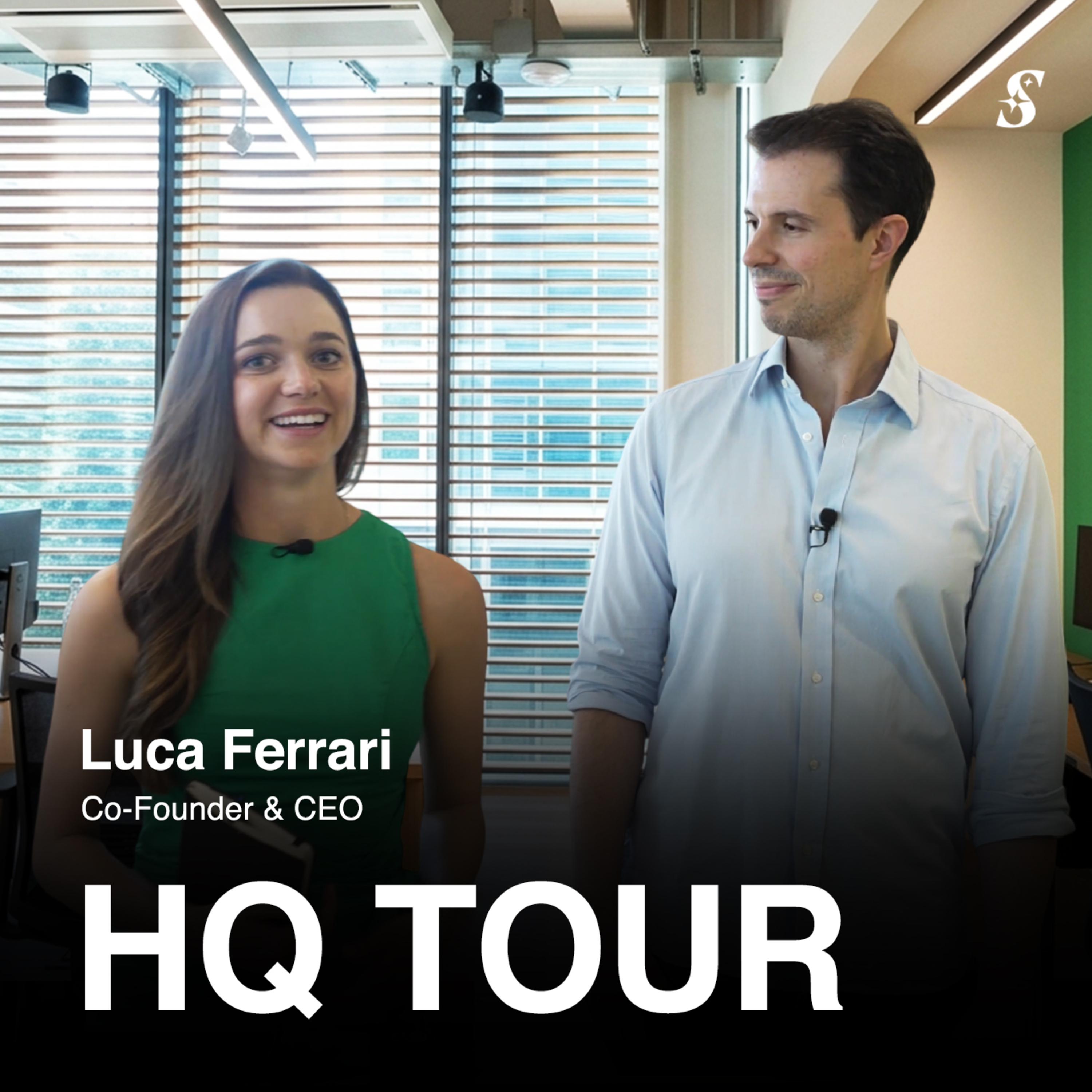
By strictly limiting team size, a company is forced to hire only the “best in the world” for each role. This avoids the dilution of talent and communication overhead that plagues growing organizations, aiming to perpetually maintain the high-productivity “mind meld” of a founding team.

To avoid the hyper-competitive market for mid-level talent, startups can adopt a "barbell" strategy. Focus recruiting efforts exclusively on very senior, staff-level hires and high-potential junior talent directly from university. This bifurcated approach optimizes for talent density and budget.

By paying higher wages than competitors, convenience store chain QuickTrip attracts a large applicant pool. This allows them to be incredibly selective, interviewing just three out of every 100 applicants. The result is a high-quality, loyal workforce with a turnover rate of 13% versus the industry's 59%.

Post-acquisition, Bending Spoons intentionally creates smaller, high-talent-density teams. This "startup mode" eliminates bureaucracy and increases ownership, proving that a small, elite team can achieve more than a larger one. They argue the correlation between team size and quality is "mild at best."
Single-product companies struggle to align R&D team size with fluctuating opportunities. Bending Spoons uses a centralized pool of flexible R&D talent that can be rapidly deployed to different portfolio companies, maximizing efficiency and capturing short-lived windows of opportunity that others miss.
Ditch the traditional high-volume funnel. Instead, adopt an executive search mentality for all roles. First, define what the top 1% looks like for you. Then, identify a small, targeted list of the best people in the world (e.g., 50 people) and focus all your energy on relentlessly pursuing and activating that specific group.

Anthropic's hiring philosophy prioritizes "talent density" over "talent mass." They believe a concentrated group of top AI researchers, amplified by their own frontier models, can outperform much larger teams, making elite talent and powerful models a winning combination.
![Krishna Rao - Anthropic's CFO on Compute, Scaling to $30B ARR, and the Returns to Frontier Intelligence - [Invest Like the Best, EP.471] thumbnail](https://megaphone.imgix.net/podcasts/fdfca472-4e43-11f1-bf1a-cf5adcc9aeb5/image/b1ed0c54d8c57aae09fe68adc7d1fb32.jpg?ixlib=rails-4.3.1&max-w=3000&max-h=3000&fit=crop&auto=format,compress)