Get your free personalized podcast brief
We scan new podcasts and send you the top 5 insights daily.
Agents quickly become outdated. To manage this lifecycle, build specific 'upgrade skills' that facilitate migration to new models. For larger-scale management, deploy 'meta-agents' whose sole job is to monitor other agents, identify outdated ones, and trigger the upgrade process.

Related Insights
Letting non-technical users directly modify agent code is risky. A better pattern is to use a higher-level 'meta-agent'. Business users provide feedback in natural language to this agent, which then interprets the request and safely implements the updates to the primary agent's logic.
Enable agents to improve on their own by scheduling a recurring 'self-review' process. The agent analyzes the results of its past work (e.g., social media engagement on posts it drafted), identifies what went wrong, and automatically updates its own instructions to enhance future performance.
After successfully deploying three or four AI agents, companies will encounter a new challenge: the agents have data conflicts and provide inconsistent answers. The solution, which is still nascent, is a "meta-agent" or orchestration layer to manage them.

An unmaintained Agent OS has a shelf life of about eight weeks before context files are outdated and skills become irrelevant. To ensure compounding value, you must periodically conduct retrospectives with your agents, auditing which parts of the system are underutilized or stale and need updating.

Instead of building AI skills from scratch, use a 'meta-skill' designed for skill creation. This approach consolidates best practices from thousands of existing skills (e.g., from GitHub), ensuring your new skills are concise, effective, and architected correctly for any platform.

Daniel Miessler's PAI includes an 'upgrade skill' that allows the system to improve itself. It can ingest new information from engineering blogs or platform changelogs, then recommend and implement upgrades to its own skills and hooks to incorporate new features and knowledge.

A key capability is creating skills that continuously search the web, Reddit, and X for the latest techniques on a topic. The agent then incorporates this new knowledge to improve its future outputs and stay current.
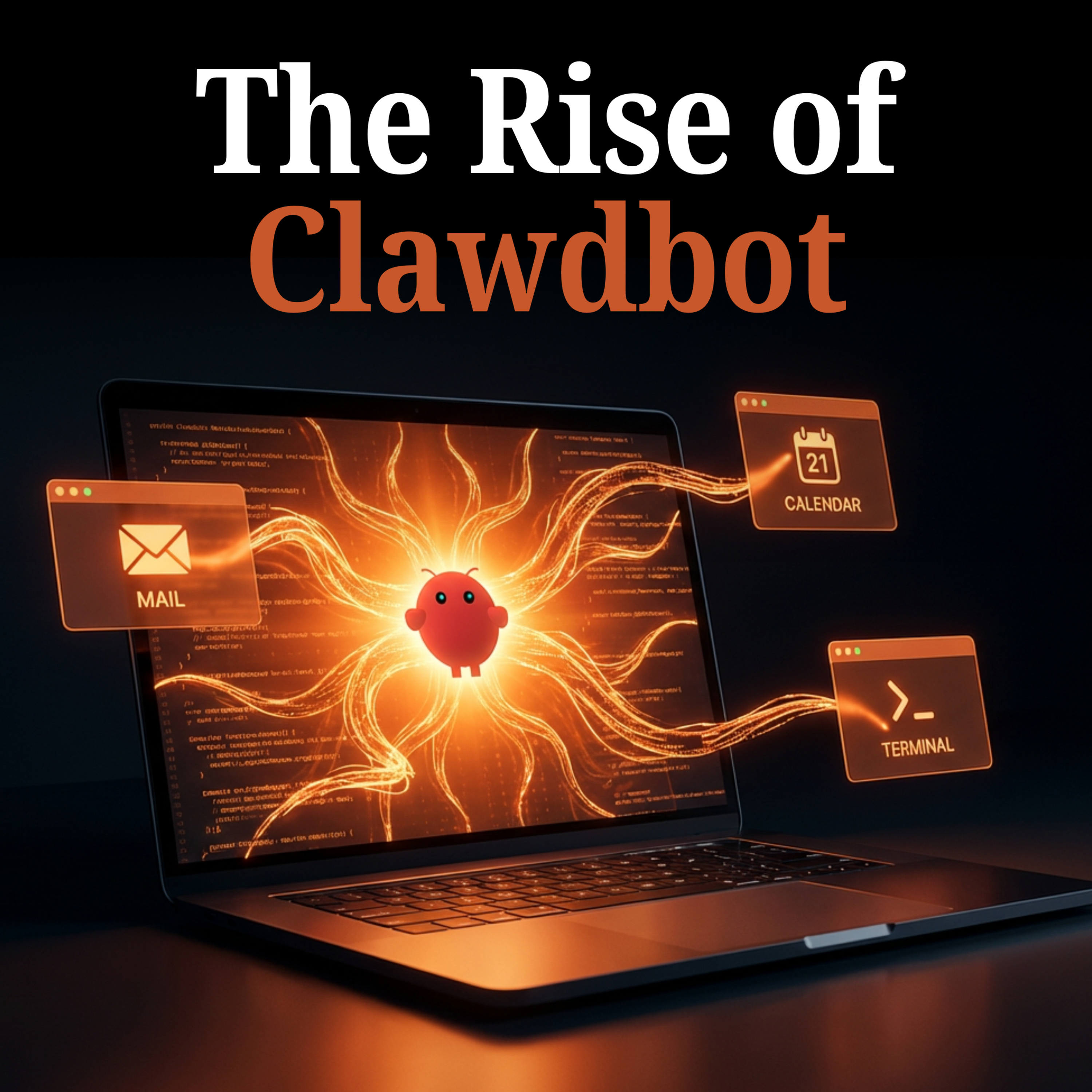
Unlike traditional, long-lasting infrastructure, AI skills have a short half-life due to rapid model updates and changing contexts. Treat them as iterative, ephemeral assets that must be re-evaluated on a monthly basis to remain effective.
The underlying infrastructure for AI agents ('harnesses') becomes obsolete roughly every six months due to rapid advances in AI models. At Notion, this means completely rewriting the harness multiple times a year, demanding a culture comfortable with constantly rebuilding core systems and discarding previous assumptions.
Anthropic's "Managed Agents" is built on the premise that any specific "harness" is temporary, as its assumptions become outdated with model improvements. They are creating a "meta-harness"—an underlying infrastructure designed to outlast any single implementation, making individual harnesses easily swappable and disposable.