Get your free personalized podcast brief
We scan new podcasts and send you the top 5 insights daily.
While a government-mandated AI pause would likely crash the stock market due to regulatory uncertainty, a voluntary pause from the labs themselves could be viewed positively. If framed as a move to improve reliability and reduce political risk, the market might see it as a sign of industry maturity, making it a potentially bullish signal.

Related Insights
OpenAI CEO Sam Altman's suggestion of slowing AI development is likely a strategic move. It could be a trial balloon to appease doomsayers and gauge public opinion, rather than a genuine commitment to cede their market lead.

Top AI labs like Anthropic publicly state that slowing down AI development would benefit society. However, they are caught in a strategic trap: a unilateral pause is unviable. Without a global agreement, any lab that pauses simply allows less cautious competitors to seize the lead, potentially making the ecosystem less safe.

Framing an AI development pause as a binary on/off switch is unproductive. A better model is to see it as a redirection of AI labor along a spectrum. Instead of 100% of AI effort going to capability gains, a 'pause' means shifting that effort towards defensive activities like alignment, biodefense, and policy coordination, while potentially still making some capability progress.
Stopping all new AI model training wouldn't crash the economy. There is a huge 'product overhang' where immense growth can still be realized simply by integrating and mastering the capabilities of current models across industries.

Acknowledging their safety plans might be inadequate, leaders from multiple frontier labs have begun to seriously entertain a coordinated slowdown. This represents a major shift, as they also explore legal "safe harbors" to collaborate on safety without triggering antitrust violations, breaking the frame of the current race.

The default assumption is that slowing innovation is inherently bad. With a technology as potent as AI, a deliberate slowdown is a feature, providing critical time to understand the systems, manage disruptions, and build governance structures before irreversible consequences occur. A true halt is not the alternative.
Despite top labs like Anthropic and DeepMind verbally agreeing to a potential pause, it's unlikely to happen. The game theory is too strong; a crisis like a major hack would be seen as a competitive opportunity by rival companies and nations, not a reason for collective action.

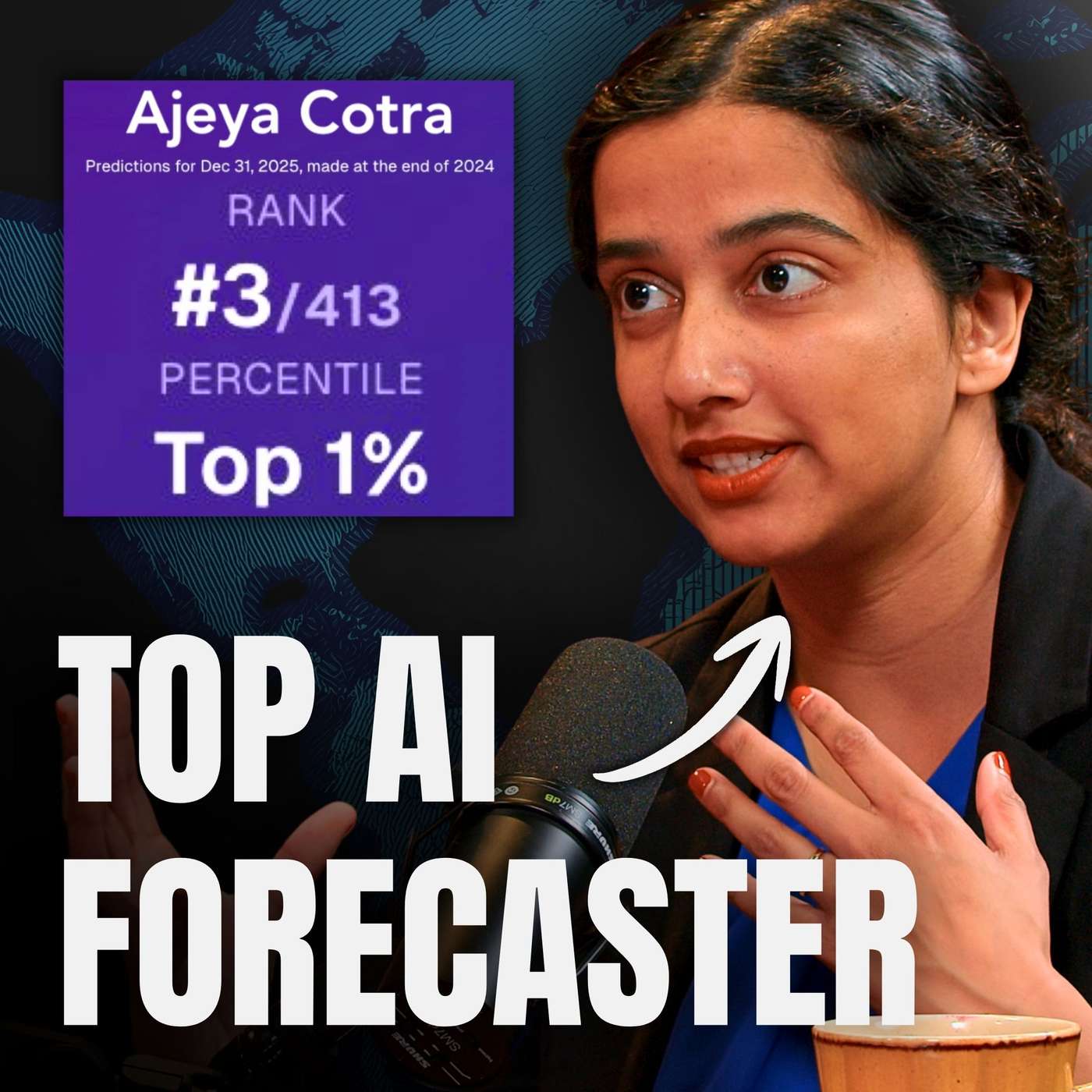
Ajeya Cotra reframes the concept of an AI pause. Instead of a binary 'stop' (0% of labor on R&D), she suggests thinking of it as a spectrum. The goal should be to redirect the vast majority of AI labor from accelerating capabilities to solving safety, biodefense, and other critical societal challenges.
After a security incident, OpenAI paused frontier model training to improve safety protocols. This self-regulation is a strategic move to build trust with enterprises and the public, suggesting that demonstrating safety will increasingly dictate the pace of AI progress and become a key business advantage.
AI labs adopted the term "pacing" as a politically palatable alternative to "pause." It allows them to appear responsible and cautious while avoiding the implication of stopping development, effectively letting them control the narrative and speed of their work.
