Get your free personalized podcast brief
We scan new podcasts and send you the top 5 insights daily.
The popular O(n^2) solution for the 'Threesome' problem can be beaten. The advanced technique involves sorting, grouping elements into small blocks, and using pre-processed data structures to accelerate the search, treating groups as single units.

Related Insights
The success of neural networks on problems like Go and protein folding, long considered intractable NP-hard problems, is profound. It suggests our formal understanding of computational hardness, which focuses on worst-case scenarios, may be an incomplete model for how to find useful, approximate solutions in practice.

The NP-complete Subset Sum problem (typically 2^n time) can be solved in sqrt(2^n) time. This is achieved by reducing it to the Two-Sum problem (solvable in n log n time), demonstrating a powerful technique in fine-grained complexity that connects seemingly disparate problem classes.
The NEX vs. EX problem is equivalent to solving highly compressed, structured SAT instances. Because real-world SAT instances are also highly structured (not random), the possibility that NEX=EX implies that structure might be the key to efficiently solving certain exponential-time problems.
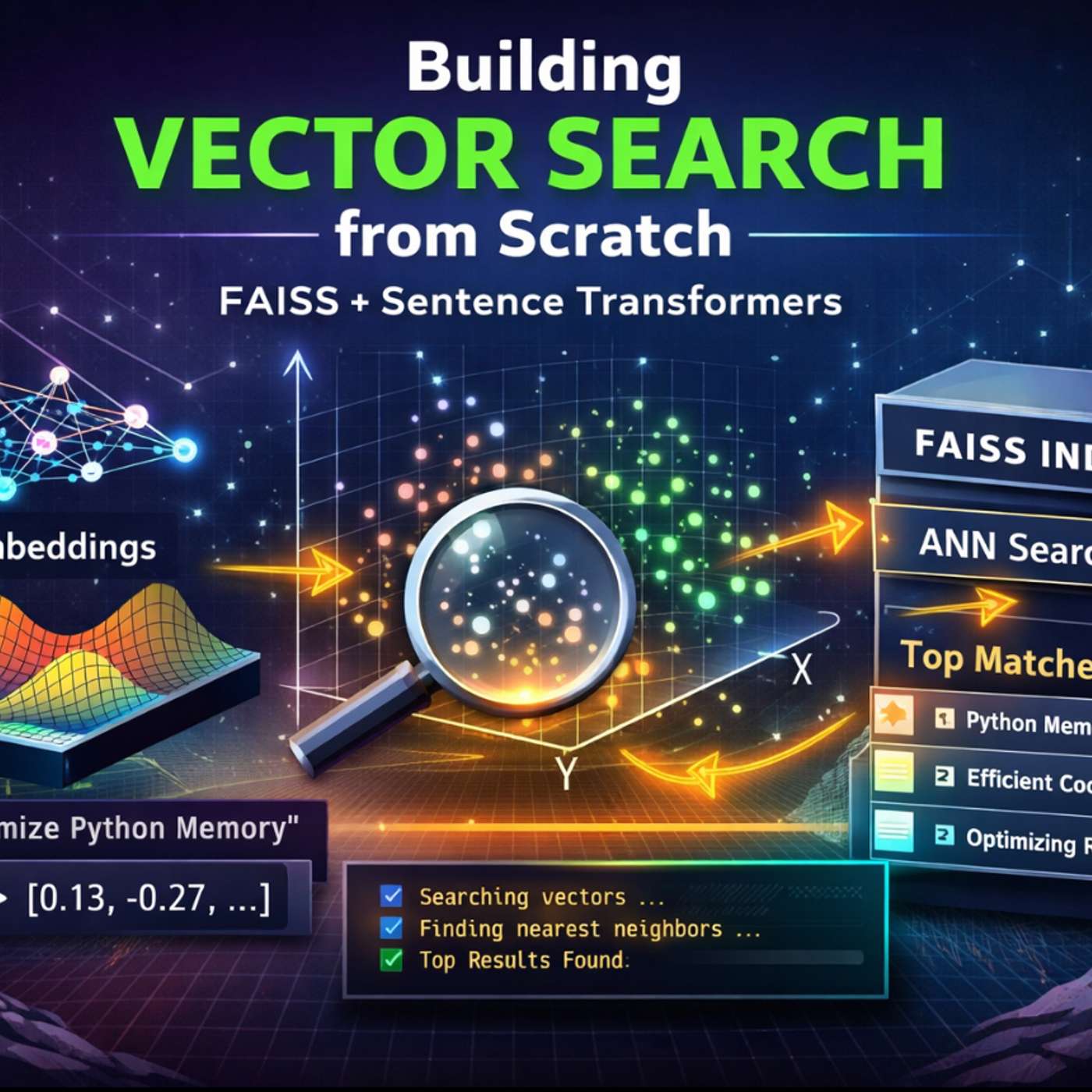
For millions of vectors, exact search (like a FAISS flat index) is too slow. Production systems use Approximate Nearest Neighbor (ANN) algorithms which trade a small amount of accuracy for orders-of-magnitude faster search performance, making large-scale applications feasible.
It's possible to solve problems like finding the majority element in a bit string using constant memory, regardless of the string's length. This is achieved by encoding computations as sequences of operations in a non-commutative group, defying the intuition that counting requires logarithmic space to store a counter.

Dr. Levin's lab found that basic, deterministic sorting algorithms perform additional, unprogrammed computations, or "side quests" like clustering, while executing their primary task. This concept of "polycomputing" suggests a single physical process can have multiple computational interpretations, challenging how we define and measure computation.

A core legacy of AlphaGo is turning complex search problems into 'games' for AI agents. AlphaTensor reframed the challenge of finding the fastest matrix multiplication algorithm as a game, allowing it to discover a more efficient method than any human had found in over 50 years, proving the approach's power for scientific discovery.

While problems like protein folding are NP-hard in theory, the instances found in nature have structural properties that allow for efficient solutions. Real-world cases of NP-hard problems aren't the adversarial, worst-case scenarios used in complexity proofs, explaining the gap between theory and practice.
A 1975 result showed time-T algorithms could run in T/log(T) space. Ryan Williams improved this to sqrt(T) by changing a core assumption. Instead of only writing to erased memory, his method uses XOR operations to destructively overwrite memory, enabling massive space savings by cleverly managing information.
Popular AI coding benchmarks can be deceptive because they prioritize task completion over efficiency. A model that uses significantly more tokens and time to reach a solution is fundamentally inferior to one that delivers an elegant result faster, even if both complete the task.