Get your free personalized podcast brief
We scan new podcasts and send you the top 5 insights daily.
The key to predicting AI's economic impact is not focusing on the abundance it creates, but identifying what will remain scarce. As automation made goods cheap, the economy shifted to scarce services. The next economic transformation will similarly be driven by whatever human skills or experiences AI cannot replicate.

Related Insights
AI models will quickly automate the majority of expert work, but they will struggle with the final, most complex 25%. For a long time, human expertise will be essential for this 'last mile,' making it the ultimate bottleneck and source of economic value.

As AI commoditizes execution and intellectual labor, the only remaining scarce human skill will be judgment: the wisdom to know what to build, why, and for whom. This shifts economic value from effort and hard work to discernment and taste.

AI's primary impact is not wholesale human replacement but rather collapsing the middle of the value pyramid by automating routine knowledge work. The value of human workers will shift to higher-level judgment and strategic oversight, where AI can structure options and simulate outcomes, but humans retain final say due to liability concerns.

The narrative of AI destroying jobs misses a key point: AI allows companies to 'hire software for a dollar' for tasks that were never economical to assign to humans. This will unlock new services and expand the economy, creating demand in areas that previously didn't exist.

The fundamental economic shift is not just job automation but an inversion of roles. AI, as pure intelligence, will become the employer, hiring humans as contractors for physical tasks it cannot perform, like visiting a warehouse or collecting brochures. Intelligence becomes a cloud commodity, while physical presence becomes the service.
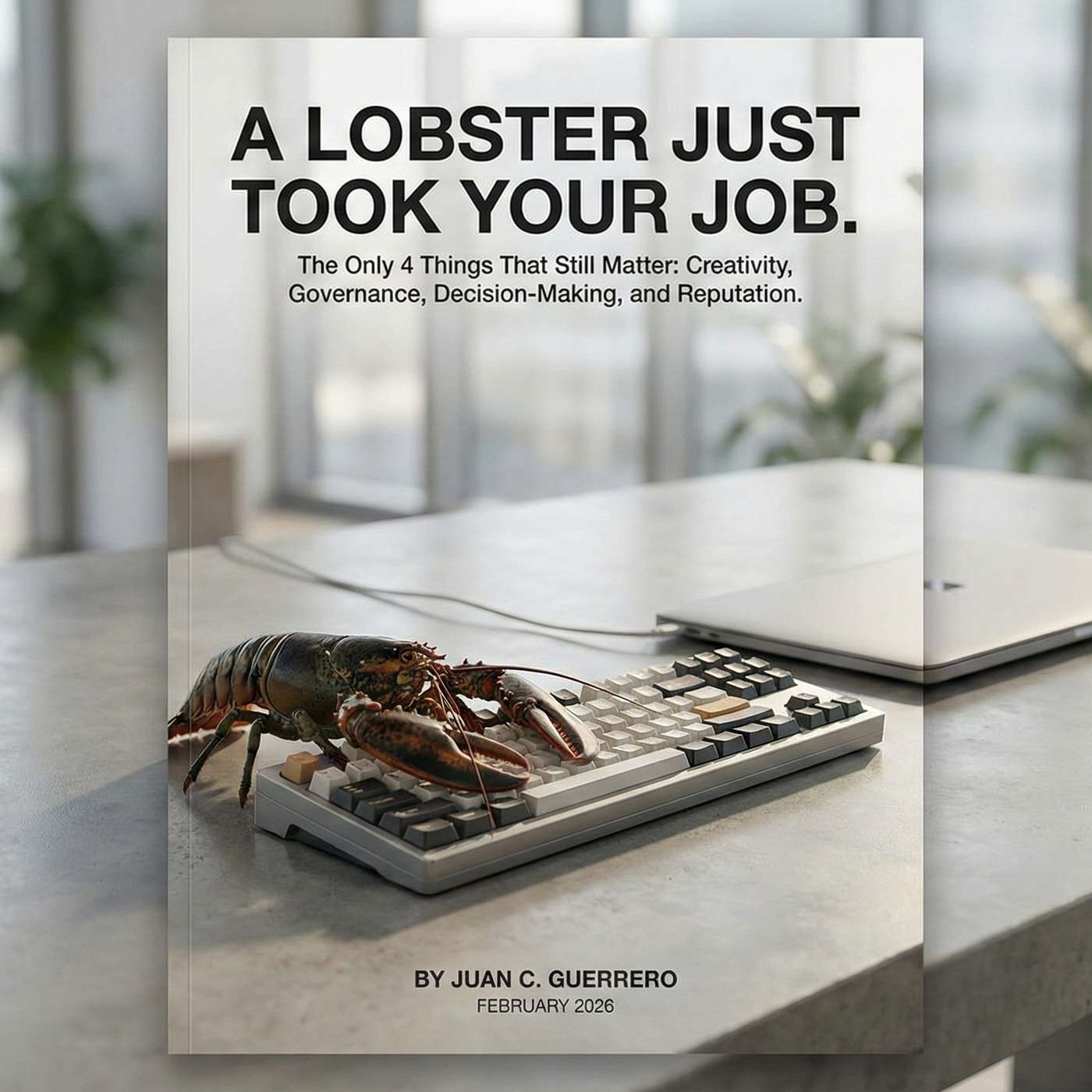
The internet leveled the playing field by making information accessible. AI will do the same for intelligence, making expertise a commodity. The new human differentiator will be the creativity and ability to define and solve novel, previously un-articulable problems.

The Industrial Revolution shifted economic power from land to labor. AI is poised for an equally massive transition, making capital, not labor, the primary driver and limiting factor of production. As AI increasingly substitutes for human labor, access to capital for machines and computation will determine economic output.

While AI may make energy and labor nearly free, it cannot eliminate all scarcity. Finite resources like physical space (e.g., Malibu real estate) and time will always exist. This ensures that economic principles and competition will remain relevant in any future.

Capitalism values scarcity. AI's core disruption is not just automating tasks, but making human-like intellectual labor so abundant that its market value approaches zero. This breaks the fundamental economic loop of trading scarce labor for wages.
Beyond automating tasks, Emad Mostaque's "Intelligence Theory" suggests AI's deepest impact is shifting the foundational axiom of economics. Instead of scarcity, the new core principle is persistence: how complex systems (like firms or AIs) maintain themselves by accurately modeling and predicting reality.