Get your free personalized podcast brief
We scan new podcasts and send you the top 5 insights daily.
Combining two payloads in an Antibody-Drug Conjugate (ADC) introduces a major risk: new, synergistic toxicities not seen with either agent alone. This complicates dose-finding and safety assessment, requiring developers to anticipate and monitor for entirely novel side effects.

Related Insights
Simple cell viability screens fail to identify powerful drug combinations where each component is ineffective on its own. AI can predict these synergies, but only if trained on mechanistic data that reveals how cells rewire their internal pathways in response to a drug.

Trastuzumab deruxtecan (TDXD) and datopotamab deruxtecan (Dato-DXd) share the same cytotoxic payload, yet Dato-DXd has a much lower rate of interstitial lung disease (ILD). This indicates the toxicity is driven by the antibody-antigen interaction, not the payload itself.
Different TROP2-targeted ADCs using the same class of payload (topo-1 inhibitor) display distinct primary toxicities, such as diarrhea versus stomatitis. This highlights that subtle differences in drug-to-antibody ratio and linker technology create unique pharmacological profiles, making the drugs clinically distinct despite their apparent similarities.

A key innovation in Antibody-Drug Conjugates (ADCs) is the 'tandem cleave' linker. This technology requires two separate events—one in the tumor microenvironment and another after internalization—to release the payload, improving stability and reducing systemic toxicity.
An ADC may show better response rates than chemotherapy, but its true benefit is compromised if toxicities lead to treatment discontinuation. As seen with failed PARP/IO combinations, if patients cannot tolerate a drug long enough, the regimen's overall effectiveness can become inferior to standard therapy.
Despite the individual high efficacy of both BCMA-directed therapies and anti-CD38 antibodies, there is significant clinical concern about combining them. The potential for compounded immunosuppression and severe infection risk is a major barrier shaping clinical trial design and favoring sequential use over concurrent combination.
The primary reason Antibody-Drug Conjugates (ADCs) stop working is payload resistance, a shift from the traditional belief that failure stems from tumors losing the target antigen. This insight drives development of multi-payload ADCs to overcome this resistance mechanism.
As multiple effective Antibody-Drug Conjugates (ADCs) become available, the primary clinical challenge is no longer *if* they work, but *how* to use them best. Key unanswered questions involve optimal sequencing, dosing for treatment versus maintenance, and overall length of therapy, mirroring issues already seen in breast cancer.
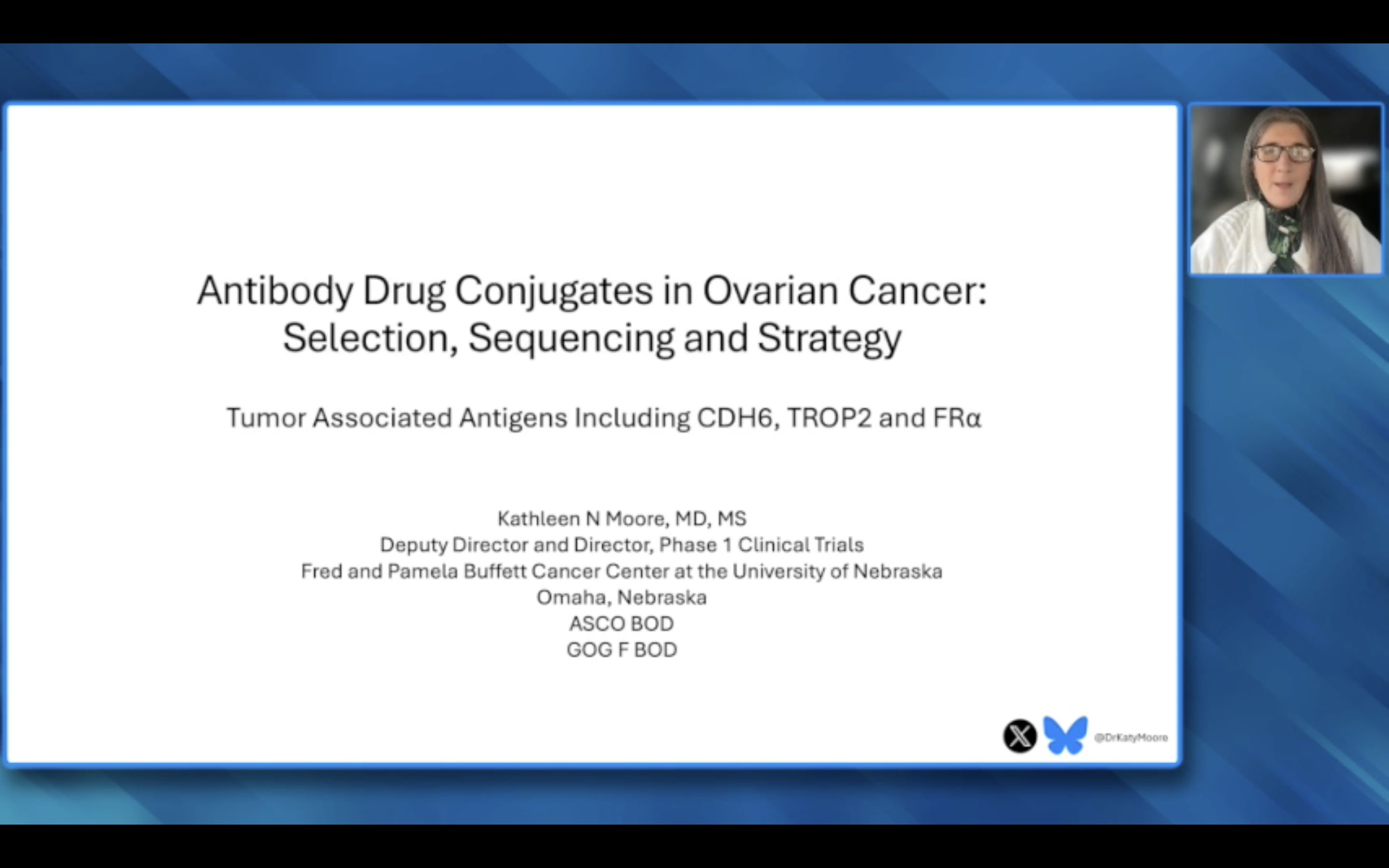
The differing efficacy and toxicity profiles of TROP2 ADCs like sacituzumab govitecan and Dato-DXD suggest that the drug's linker and payload metabolism are crucial determinants of clinical outcome. This indicates that focusing solely on the target antigen is an oversimplification of ADC design and performance.

Despite being advanced targeted therapies, TROP2-directed ADCs present complex safety profiles. Oncologists must manage classic chemotherapy side effects like nausea and cytopenias alongside unique, serious toxicities including stomatitis, ocular issues, and potentially fatal interstitial lung disease, requiring specialized patient monitoring and counseling.