Get your free personalized podcast brief
We scan new podcasts and send you the top 5 insights daily.
Gina Smilich says Edgeworth was extremely famous in her day, with Lord Byron jealous of her and royals reading her, but she was forgotten. A big reason is that her novels carried heavy teaching material just as literary taste shifted toward more naturalistic storytelling and away from direct instruction.

Related Insights
Joe Weisenthal compares Edgeworth to later Koch-funded economics fiction, but Gina Smilich says that comparison misses her context. Writing just after Adam Smith and the French Revolution, Edgeworth was translating a new way of thinking for ordinary readers and citizens, not selling a fixed ideology.
Famous opening lines like 'It is a truth universally acknowledged...' are not the author's voice but an ironic representation of a small community's foolish consensus. These authoritative statements are almost always questionable or wrong, a device Austen uses to critique social gossip and groupthink.
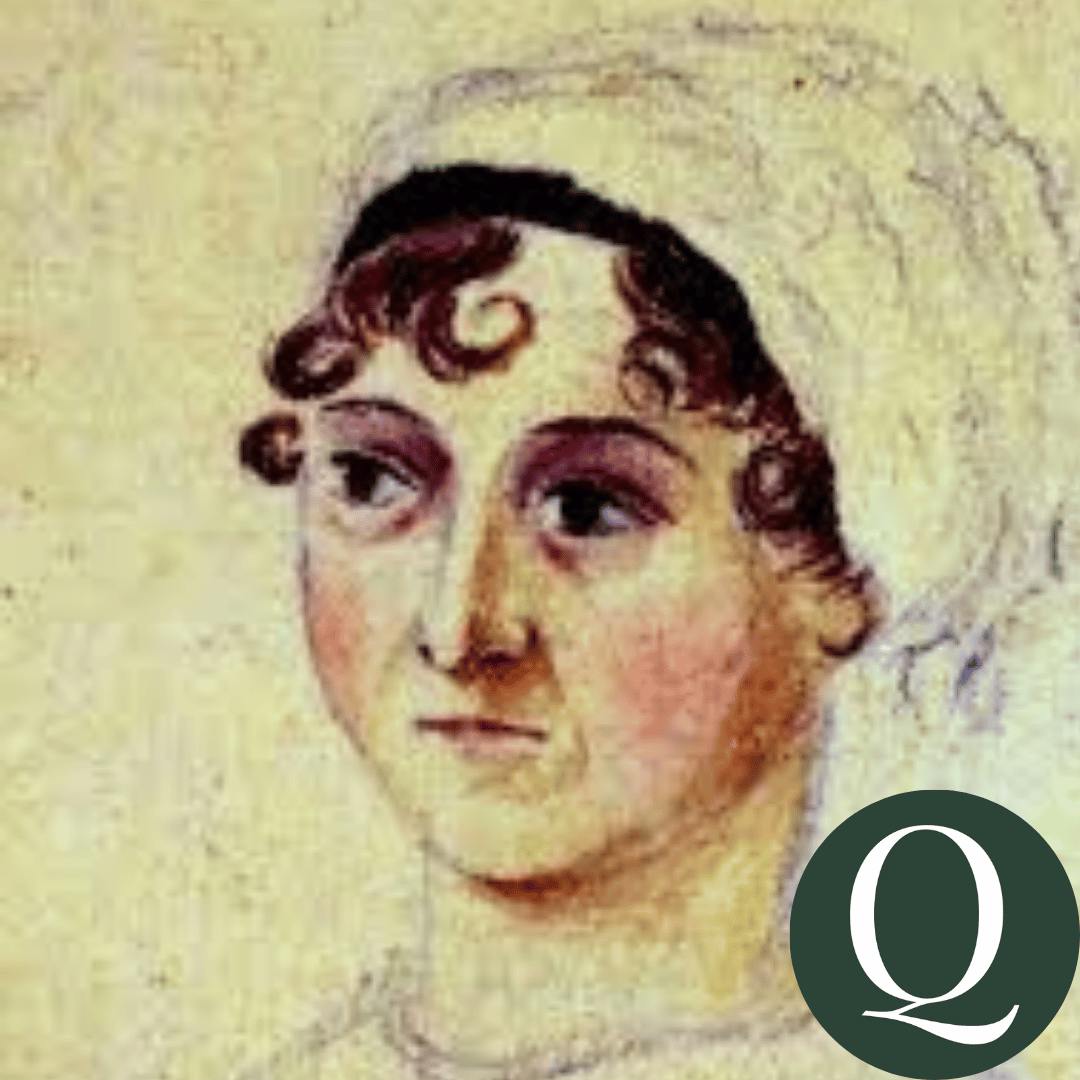
18th-century novels created a new literary form that explored the passions and ordinary lives of individuals. This cultural shift elevated the private sphere, previously considered unimportant, into a subject of value, fascination, and social anxiety.

Gina Smilich says Edgeworth reviewed a French translation of Bentham and translated it back into English, simplifying it for ordinary readers. Some academic research suggests the utilitarian ideas her nephew F.Y. Edgeworth later developed probably originated with her, though the evidence is not completely definitive.
Gina Smilich says for her more heavily economic work, Edgeworth often published anonymously or used a male colleague or relative's name. An Oxford education essay was written in her hand but intended for publication under her father's name, and notes suggest the ideas were largely hers.
Despite her reputation for conservative subject matter, Austen's technical audacity was unprecedented. She introduced narrative techniques like free indirect style to English fiction, making her a true experimental writer of her time, developing these innovations in isolation without a literary community for feedback.
Gina Smilich says Edgeworth wrote for different audiences. Her children's story The Cherry Orchard is a simple lesson on division of labor for the nursery, while her adult novel Ennui includes a very sophisticated chapter and a half dedicated to economics for elite adult readers.
Austen's work possesses a unique duality: it is accessible enough for a 13-year-old to enjoy, yet so layered with technical and psychological complexity that scholars can reread it for a lifetime and continually discover new nuances. This blend of superficial simplicity and deep sophistication is her singular achievement.
Jane Austen's work is deeply influenced by Adam Smith's *Theory of Moral Sentiments*. Her narrative techniques, particularly the management of character perspective, are designed to guide the reader in developing an "impartial spectator"—an internal moral compass—which is a central Smithian concept.

The legacy of a novel like "Pride and Prejudice" isn't solely defined by its intellectual or social influence. The immense and lasting joy it brings to readers across generations is a profound, often underrated, form of changing the world.