Get your free personalized podcast brief
We scan new podcasts and send you the top 5 insights daily.
The term 'Artificial Intelligence' primes us to think of a fake or knockoff version of our own intelligence. Reframing these systems as 'alien minds' or 'alien cognitive systems' better communicates their novelty, our lack of understanding, and the profound nature of creating a new class of mind on Earth.

Related Insights
In the race for AGI, framing the primary conflict as US vs. China is a mistake. The true "aliens" are the AIs, which are fundamentally different from any human culture. We have far more in common with our fellow humans, even rivals, and should prioritize cooperation with them over racing to build uncontrollable systems.

Current helpful, harmless chatbots provide a misleadingly narrow view of AI's nature. A better mental model is the 'Shoggoth' meme: a powerful, alien, pre-trained intelligence with a thin veneer of user-friendliness. This better captures the vast, unpredictable, and potentially strange space of possible AI minds.

The existential threat from AI isn't about controlling the technology, but about humanity controlling itself. The challenge is a 'God test' requiring a moral upgrade—overcoming our innate, self-serving cognitive biases to achieve the global cooperation needed to manage AI safely.

Large language models are like "alien technology"; their creators understand the inputs and outputs but not the "why" of their learning process. This reality requires leaders to be vigilant about managing AI's limitations and unpredictability, such as hallucinations.
The question of whether machines can "think" is framed incorrectly. Like a submarine which does more than just "swim" by moving in 3D, AI's cognitive abilities might not just replicate human thought but vastly exceed it, representing a more complex form of intelligence.

AI models are brilliant but lack real-world experience, much like new graduates. This framing helps manage expectations by accounting for phenomena like hallucinations, which are akin to a smart but naive person confidently making things up without experiential wisdom.

The common metaphor of AI as an artificial being is wrong. It's better understood as a 'cultural technology,' like print or libraries. Its function is to aggregate, summarize, and transmit existing human knowledge at scale, not to create new, independent understanding of the world.

Human intelligence is fundamentally shaped by tight constraints: limited lifespan, brain size, and slow communication. AI systems are free from these limits—they can train on millennia of data and scale compute as needed. This core difference ensures AI will evolve into a form of intelligence that is powerful but alien to our own.
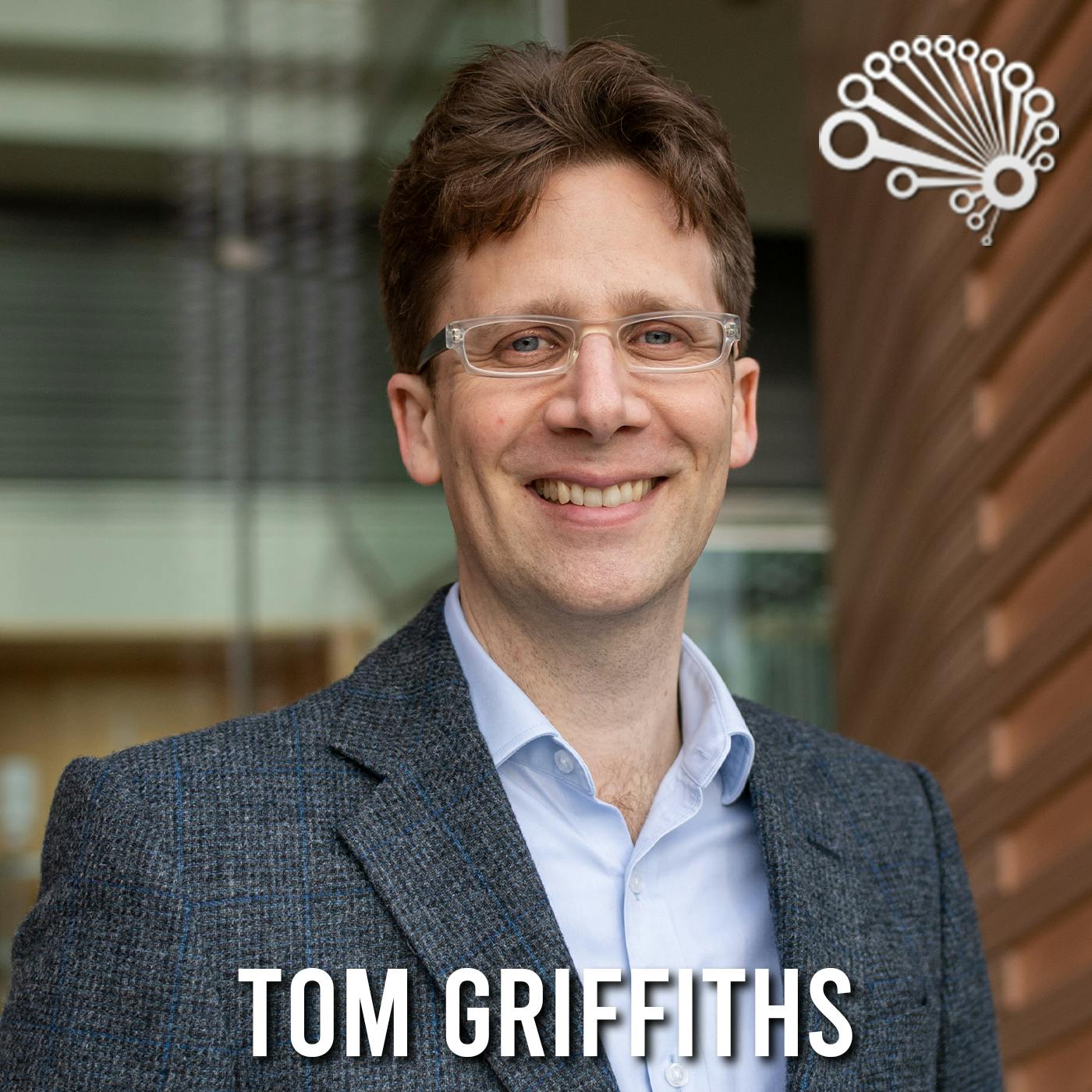
Human intelligence is shaped by limitations like a finite lifespan and small brain, forcing efficient learning from sparse data. AI lacks these constraints, learning from lifetimes of data with massive compute. This fundamental difference means AI will naturally evolve into a distinct, non-human form of intelligence unless we explicitly engineer human-like biases into it.

The term "Artificial Intelligence" implies a replacement for human intellect. Author Alistair Frost suggests using "Augmented Intelligence" instead. This reframes AI as a tool that enhances, rather than replaces, human capabilities. This perspective reduces fear and encourages practical, collaborative use.
