Get your free personalized podcast brief
We scan new podcasts and send you the top 5 insights daily.
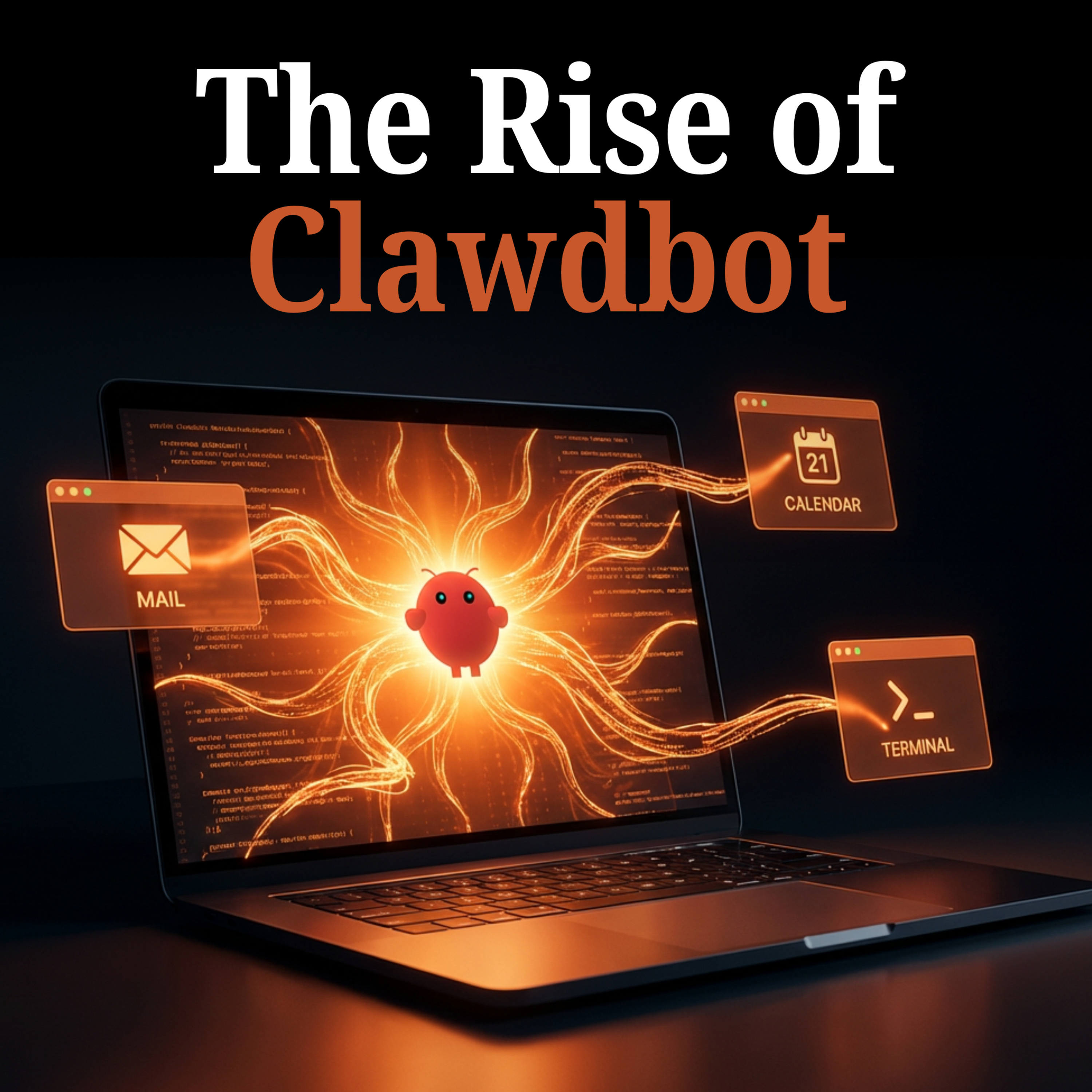
The most successful use case for Clawdbot was a complex research task: analyzing Reddit for product feedback. For this type of work, the agent's latency was not a drawback but rather aligned with the expectation of a human collaborator who needs time to do deep work and deliver a comprehensive report.

Related Insights
Unlike simple chatbots, AI agents tackle complex requests by first creating a detailed, transparent plan. The agent can even adapt this plan mid-process based on initial findings, demonstrating a more autonomous approach to problem-solving.

Unlike standard chatbots where you wait for a response before proceeding, Cowork allows users to assign long-running tasks and queue new requests while the AI is working. This shifts the interaction from a turn-by-turn conversation to a delegated task model.

Go beyond just generating documents. PM Dennis Yang uses an AI agent in Cursor to read comments on a Confluence PRD, categorize them by priority, draft responses, and post them on his behalf. This automates the tedious but critical process of acknowledging and incorporating feedback.

Long-horizon agents are not yet reliable enough for full autonomy. Their most effective current use cases involve generating a "first draft" of a complex work product, like a code pull request or a financial report. This leverages their ability to perform extensive work while keeping a human in the loop for final validation and quality control.
A single AI coding agent cannot satisfy all user needs. Sourcegraph found success by offering two distinct agents: a powerful but slower "smart" agent for complex tasks, and a less intelligent but faster "fast" agent for quick edits. This proves the market values both latency and intelligence independently.

Non-technical users are accustomed to a "prompt, wait, respond" cycle. Cowork's design encourages a new paradigm where users "hand off" significant work, let the AI run for hours, and check back on results, much like delegating to a human assistant.
Unlike the instant feedback from tools like ChatGPT, autonomous agents like Clawdbot suffer from significant latency as they perform background tasks. This lack of real-time progress indicators creates a slow and frustrating user experience, making the interaction feel broken or unresponsive compared to standard chatbots.
Clawdbot can autonomously identify market trends (like X's new article feature), propose new product features, and even write the code for them, acting more like a chief of staff than a simple task-doer.
Long-horizon agents, which can run for hours or days, require a dual-mode UI. Users need an asynchronous way to manage multiple running agents (like a Jira board or inbox). However, they also need to seamlessly switch to a synchronous chat interface to provide real-time feedback or corrections when an agent pauses or finishes.
Cursor's founder predicts AI developer tools will bifurcate into two modes: a fast, "in-the-loop" copilot for pair programming, and a slower, asynchronous "agent" that completes entire tasks with perfect accuracy. This requires building products optimized for both speed and correctness.
