Get your free personalized podcast brief
We scan new podcasts and send you the top 5 insights daily.
Top AI labs like OpenAI and Anthropic build internal data platforms with conventional tools like Fivetran and Snowflake. This indicates a modern data stack is perfectly sufficient for providing AI context, and companies don't need to build bespoke, exotic infrastructure.

Related Insights
While a unified data platform is non-negotiable for AI, leaders should resist standardizing AI tools and frameworks too early. Given the rapid pace of innovation, it's better to allow for experimentation and "let the flowers bloom." This dual approach—a stable data foundation with flexible tooling—enables both governance and agility.

AI agents make it dramatically easier to extract and migrate data from platforms, reducing vendor lock-in. In response, platforms like Snowflake are embracing open file formats (e.g., Iceberg), shifting the competitive basis from data gravity to superior performance, cost, and features.

A key differentiator is that Katera's AI agents operate directly on a company's existing data infrastructure (Snowflake, Redshift). Enterprises prefer this model because it avoids the security risks and complexities of sending sensitive data to a third-party platform for processing.

Simply adding an AI layer on top of a traditional SaaS stack will fail. A true AI-native architecture requires an "AI data layer" sitting next to the "AI application layer," both controlled by ML engineers who need to constantly tune data ingestion and processing without dependencies on the core tech team.
Snowflake is avoiding direct competition in building foundational models. Instead, its strategy is to be the essential 'control plane' for enterprise AI, offering customers a choice of leading models (OpenAI, Anthropic) built upon its core, defensible moat: the secure and governed data layer where enterprise information already resides.

Many enterprises delay AI adoption by blaming messy data. Snowflake's VP of AI argues that a solid data strategy—breaking silos, centralizing, and governing data—is the non-negotiable prerequisite for any successful AI initiative. AI models must be brought to the data, not the other way around.

Legacy companies are siloed, creating IT "spaghetti" that blocks AI progress. In contrast, AI-native organizations structure themselves around a central "AI factory" or unified data platform. Business units function like apps on an iPhone, accessing shared, controlled data to rapidly innovate and deploy new services.
The data that most of Anthropic's customers also use OpenAI refutes the idea of a zero-sum market. It reveals a sophisticated enterprise strategy: companies are not choosing one provider, but are building a 'best-of-breed' AI stack, leveraging different models for different tasks. The battle is for workload share, not winner-take-all.

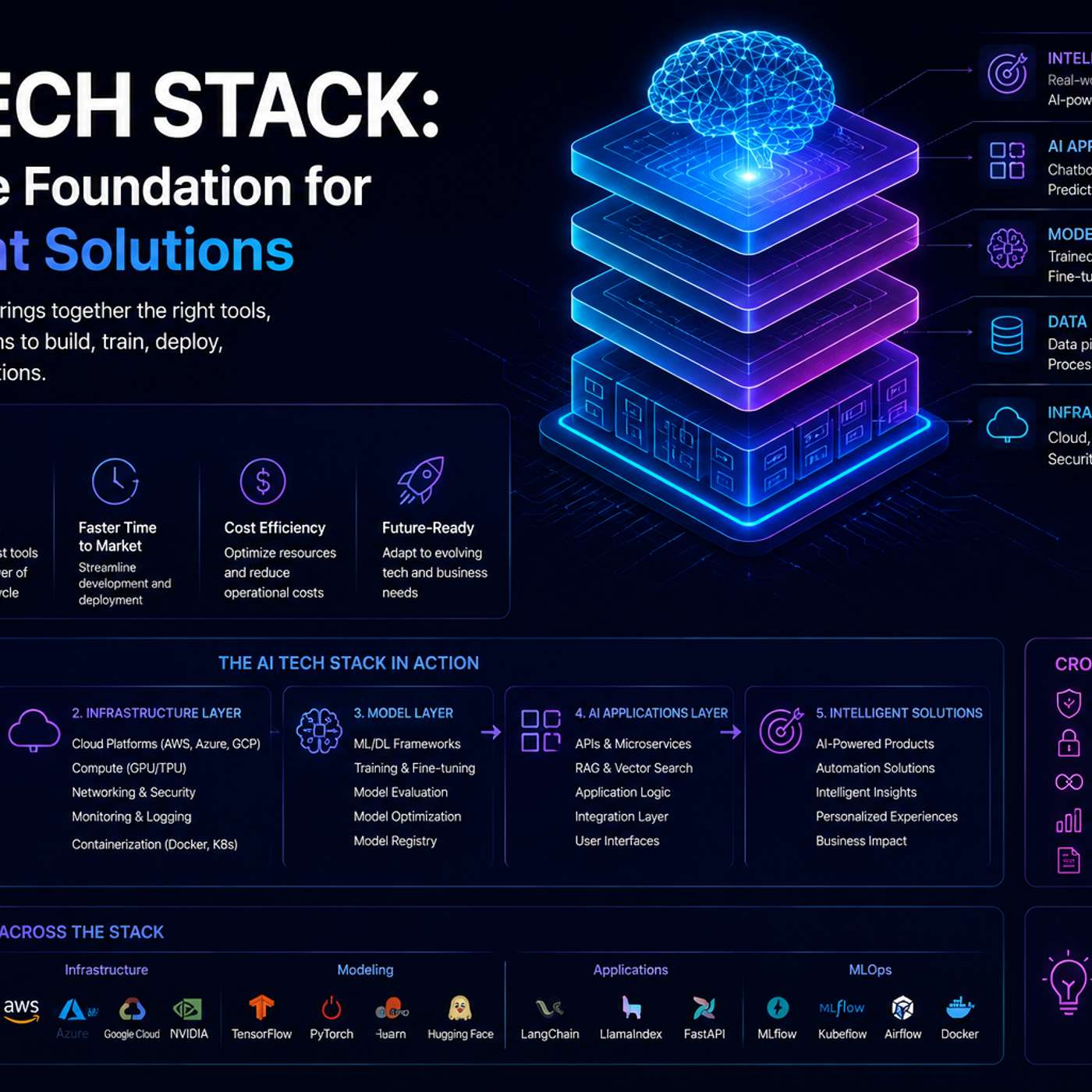
The modern AI stack has shifted from manually managed, monolithic systems to modular, cloud-native architectures. This change prioritizes scalability, reproducibility, and collaboration, reflecting AI's move from a research discipline to a core engineering function that supports scalable production systems.
Snowflake Intelligence is intentionally an "opinionated agentic platform." Unlike generic AI tools from cloud providers that aim to do everything, Snowflake focuses narrowly on helping users get value from their data. This avoids the paralysis of infinite choice and delivers more practical, immediate utility.
