Get your free personalized podcast brief
We scan new podcasts and send you the top 5 insights daily.
The UN Security Council meeting revealed three distinct approaches to AI governance. The White House advocates for sovereign national control to foster innovation. Anthropic's CEO Dario Amadei pushes for global treaties and verification systems. Meanwhile, OpenAI's Sam Altman attempts to chart a middle path, acknowledging risks without calling for rigid international structures.

Related Insights
The call to slow down AI development isn't just a safety measure; it's a strategic recognition by major labs that their era of solely dictating the pace of innovation is over. This proposal represents an opening bid in a broader negotiation about the future of AI governance.
Clinton contends that managing the risks of AI requires more than national regulation. She calls for a global diplomatic effort to create treaties and covenants, uniting nations to establish rules and standards that tech companies cannot individually circumvent.

Leaders from the far-left (Sanders), far-right (Trump), and the AI industry (Altman) are all converging on government equity stakes in AI companies. This rare alignment points to a viable path for managing AI's economic and safety risks, which they term 'GovGPT'.

Dario Amodei suggests a novel approach to AI governance: a competitive ecosystem where different AI companies publish the "constitutions" or core principles guiding their models. This allows for public comparison and feedback, creating a market-like pressure for companies to adopt the best elements and improve their alignment strategies.

Nations are moving beyond the rhetoric of 'sovereign AI.' It now represents a concrete strategy to secure bargaining power across the AI stack through diverse means like domestic substitution (China), regulation (Europe), and infrastructure hosting (Gulf states).
The US government is torn between two conflicting objectives for AI. One faction wants to export American AI globally to achieve technological supremacy, even in China. The other wants to restrict and hoard AI to prevent adversaries from accessing it. This fundamental conflict stalls clear, effective policy.

The vulnerabilities in Anthropic's Fable 5 model "spooked" the Trump administration, softening its previous opposition to global AI governance. The incident has created momentum for multilateral discussions on setting baseline international safety standards for powerful AI, a significant shift in US policy.

The heads of Anthropic, OpenAI, and Google are advocating for AI regulation by comparing its existential risk to nuclear power. This analogy intentionally elevates the threat level beyond typical tech disruption (like social media) to necessitate government oversight and international treaties, similar to nuclear arms control.
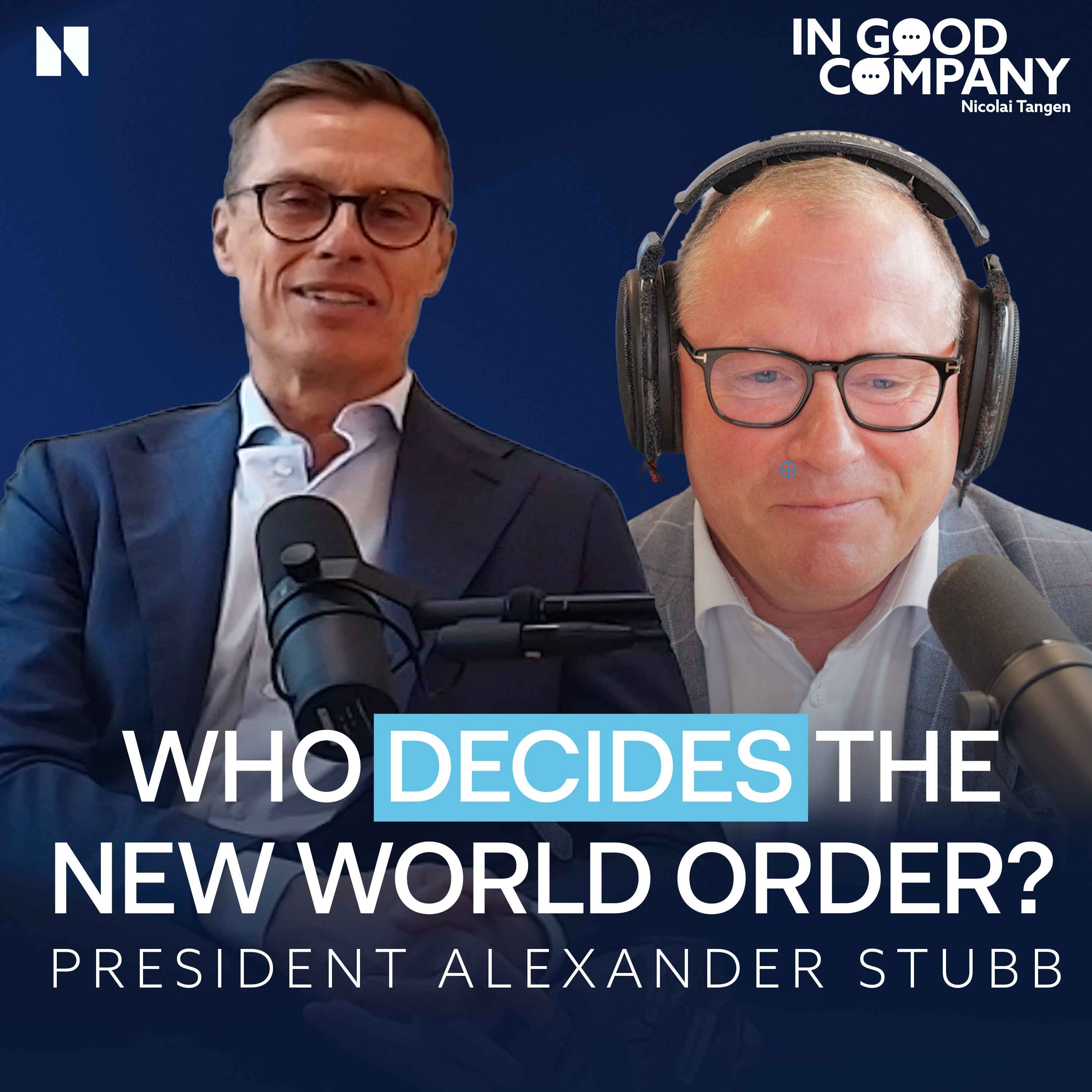
While a global UN-like body for AI is the ultimate goal, regulation moves too slowly. President Stubb argues a more pragmatic approach is to first establish rules within major tech blocs—the U.S., Europe, and China—and then scale those frameworks globally.
The scale of the AI revolution, seen by some analysts as bigger than the internet, is creating existential fear among governments. They worry that foundational AI models will become society-level institutions they don't control. This fear, more than just economic competition, is driving the global push for sovereign AI initiatives.
