Get your free personalized podcast brief
We scan new podcasts and send you the top 5 insights daily.
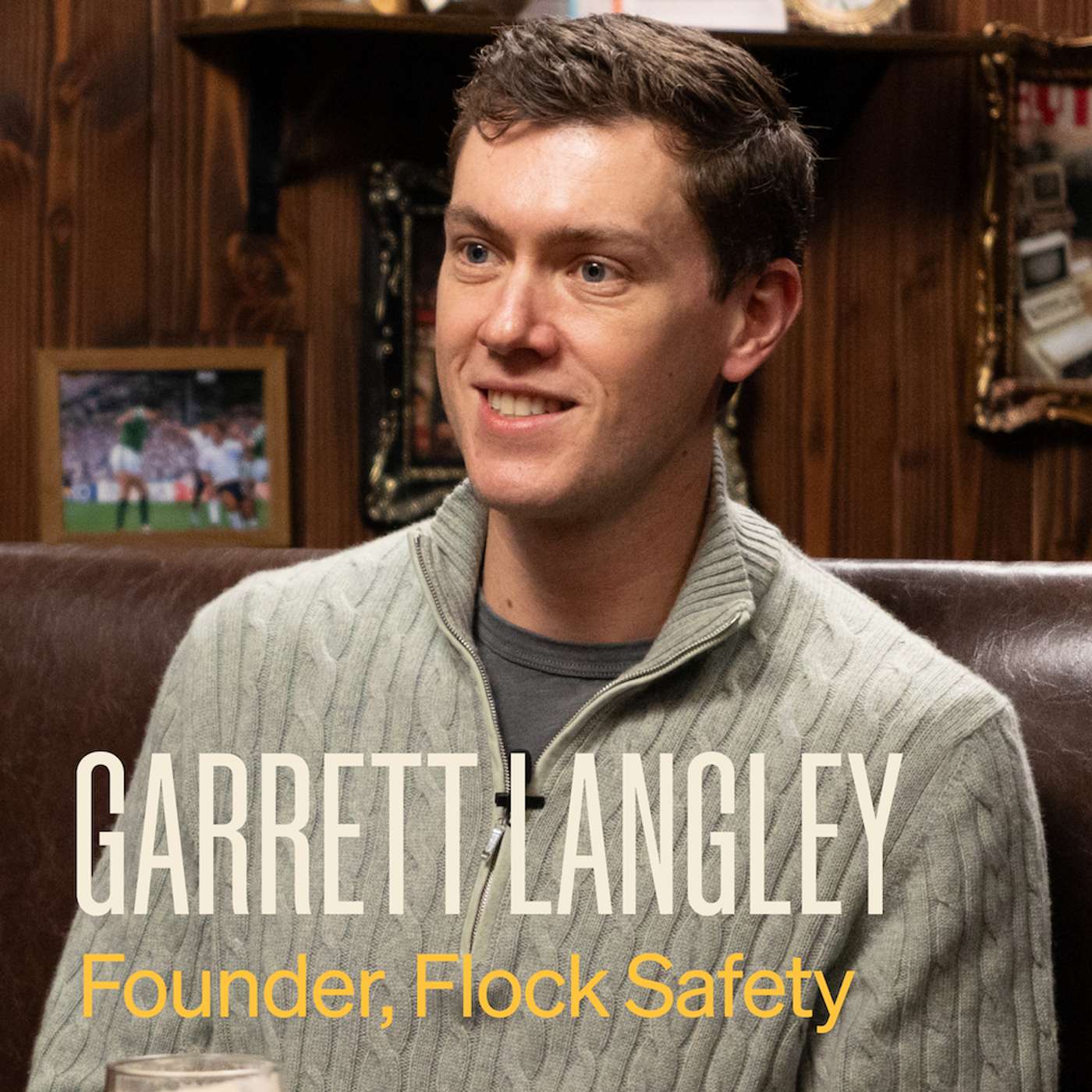
Flock Safety's corporate business has seen a distinct shift. Initially, clients wanted to stop theft. Now, the primary concern is employee safety, driven by fears of workplace violence from terminated employees. Their system automates alerts when a former employee's car appears on campus.
Related Insights
Security tech company Flock Safety found its ultimate proof of product-market fit when a criminal on a podcast complained that 'those effing flockers' made crime too difficult. This demonstrates success in their core mission: making crime economically non-viable.

Organizations often place excessive faith in firewalls and perimeter security, assuming their internal environment is safe. This overlooks the fact that once a breach occurs, sensitive data is exposed. The critical question isn't just preventing entry, but protecting data once an attacker is already inside the "secure" environment.

Flock Safety found a critical gap in law enforcement tech: the national database for stolen cars (NCIC) can take 24 hours to update via FTP uploads. Providing a real-time, local hotlist gives police a massive advantage in the crucial first hours after a crime.
Cloudflare expanded from protecting websites (a reverse proxy) to protecting corporate employees (a forward proxy). They realized the same global network used to inspect incoming traffic could inspect outgoing traffic, allowing them to enter the massive Zero Trust security market with existing hardware.
![Cloudflare: Leading Cybersecurity - [Business Breakdowns, EP.241] thumbnail](https://megaphone.imgix.net/podcasts/cd4e36dc-0515-11f1-83d0-db915309e405/image/63f96f239cd7d53c5b87978bfd6c7f0e.jpg?ixlib=rails-4.3.1&max-w=3000&max-h=3000&fit=crop&auto=format,compress)
SiteAdvisor's core insight was that security products focused on technical vulnerabilities, while new threats like phishing exploited human psychology. This mismatch created a market opportunity for a new protection category based on identifying social engineering attacks.

Unlike previous tech waves, agent adoption is a board-level imperative driven by clear operational efficiency gains. This top-down pressure forces security teams to become enablers rather than blockers, accelerating enterprise adoption beyond the consumer market, where the value proposition is less direct.
Instead of a human operator manually typing notes, Flock's system listens to 911 calls, uses AI to identify key details (like a suspect's shoes), and immediately queries connected camera systems for matches. This transforms an investigation, enabling arrests in minutes instead of weeks.
Security's focus shifted from physical (bodyguards) to digital (cybersecurity) with the internet. As AI agents become primary economic actors, security must undergo a similar fundamental reinvention. The core business value may be the same (like Blockbuster vs. Netflix), but the security architecture must be rebuilt from first principles.

The old security adage was to be better than your neighbor. AI attackers, however, will be numerous and automated, meaning companies can't just be slightly more secure than peers; they need robust defenses against a swarm of simultaneous threats.

The decision to invest in formal security measures like anti-phishing training should be based on team size and industry risk, not revenue milestones. The attack surface grows with each new employee, making a headcount of 15-20 a practical trigger point to implement such policies.
