Get your free personalized podcast brief
We scan new podcasts and send you the top 5 insights daily.
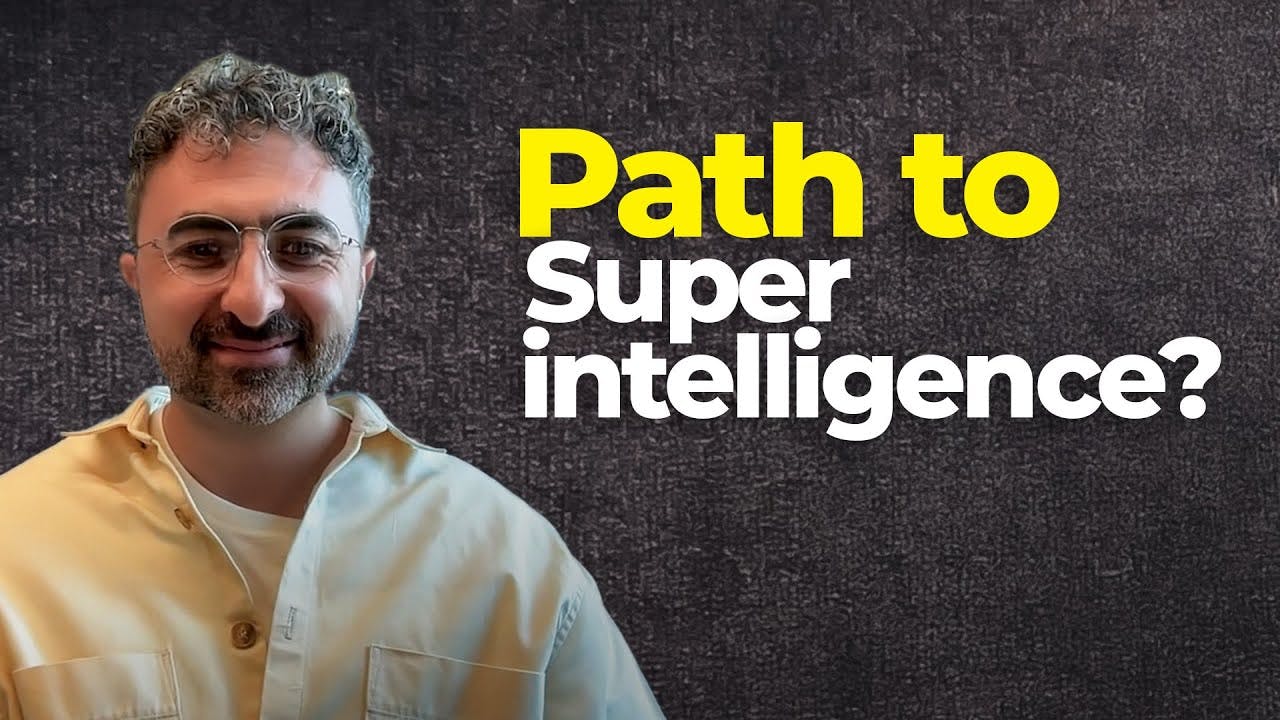
Despite concerns about the limits of Large Language Models, Microsoft AI's CEO is confident the current transformer architecture is sufficient for achieving superintelligence. Future leaps will come from new methods built on top of LLMs—like advanced reasoning, memory, and recurrency—rather than a fundamental architectural shift.
Related Insights
While more data and compute yield linear improvements, true step-function advances in AI come from unpredictable algorithmic breakthroughs like Transformers. These creative ideas are the most difficult to innovate on and represent the highest-leverage, yet riskiest, area for investment and research focus.

OpenAI co-founder Ilya Sutskever suggests the path to AGI is not creating a pre-trained, all-knowing model, but an AI that can learn any task as effectively as a human. This reframes the challenge from knowledge transfer to creating a universal learning algorithm, impacting how such systems would be deployed.
The current limitation of LLMs is their stateless nature; they reset with each new chat. The next major advancement will be models that can learn from interactions and accumulate skills over time, evolving from a static tool into a continuously improving digital colleague.
An LLM shouldn't do math internally any more than a human would. The most intelligent AI systems will be those that know when to call specialized, reliable tools—like a Python interpreter or a search API—instead of attempting to internalize every capability from first principles.

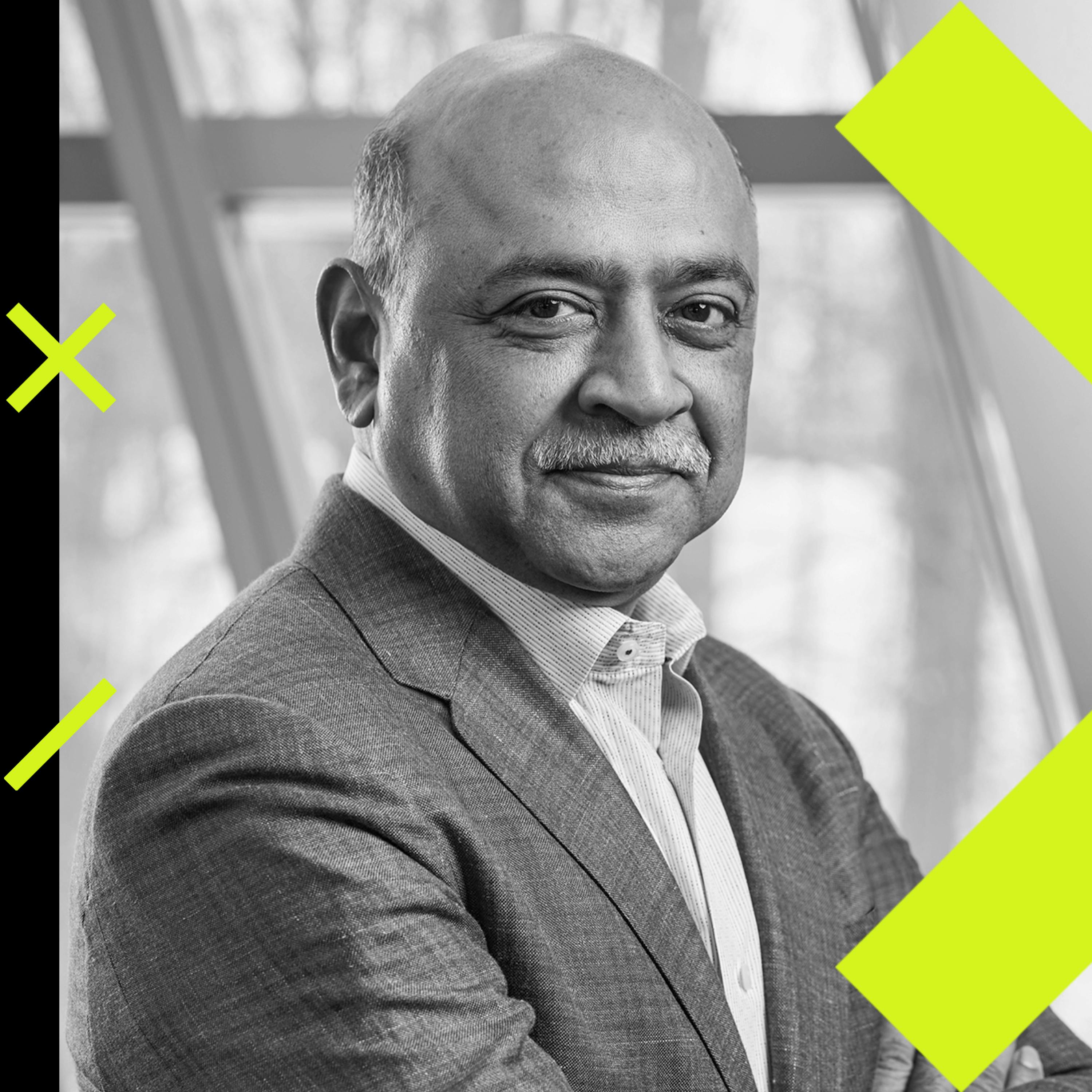
Arvind Krishna firmly believes that today's LLM technology path is insufficient for reaching Artificial General Intelligence (AGI). He gives it extremely low odds, stating that a breakthrough will require fusing current models with structured, hard knowledge, a field known as neurosymbolic AI, before AGI becomes plausible.
Microsoft CEO Satya Nadella views AI's trajectory in two distinct paths. The first is "cognitive enhancement" tools that assist users, like Copilot. The second, more ambitious path is a "guardian angel," an AGI-like system that oversees and manages tasks. This framework signals a deeper belief in AGI's potential than is commonly associated with him.

Microsoft's AI chief, Mustafa Suleiman, announced a focus on "Humanist Super Intelligence," stating AI should always remain in human control. This directly contrasts with Elon Musk's recent assertion that AI will inevitably be in charge, creating a clear philosophical divide among leading AI labs.
Contrary to the prevailing 'scaling laws' narrative, leaders at Z.AI believe that simply adding more data and compute to current Transformer architectures yields diminishing returns. They operate under the conviction that a fundamental performance 'wall' exists, necessitating research into new architectures for the next leap in capability.

The next leap in AI will come from integrating general-purpose reasoning models with specialized models for domains like biology or robotics. This fusion, creating a "single unified intelligence" across modalities, is the base case for achieving superintelligence.
Ilya Sutskever argues that the AI industry's "age of scaling" (2020-2025) is insufficient for achieving superintelligence. He posits that the next leap requires a return to the "age of research" to discover new paradigms, as simply making existing models 100x larger won't be enough for a breakthrough.
