Get your free personalized podcast brief
We scan new podcasts and send you the top 5 insights daily.
Iranian control over crucial sea passages like the Strait of Hormuz functions as an economic countermeasure against international sanctions enforcement. Tehran utilizes naval interdiction to signal that countries adhering to American economic blockades will forfeit access to vital global energy shipping corridors.

Related Insights
The failure to militarily secure the Strait of Hormuz is a major strategic concession. It demonstrates a critical vulnerability and effectively hands Iran control over a global economic chokepoint, allowing them to wield immense leverage over international trade.

By attacking just a few ships, Iran creates enough perceived risk to make insurance carriers unwilling to cover vessels transiting the Strait of Hormuz. This effectively disrupts 20% of the world's oil supply without needing a large-scale military blockade, a key tactic in asymmetric economic warfare.

A likely outcome of the conflict is Iran establishing control over the Strait of Hormuz and charging tolls for passage. This would mirror Russia's control over the Northern Sea Route, fundamentally altering freedom of navigation and creating a new economic reality where a state actor monetizes a critical global chokepoint.
Iran doesn't need a naval blockade to close the Strait of Hormuz. The mere threat of drone and missile attacks is enough to deter shippers and insurers, creating a "de facto closure." This asymmetrical strategy highlights how psychological warfare can be as effective as direct military action in disrupting global trade.
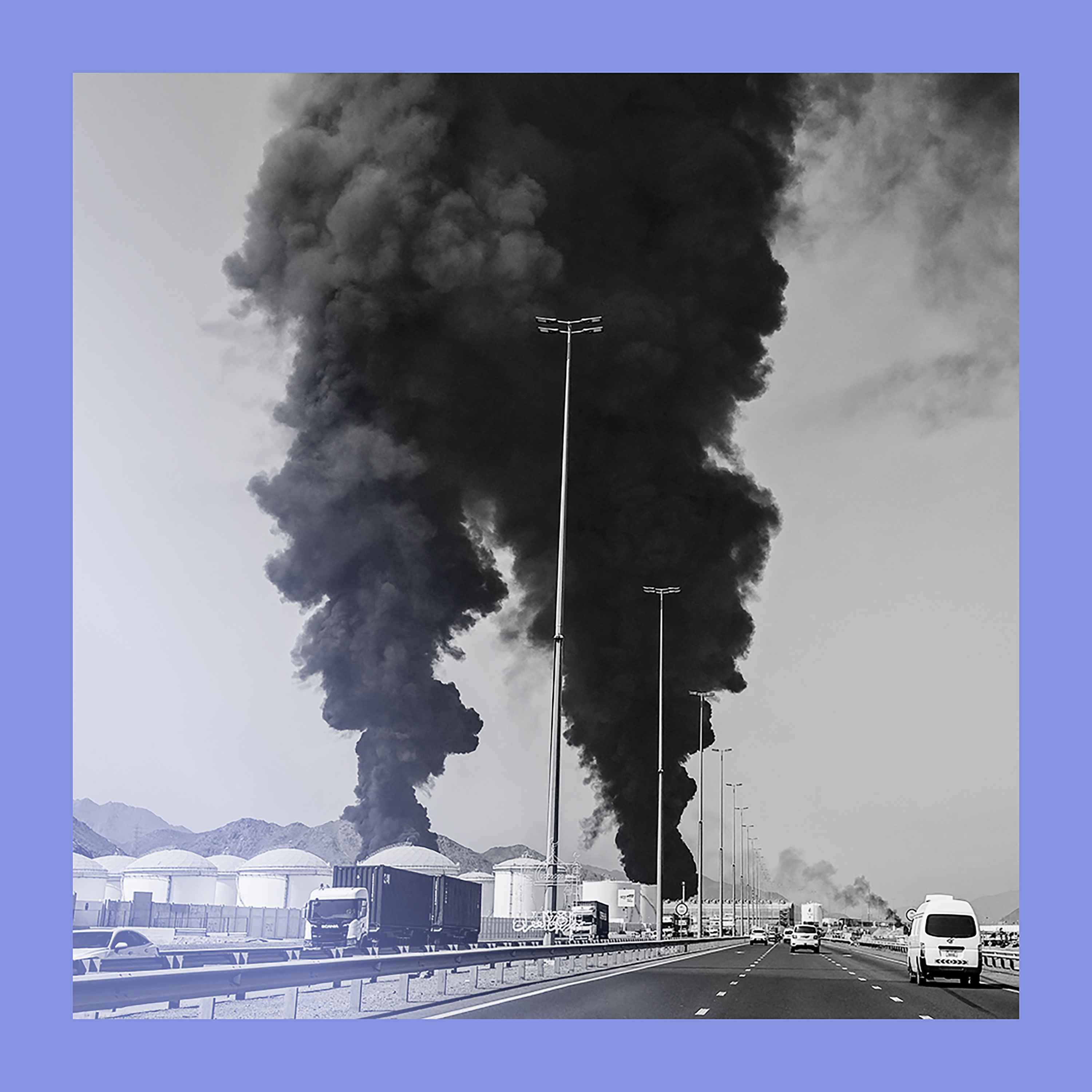
Iran's demonstrated ability to close the Strait of Hormuz has become its most potent strategic and economic leverage. This physical control over a critical global chokepoint is seen as a more immediate and effective deterrent than a potential nuclear weapon, giving Tehran a powerful tool to counter sanctions.
Iran successfully leveraged its control over the Strait of Hormuz, a critical global trade chokepoint, to create immense economic pressure. This conventional deterrent shifted the burden onto the US to de-escalate, proving more immediately impactful than a theoretical nuclear capability.
Iran's victory condition isn't military dominance but strategic disruption. By using asymmetric warfare—mines, drones, and missiles—to create chaos in the Strait of Hormuz, it can halt the flow of oil. This cracks the petrodollar system and achieves its primary geopolitical objective without needing to defeat the US Navy in a conventional battle.

By selectively allowing passage for tankers pricing oil in Chinese Yuan, Iran is playing a high-stakes game. This forces countries to bypass the US dollar to secure their energy supply, directly threatening the foundation of American global economic power and accelerating de-dollarization.

Iran employs inexpensive weapons against shipping in the Strait of Hormuz. This asymmetric strategy avoids direct military confrontation while making the risk too high for insured commercial vessels, effectively closing the strait without a formal blockade.

Despite significant military losses, Iran is successfully leveraging its control over the Strait of Hormuz. This asymmetric strategy chokes global energy markets, creating economic pain that Western nations may be less willing to endure than Iran, potentially snatching a strategic victory from a tactical defeat.
