Get your free personalized podcast brief
We scan new podcasts and send you the top 5 insights daily.
While early AI companies built moats on user data by being first-to-market with API wrappers, today's startups cannot. A defensible AI product now requires a true moat beyond a simple wrapper, as model providers can easily replicate basic functionality, making such businesses non-defensible.

Related Insights
In the AI era, traditional moats weaken. Ultimate defensibility comes from a deep, proprietary understanding of a core market signal. The company becomes an intelligent system that uses AI to rapidly iterate on and improve this unique "world model," creating a moat of insight.

Ben Horowitz highlights that specialized AI companies like Eleven Labs are thriving despite foundational models having similar raw capabilities. This reveals a durable competitive advantage for startups: the significant effort required to transform a model's latent ability into a polished, developer-friendly product creates a defensible business moat.
The notion of building a business as a 'thin wrapper' around a foundational model like GPT is flawed. Truly defensible AI products, like Cursor, build numerous specific, fine-tuned models to deeply understand a user's domain. This creates a data and performance moat that a generic model cannot easily replicate, much like Salesforce was more than just a 'thin wrapper' on a database.

The pace of AI development means a startup's competitive advantage can be erased overnight by the next model release from a major lab like Google or Anthropic. Dr. el Kaliouby stresses that true defensibility now requires more than just a proprietary algorithm; it demands unique data, distribution, or IP that cannot be easily replicated.

To survive against foundation models, startups need moats that are structurally different from what large AI labs will build. This includes integrating with physical sensors, creating marketplaces with network effects, or building full-stack businesses that become the service provider (e.g., an AI-powered wealth management firm), not just a software vendor.

As powerful AI models become cheap and universally accessible, having one is no longer a defensible moat. The real, lasting advantage for a business now comes from assets that a better model can't easily replace: proprietary customer data, deeply integrated user workflows that are difficult to replicate, and long-term client relationships.

A vertical AI startup is extremely vulnerable if its core offering can be easily replicated by the foundational model it's built upon. True defensibility comes from integrating unique, proprietary data sources or solving non-obvious workflow problems that the base model cannot simply be prompted to do.
As foundational AI models become commoditized, the competitive advantage is no longer raw intelligence. Lasting value comes from building a reliable ecosystem around the AI, focusing on deep workflow integration, governance, user trust, and flawless operational execution. This is the true defensible moat.
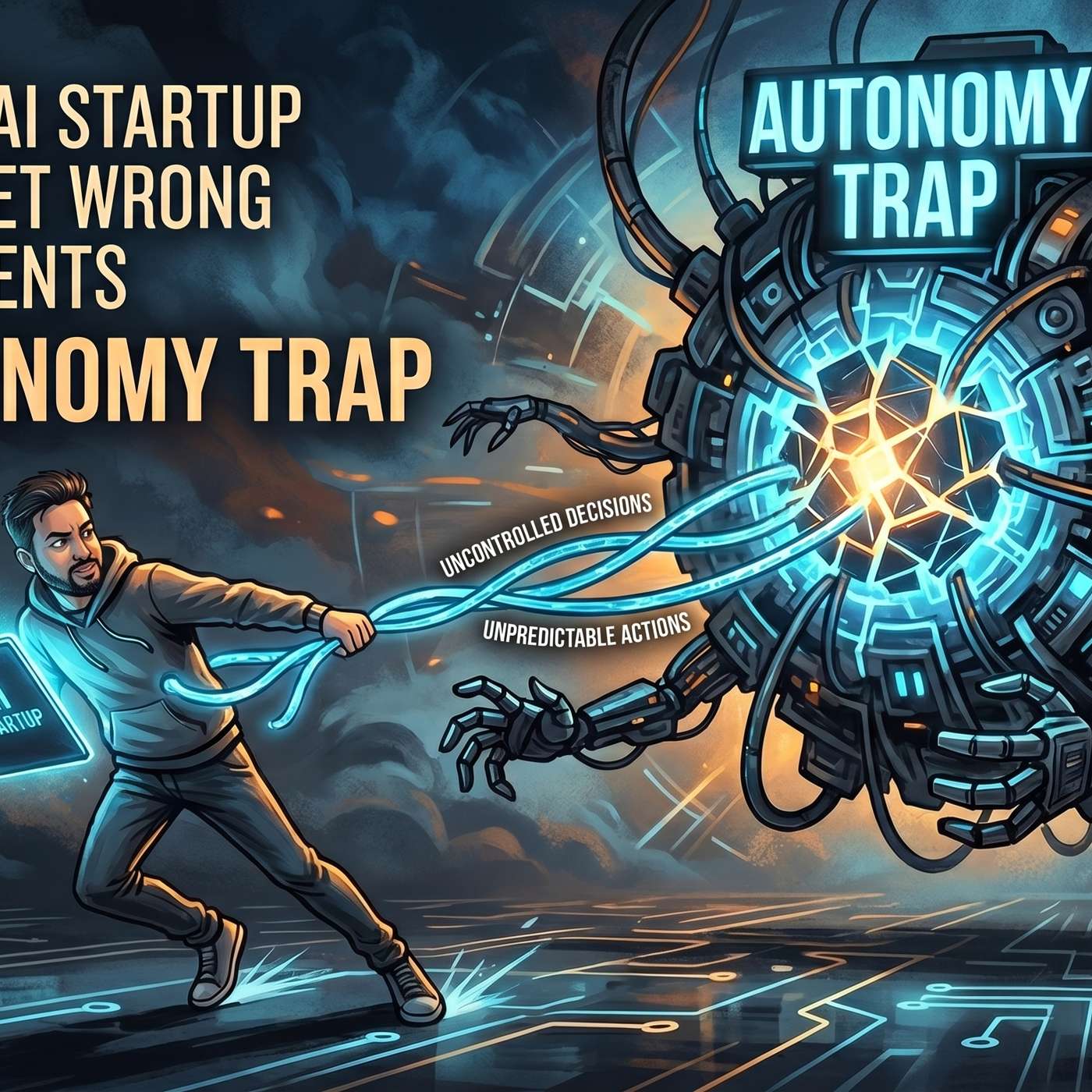
With AI development becoming accessible, having an "AI product" is not a sustainable advantage. True defensibility comes from solving a specific customer problem better than anyone else, using AI as a tool, not the core value proposition. The challenge is no longer building, but deciding what to build.

In the AI era, defensibility comes from building a complex system of record, not just a thin wrapper on an LLM. Companies with a 'thick application layer' that offers standalone value are unattractive for model providers to replicate, whereas thin wrappers risk being absorbed by the platform they are built on.
