Get your free personalized podcast brief
We scan new podcasts and send you the top 5 insights daily.
Following SpringHill's merger with Fullwell, Carter identifies live entertainment and digital content as the key growth areas. He views scripted content as a high-risk "needle in the haystack" business, while live experiences offer a more reliable path to monetization and audience connection.

Related Insights
Endeavor CEO Ari Emanuel calls his focus on live events "the opposite of an AI bet." The logic is that as AI makes digital content abundant, the scarcity and value of real-world, in-person human experiences will skyrocket. This is a powerful counter-narrative that leverages the AI trend to its advantage.

The traditional entertainment industry has a widening gap between struggling artists and highly-paid stars. The rise of digital scripted formats, like microdramas, can create a sustainable "middle class" of creative professionals—from writers to costumers—by offering more consistent, moderately-budgeted work.

Despite his on-screen presence in shows like "The Shop," Carter reveals he was reluctant and his real ambition was to be an executive. This mindset is key to scaling a celebrity-driven media company: the principals must eventually focus on building the business, not just being the talent within it.
Many aspiring creators who fail at traditional content (brand deals, affiliates) aren't necessarily untalented. They might be better suited for an alternative format like live shopping, which rewards different skills like salesmanship and live interaction. Success is about finding the right format for your inherent destiny and talents.

The business model for 24/7 news streams like a16z-funded MTS isn't the live audience. The always-on show acts as a low-production-cost "content factory" to generate short, shareable clips. These clips are the actual product, designed for viral distribution and monetization on social platforms like X, where they receive far more views than the live broadcast.

Acquired strategically curates guests like Jamie Dimon and Barry Diller for live events, framing it as a 'cinematic universe' of iconic leaders. This narrative transforms a podcast into a larger media property, creating a cohesive brand world for its audience.

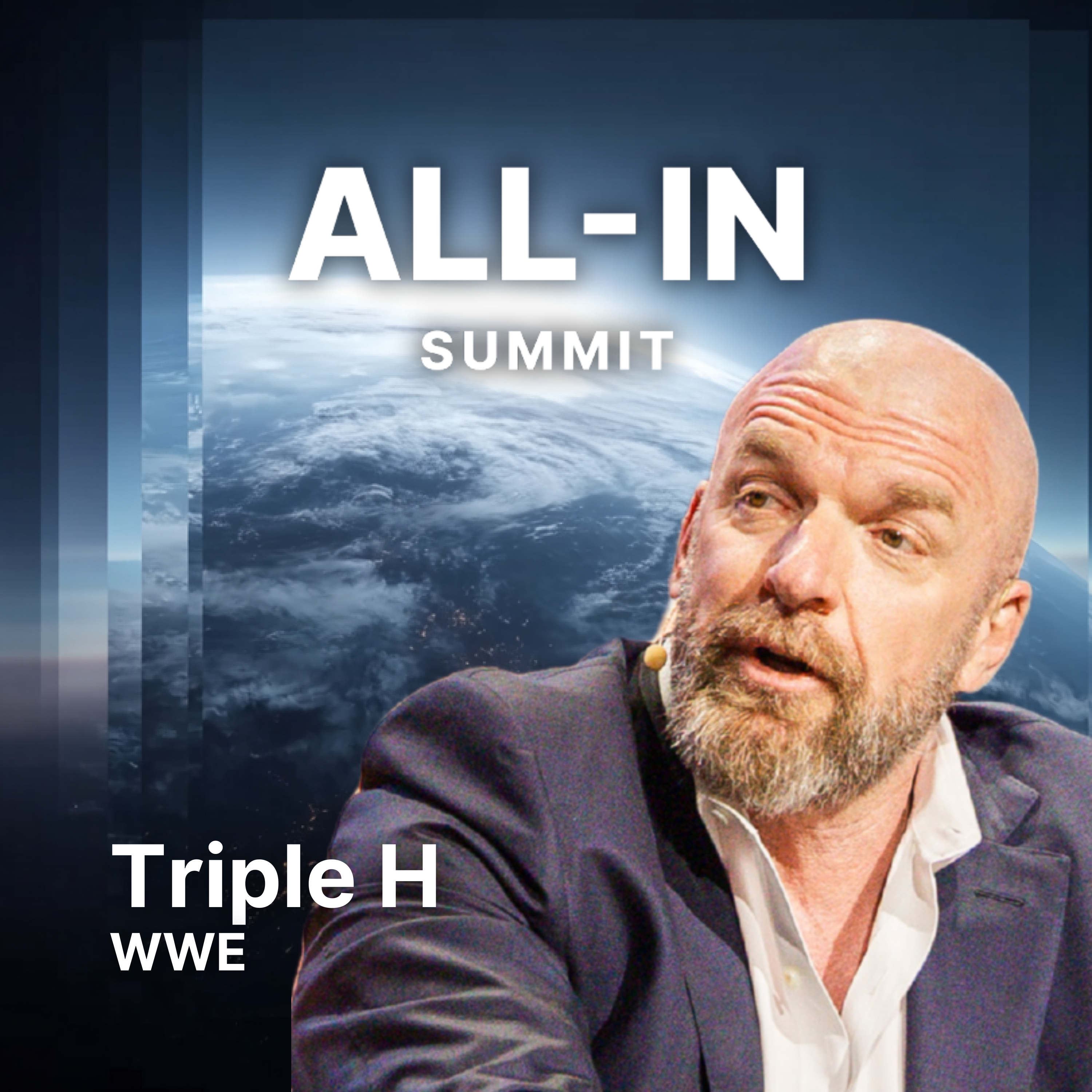
WWE's live events thrive by attracting multi-generational family groups. Paul Levesque believes this shared experience, where different generations bond over stars past and present, is a powerful driver of success in a post-COVID world that increasingly values experiences over material possessions.
The future of creator monetization includes 'commercetainment'—live shows where the primary goal is entertainment but which also seamlessly integrate product sales. Skilled entertainers can make this feel authentic, creating a modern, interactive version of QVC that builds community and drives direct revenue.
Traditional media is evolving beyond content by adopting creator strategies. Recurrent uses video to build personal relationships that drive audiences to live events and product lines, creating a multi-faceted "360 business" rather than just a publishing one.

A key opportunity exists in pairing successful creators, who have audience and cultural relevance but lack business infrastructure, with media companies that possess monetization engines but have lost touch with talent-driven content. This symbiotic relationship forms the basis for a modern media M&A strategy.
