Get your free personalized podcast brief
We scan new podcasts and send you the top 5 insights daily.
Retrospective data reveals a four-fold increase in radiation necrosis when antibody-drug conjugates (ADCs) like TDXD or TDM-1 are given within weeks of stereotactic radiosurgery (SRS). Clinicians should pause ADC treatment for at least one cycle around SRS to mitigate this serious complication.

Related Insights
Trastuzumab deruxtecan (TDXD) and datopotamab deruxtecan (Dato-DXd) share the same cytotoxic payload, yet Dato-DXd has a much lower rate of interstitial lung disease (ILD). This indicates the toxicity is driven by the antibody-antigen interaction, not the payload itself.
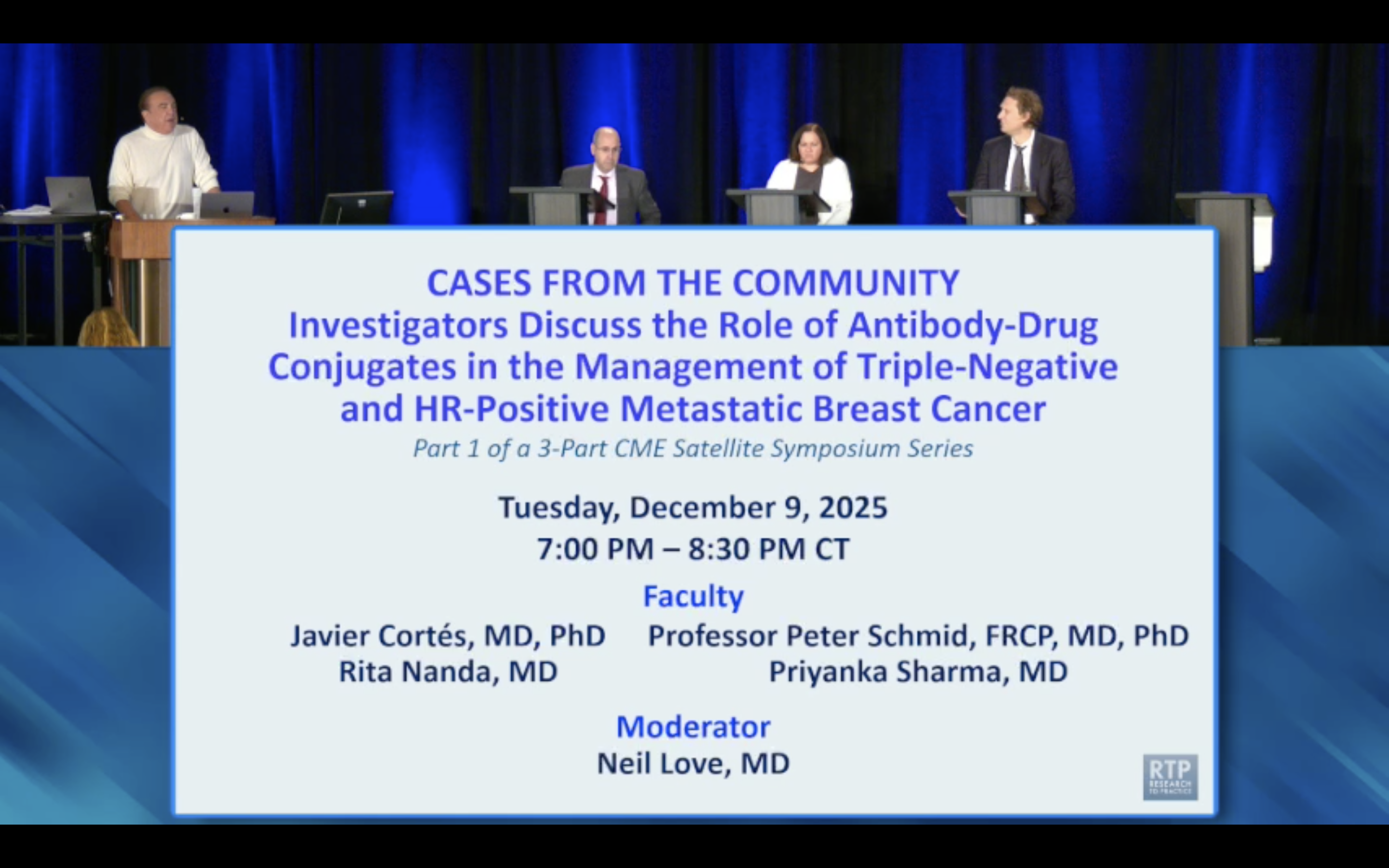
Real-world data suggests that using one antibody-drug conjugate (ADC) immediately after another is often ineffective. A potential strategy to overcome this resistance is to administer a different class of chemotherapy before starting the second ADC.
Clinicians are concerned about the overuse of Stereotactic Body Radiation Therapy (SBRT) for oligoprogressive disease, a practice dubbed 'Pokemon' (gotta catch 'em all). This approach of sequentially radiating new lesions can delay the start of more effective systemic therapies and is not considered a standard of care.

A leading hypothesis for why adding immunotherapy to chemoradiation failed is that radiation, particularly for central tumors, destroys the very lymphocytes immunotherapy aims to activate. This biological mechanism suggests the radiation essentially canceled out the drug's intended effect.

For patients with otherwise well-controlled disease who develop isolated oligoprogression in the brain, evidence suggests a better survival outcome from adding local therapy (like SRS) and continuing the current effective systemic therapy, rather than switching the systemic regimen entirely.
When imaging is ambiguous between radiation necrosis and tumor progression in the brain, a short course of high-dose dexamethasone can serve as a diagnostic tool. Imaging improvement after steroids strongly suggests radionecrosis, potentially avoiding an invasive biopsy.
Emerging data shows that a second ADC, particularly one with the same payload, often has limited efficacy. This suggests clinicians must be highly strategic in selecting the first ADC, as it may be their most impactful opportunity for this class of drugs.
For managing nausea from ADCs like TDXD, a three-drug prophylactic regimen (steroid, 5-HT3 antagonist, NK1 inhibitor) is recommended. For delayed nausea, continuing the 5-HT3 antagonist on days two and three is often effective before needing to add agents like olanzapine.
The differing efficacy and toxicity profiles of TROP2 ADCs like sacituzumab govitecan and Dato-DXD suggest that the drug's linker and payload metabolism are crucial determinants of clinical outcome. This indicates that focusing solely on the target antigen is an oversimplification of ADC design and performance.
Clinical trial data shows that despite specific toxicities, antibody-drug conjugates (ADCs) can be better tolerated overall than standard chemotherapy. For example, trials for both sacituzumab govitecan and dato-DXd reported fewer patients discontinuing treatment in the ADC arm compared to the chemotherapy arm.