Get your free personalized podcast brief
We scan new podcasts and send you the top 5 insights daily.
A VC recounts advising founders to accept a massive acquisition offer during a market bubble, but they refused. Prioritizing his 'people-first' philosophy, he supported their decision to continue building. This choice ultimately cost the company, investors, and employees a potential $25-30 billion outcome when the market later corrected, highlighting a major conflict between financial optimization and founder support.

Related Insights
When faced with a life-changing $500M acquisition offer, Ryan Smith's wife provided the clarifying perspective: "if it's going good, just keep it rolling." This, combined with a mentor's advice against selling, empowered him to turn it down and aim for a much larger outcome.

The abundance of capital has shifted the VC mindset from serving founders over a decade to simply "winning" the next hot deal. This transactional approach is misaligned with what founders truly need: a committed, long-term partner who puts the company first.
Beyond product-market fit, there is "Founder-Capital Fit." Some founders thrive with infinite capital, while for others it creates a moral hazard, leading to a loss of focus and an inability to make hard choices. An investor's job is to discern which type of founder they're backing before deploying capital that could inadvertently ruin the company.

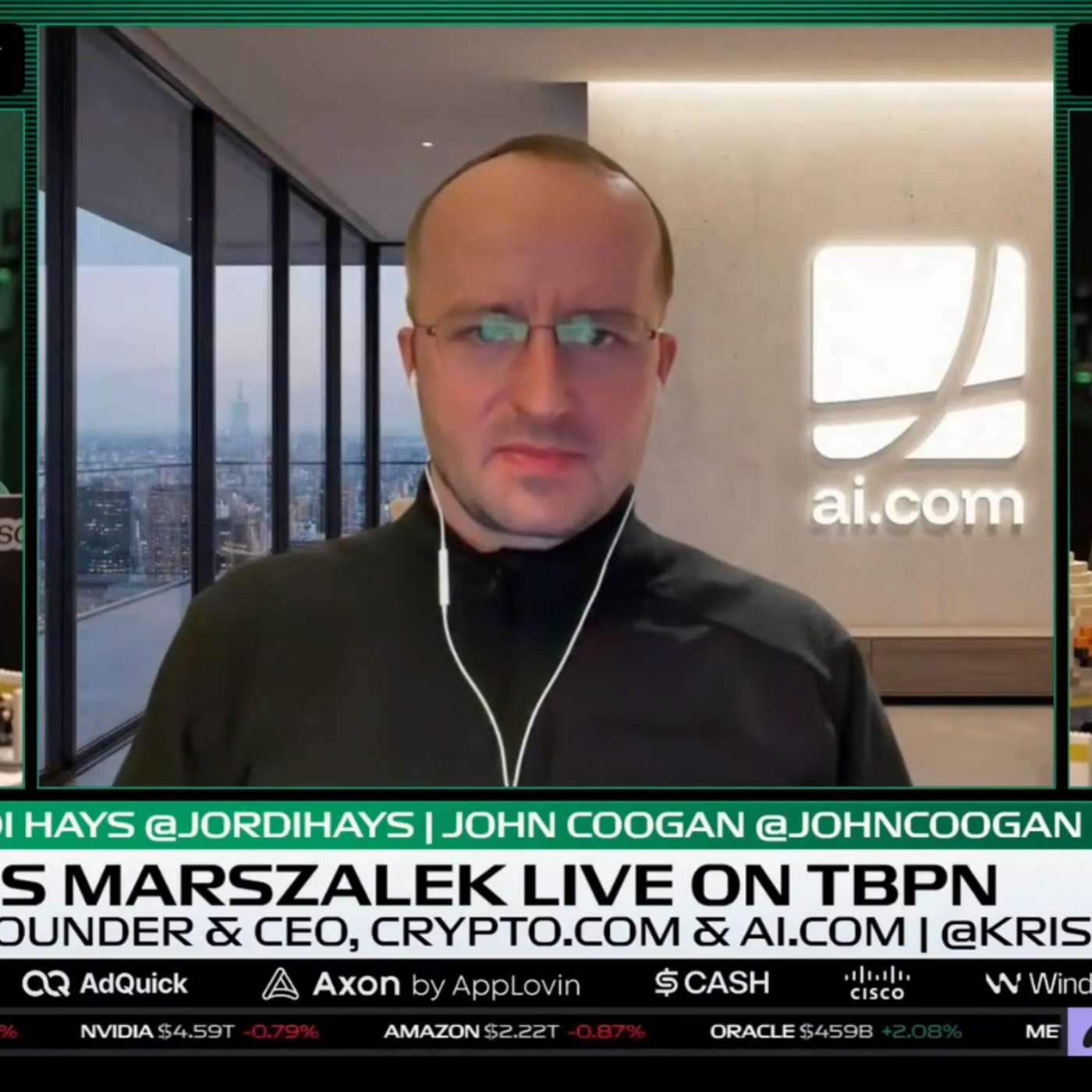
Immediately after acquiring AI.com for $70M, the founder received and rejected an offer exceeding $500M. This demonstrates extreme long-term conviction, prioritizing the potential of building a platform over a massive, quick profit.
When a founder faces a major acquisition offer, the pivotal question isn't just about valuation, but temperament. A board member should ask, "Are you built to be a public company CEO?" The intense stress and public scrutiny aren't for everyone. Pushing a founder who isn't an "IPO guy" to reject an offer can be a disastrous long-term decision.
When a company like Synthesia gets a $3B offer, founder and VC incentives decouple. For a founder with 10% equity, the lifestyle difference between a $300M exit and a potential $1B future exit is minimal. For a VC, that same 3.3x growth can mean the difference between a decent and a great fund return, making them far more willing to gamble.
The podcast host chose to forego scaling his company from a $30M valuation to a potential $300M+ because it would have required changing the team and culture he cherished, illustrating a key tradeoff between wealth and values.

When founders receive life-altering offers (e.g., billions of dollars), the long-term reputational game of venture capital collapses into a single-turn, "one and done" decision. This game theory shift incentivizes taking the immediate payout, overriding loyalty.
VCs often correctly identify a special founder but then pass due to external factors like competition or perceived market size. Reflecting on missing Scale AI, Benchmark concludes this is a critical error; the person is the signal that should override other concerns.
Two founders rejected a $20M acquisition offer they felt was too low. After successfully pivoting their business during the pandemic, they returned to the same buyer and received a doubled offer of $40M with better terms. This shows how patience and focusing on business performance can dramatically improve an exit outcome.
