Get your free personalized podcast brief
We scan new podcasts and send you the top 5 insights daily.
As AI capabilities advance, the limiting factor shifts from the technology itself to our ability to imagine and articulate valuable tasks. The speaker claims the "uniquely human ingredient" for leveraging AI will be curiosity and agency, which is why Perplexity designs its products to spark and activate it.

Related Insights
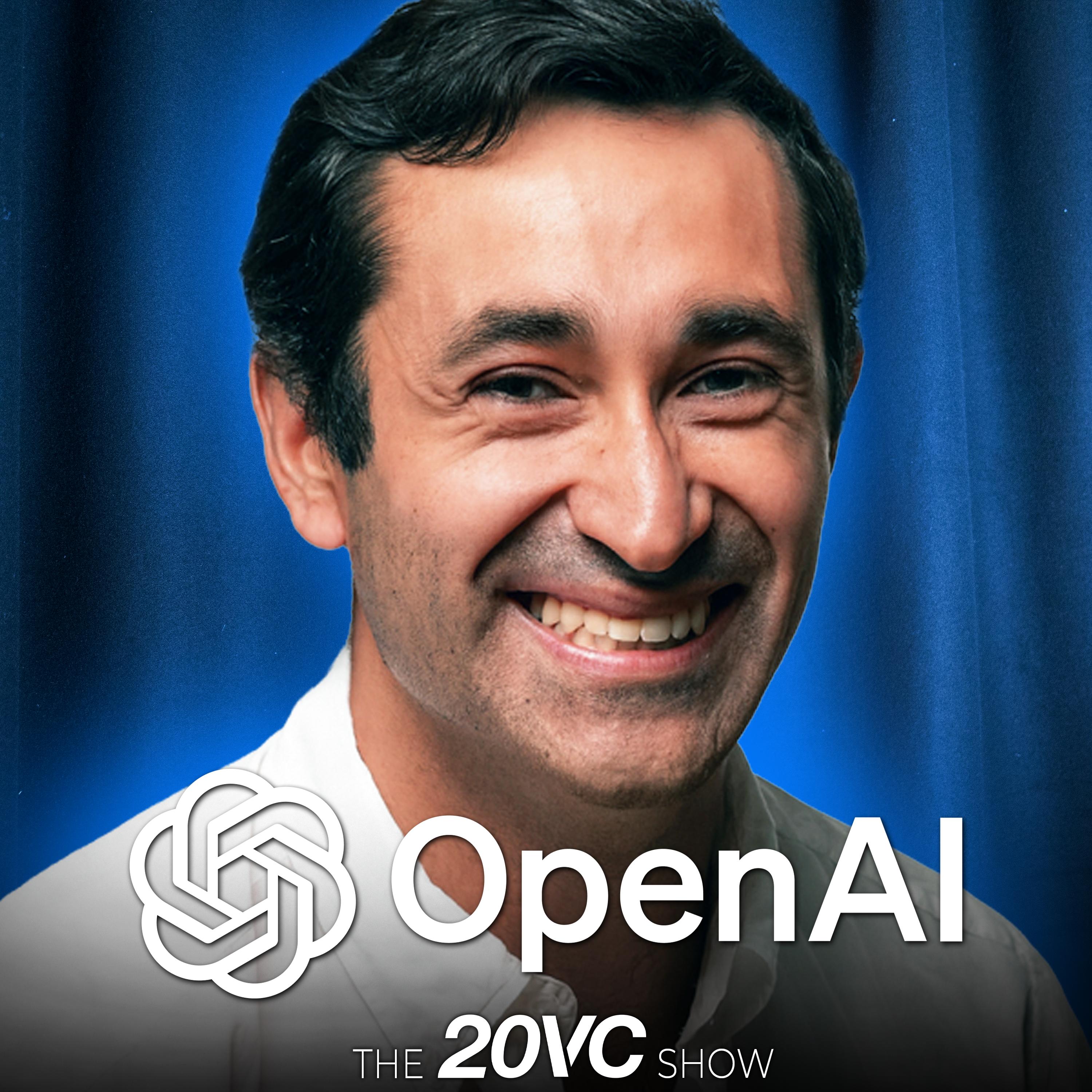
OpenAI's Head of Codex argues the main barrier to AGI isn't model capability but human laziness and lack of creativity in prompting. People use AI tens of times daily, but the potential is for tens of thousands. The friction of typing and thinking of prompts is the key limiter.
Using AI effectively isn't about cognitive offloading, which leads to mediocrity. It's about amplifying human thought. Humans must provide the 'why' (ambition) and the 'what' (taste) to bookend the technology, which only solves for the 'how'.

While AI's technical capabilities advance exponentially, widespread organizational adoption is slowed by human factors like resistance to change, lack of urgency, and abstract understanding. This creates a significant gap between potential and reality.

Historically, curiosity was hampered by the effort required to find answers. By closing the gap between question and answer to mere seconds, AI removes this friction and can potentially trigger an explosion in learning and exploration for a broad population.

AI models can provide answers, but they lack innate curiosity. The unique and enduring value of humans, especially in fields like journalism, is their ability to ask insightful questions. This positions human curiosity as the essential driver for AI, rather than a skill that AI will replace.

Even as AI models become vastly more powerful, widespread adoption is throttled by the slow evolution of users' mental models of what AI can do. People rely on a system based on past experiences, and it takes a 'magical' result to expand their belief in its capabilities for new, complex tasks.

As AI agents eliminate the time and skill needed for technical execution, the primary constraint on output is no longer the ability to build, but the quality of ideas. Human value shifts entirely from execution to creative ideation, making it the key driver of progress.

The primary hurdle for potential AI agent users isn't the technical setup; it's the inability to imagine what to do with the tool. Even technically proficient individuals get stuck on the "what can I do with this?" question, indicating that mainstream adoption requires clear, relatable examples and blueprints, not just easier installation.

As AI automates tasks and transforms industries, fixed skills have a shorter shelf life. The defining characteristic for success will be curiosity—the intrinsic motivation to explore, ask questions, and learn continuously. It's the engine that enables adaptation and discovery.

The internet leveled the playing field by making information accessible. AI will do the same for intelligence, making expertise a commodity. The new human differentiator will be the creativity and ability to define and solve novel, previously un-articulable problems.
