Get your free personalized podcast brief
We scan new podcasts and send you the top 5 insights daily.
Ovelle's founding was catalyzed by Travis Potter discovering Merrick Smela's published papers. Merrick's public presence and clear communication of his work made him discoverable. This demonstrates that for scientific entrepreneurs, sharing expertise openly is a powerful tool for inbound recruiting and fundraising.

Related Insights
Ovelle's co-founders exemplify a common success pattern in biotech: one partner with profound scientific knowledge (Merrick) and another with extensive business experience (Travis). This combination covers critical aspects from research to capital raising and team building, as it's rare to find both skill sets in one person.
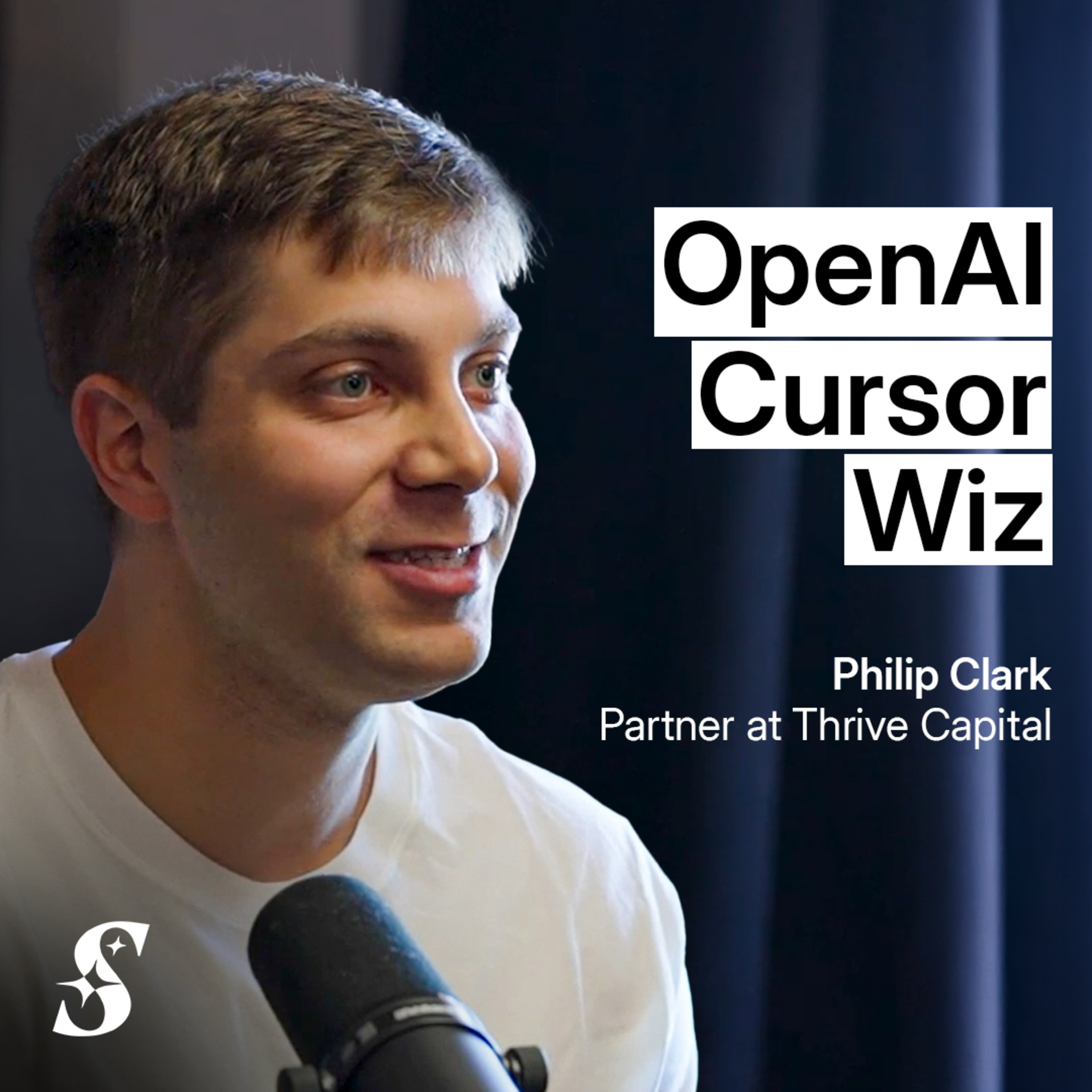
The speaker, Philip, caught the attention of Thrive's founder, Josh Kushner, by writing a niche Substack about semiconductors. This demonstrates that deep, public expertise in a specific domain can be a powerful way to network and find unique career opportunities in venture capital.
To stay on the cutting edge, Palmer Luckey reads academic literature across many fields. He argues that academics effectively survey the state-of-the-art and identify key players and new approaches. While their own work may not be practical, their research provides a reliable, consolidated signal of innovation.

Because in vitro gametogenesis is so new, there's no pre-existing talent pool. Ovelle's hiring strategy prioritizes finding intelligent scientists who can learn quickly. Scientific co-founder Merrick Smela emphasizes that his ability to train these new hires is a critical contribution to the company's success.
Early outreach often fails by pitching an unproven value proposition. Instead, founders should use "Founder Magic"—leveraging their unique background, story, or mission to make themselves so interesting that prospects agree to a meeting out of sheer curiosity. The outreach should be product-agnostic and focus on being compelling as a person.

To find a Chief Scientific Officer with a rare combination of skills, EARLI's CEO used LinkedIn search. He combined terms like "gene therapy," "venture," and "FDA experience" to narrow the global candidate pool to about 25 people, proving precise digital sourcing can outperform traditional networking for highly specialized roles.

EARLI's non-scientist CEO, Cyriac Roeding, felt stuck searching for his next venture. A powerful magazine story about scientist Dr. Sam Gambhir's work and personal loss prompted him to send a cold email. This unconventional, mission-driven outreach led to a partnership that founded the company.
In a tough funding climate, Ovelle successfully raised capital by focusing on investors who personally understood the problem of infertility. This strategy sidesteps the need to educate uninterested parties and instead builds a base of long-term partners who share the company's vision, proving more effective than a broad approach.
The most potent source of new, truly cutting-edge investment opportunities isn't inbound emails or demo days, but rather the networks of the exceptional founders and scientists you've already backed. These individuals are at the frontier and can identify the next wave of talent.
![[REPLAY] Josh Wolfe – Seeing the Lux (Capital Allocators, EP.65) thumbnail](https://static.libsyn.com/p/assets/f/b/7/6/fb76e1c8bfb69e8dd959afa2a1bf1c87/CA_Square_logo_light_background_6.26.24.jpg)
The co-founders of InflaRx, postdocs from Germany and China, bonded over research at the University of Michigan. Their key scientific discovery about the C5a receptor led to a late-night, beer-fueled conversation where the idea for their company was born, highlighting the role of personal chemistry in innovation.