Get your free personalized podcast brief
We scan new podcasts and send you the top 5 insights daily.
Traditionally, creating variations of creative assets like ads or designs required significant time and cost. With AI, generating countless alternatives is nearly free. This allows marketers and creators to iterate endlessly on a promising idea, moving from "give me 5 options" to "give me 5 more based on this best one" repeatedly.

Related Insights
With AI workflows generating thousands of creative variations in minutes, the primary job is no longer the manual act of creation. The critical skill becomes curation: building the right automated systems upfront and then strategically selecting winning assets from a massive pool of options.

Generative AI tools are a massive productivity lever for creative marketers, storytellers, and copywriters. By handling tasks like slide design or simple coding, AI removes dependencies on designers and developers, allowing creatives to execute their vision autonomously and rapidly, which can reinvigorate burnt-out talent.

AI tools democratize prototyping, but their true power is in rapidly exploring multiple ideas (divergence) and then testing and refining them (convergence). This dramatically accelerates the creative and validation process before significant engineering resources are committed.

An AI-generated image is no longer a final product. It's the starting point that can be branched into countless other formats: videos, 3D assets, GIFs, text descriptions, or even code. This 'infinite branching' approach transforms a single creative idea into a full-fledged, multi-format campaign.
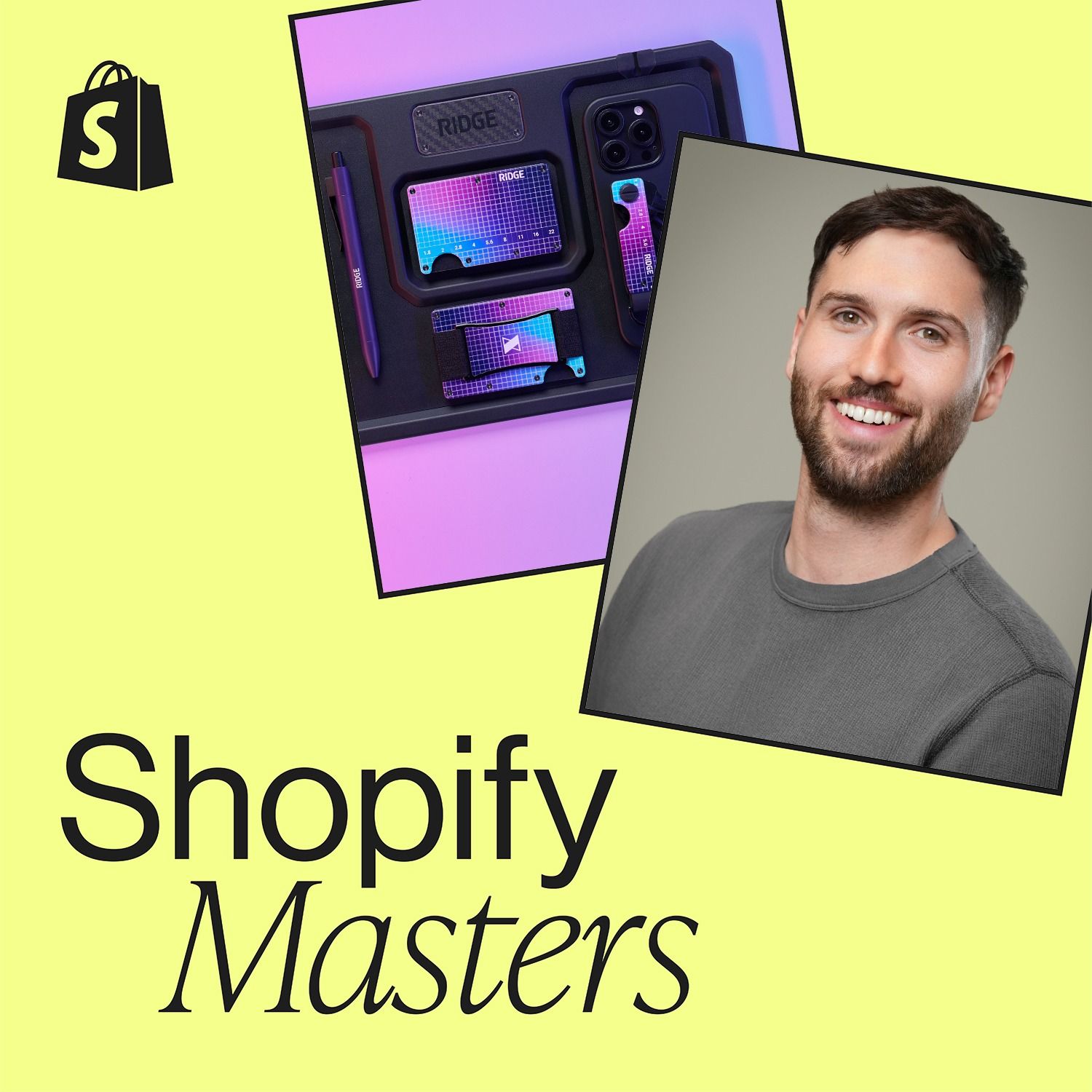
Ridge automates ad creation using a custom GPT and N8N, producing 500 static ads daily. Even if 90% are unusable, the remaining 50 ads provide a constant stream of testable creative, increasing the chances of finding winning variants for personalized campaigns at scale.
The core advantage demonstrated was not just improving a single page, but generating three distinct, high-quality redesigns in under 20 minutes. This fundamentally changes the design process from a linear, iterative one to a parallel exploration of options, allowing teams to instantly compare and select the best path forward.

Top creators like Mr. Beast relentlessly A/B test thumbnails and video intros to maximize views. AI video platforms now bring this data-driven experimentation to SMBs, allowing them to rapidly test variations of spokespeople, demographics, and creative elements to optimize ad performance.

Moving beyond using AI for simple content generation, SAS applies it to enhance marketing quality. They built an AI agent that scores creative briefs against effectiveness criteria. This forces teams to create better inputs, leading to better creative outputs and reframing AI's role from cost-saver to quality-enhancer.

For creative work like design, AI's true value isn't just accelerating tasks. It's enabling designers to explore a much wider option space, test more possibilities, and apply more craft to the final choice. Since design is non-deterministic, AI serves creative exploration more than simple speed.

AI tools can drastically increase the volume of initial creative explorations, moving from 3 directions to 10 or more. The designer's role then shifts from pure creation to expert curation, using their taste to edit AI outputs into winning concepts.