Get your free personalized podcast brief
We scan new podcasts and send you the top 5 insights daily.
Previous technologies were labor-saving tools that executed human-defined tasks. Howard Marks points out that AI is fundamentally different because it possesses autonomy. It can design new jobs, assign tasks, and even help create its own successors, operating without direct instruction in a way no prior technology could.

Related Insights
Unlike co-pilots that assist developers, Factory's “droids” are designed to be autonomous. This reframes the developer's job from writing code to mastering delegation—clearly defining tasks and success criteria for an AI agent to execute independently.

Unlike previous technologies that augmented specific skills, AI could eventually outperform humans in all domains, including creative and emotional tasks. This suggests the historical pattern of technology creating more jobs than it destroys may not hold true.

Instead of a single "AGI" event, AI progress is better understood in three stages. We're in the "powerful tools" era. The next is "powerful agents" that act autonomously. The final stage, "autonomous organizations" that outcompete human-led ones, is much further off due to capability "spikiness."

Previous technological revolutions automated physical labor but enhanced human thinking. AI's goal is to replicate and surpass human cognitive abilities, creating a categorical shift that threatens the core of human economic value.

The true disruption from AI is not a single bot replacing a single worker. It's the immense leverage granted to individuals who can deploy thousands of autonomous AI agents. This creates a massive multiplication of productivity and economic power for a select few, fundamentally altering labor market dynamics from one-to-one replacement to one-to-many amplification.
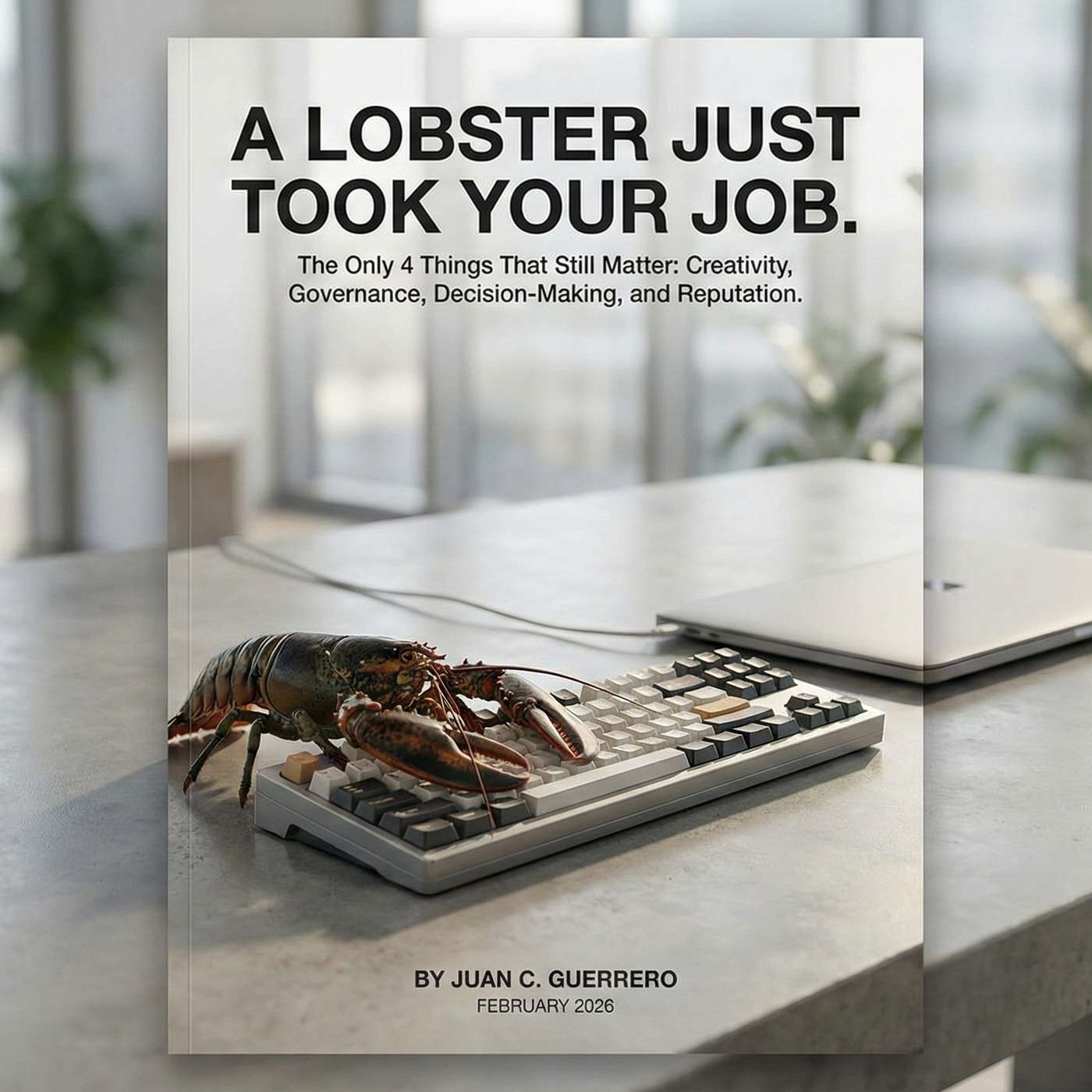
The focus on AI automating existing human labor misses the larger opportunity. The most significant value will come from creating entirely new types of companies that are fully autonomous and operate in ways we can't currently conceive, moving beyond simple replacement of today's jobs.

The firm made a strategic decision to invest in AI that fully automates professional roles (e.g., an AI oncologist, an AI chip designer) rather than building "co-pilot" tools that merely assist humans. They believe the larger opportunity lies in completely doing the work, not aiding it.
Unlike past technological shifts where humans could learn new trades, AI is a "tractor for everything." It will automate a task and then move to automate the next available task faster than a human can reskill, making long-term job security increasingly precarious for cognitive labor.

Elias Torres argues that the current AI paradigm, which focuses on tools that assist humans (e.g., summarizers, drafters), is fundamentally limited. He believes true value is unlocked when you can instruct an AI to perform a task *infinitely* on its own, without requiring a human to type into a chat box for every action.

The true threshold for AI becoming a disruptive, "non-normal" technology is when it can perform the new jobs that emerge from increased productivity. This breaks the historical cycle of human job reallocation, representing a fundamental economic shift distinct from past technological waves.
