Get your free personalized podcast brief
We scan new podcasts and send you the top 5 insights daily.
Elon says every hyperscaler and dozens of smaller companies ask for SpaceX compute, and he could rent it out several times if he said yes. He compares the shortage to the Monty Python cheese shop sketch, where customers ask for cheese the shop does not have.

Related Insights
Firms like OpenAI and Meta claim a compute shortage while also exploring selling compute capacity. This isn't a contradiction but a strategic evolution. They are buying all available supply to secure their own needs and then arbitraging the excess, effectively becoming smaller-scale cloud providers for AI.

Elon says improving AI software produces more useful intelligence per watt, so compute becomes more valuable over time. He cites old H100s renting for more than when new and a likely long shortage of superintelligence compute. That supports higher prices for existing GPUs. The market is repricing compute.
Instead of waiting for customers, Elon Musk's xAI built its data center infrastructure speculatively. This high-risk move paid off massively when he leased surplus GPU capacity to competitors like Google and Anthropic at 2-5x the market rate, capitalizing on their urgent need for compute and de-risking his initial investment.

The entire strategy of building data centers in space is only economically feasible because SpaceX's Starship is projected to increase launch capacity by 20 times and drastically lower costs. This specific technological leap turns a sci-fi concept into a viable business model.
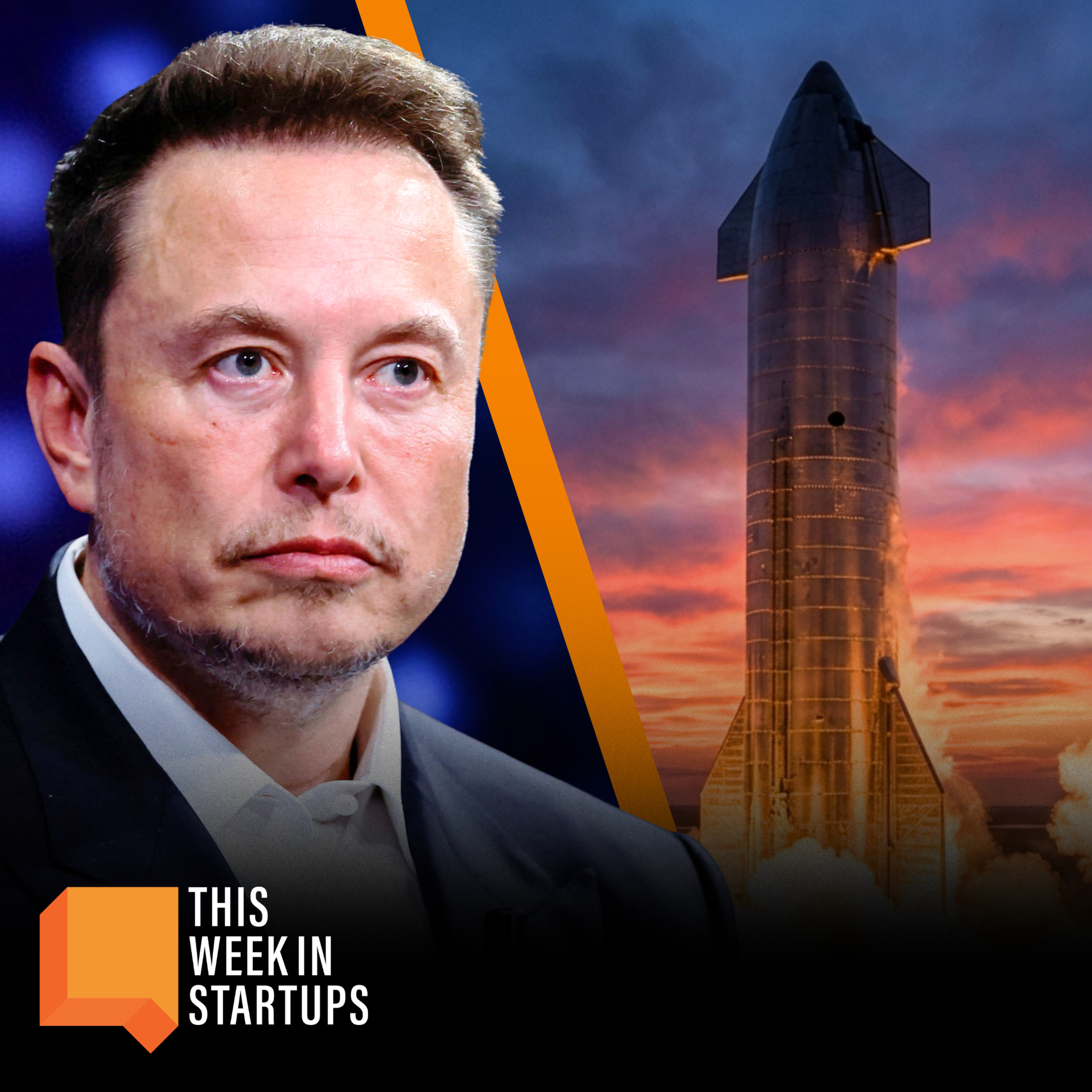
The biggest limiting factor for AI growth is energy production, which faces regulatory hurdles and physical limits on Earth. By moving data centers to space with solar power, Elon Musk aims to create an 'N of one' advantage, escaping terrestrial constraints to build a near-infinite compute infrastructure.

While Starlink's satellite internet business is growing, President Gwynne Shotwell reveals that AI compute rental has become a massive and embarrassing profitable business for SpaceX. The insatiable demand for training hardware has turned 'Elon Web Services' into a key cash generator, overshadowing other revenue lines.

On Earth, each new data center is more expensive than the last due to land and energy constraints. In space, manufacturing satellites at scale and declining launch costs (via Starship) mean the marginal cost for each new data center goes down, creating fundamentally different scaling economics.

Instead of managing compute as a scarce resource, Sam Altman's primary focus has become expanding the total supply. His goal is to create compute abundance, moving from a mindset of internal trade-offs to one where the main challenge is finding new ways to use more power.

By leveraging its capability for rapid data center deployment, SpaceX unexpectedly became a major AI compute provider, akin to an 'Elon Web Services.' This move mirrors how Amazon built AWS to monetize excess internal infrastructure, turning a core competency into a massive new business line.

Instead of viewing compute as a cost center, OpenAI treats it as a revenue generator, analogous to hiring salespeople. The core belief is that demand for AI capabilities is so vast that they can never build compute fast enough to satisfy it, justifying massive, forward-looking infrastructure investments.
