Get your free personalized podcast brief
We scan new podcasts and send you the top 5 insights daily.
Base10's Head of AI training argues against the notion of a single, all-powerful AI. Instead, he bets on a future with hundreds of millions of models, each continually learning and adapting for a specific person or company. This paradigm shift focuses on organic, specialized intelligence over a monolithic, one-size-fits-all approach from frontier labs.

Related Insights
The AI market is becoming "polytheistic," with numerous specialized models excelling at niche tasks, rather than "monotheistic," where a single super-model dominates. This fragmentation creates opportunities for differentiated startups to thrive by building effective models for specific use cases, as no single model has mastered everything.

Relying on a single frontier model is risky and inefficient. The next phase of AI will involve intelligently routing queries to the most appropriate model—be it cheaper, faster, or local. This will redistribute value from a few dominant labs to a long tail of specialized models, maturing the ecosystem.

The next major evolution in AI will be models that are personalized for specific users or companies and update their knowledge daily from interactions. This contrasts with current monolithic models like ChatGPT, which are static and must store irrelevant information for every user.

The most valuable data for creating intelligence is private and locked within enterprises. This proprietary data will be used to create millions of specialized AI models, each outperforming general-purpose models for specific tasks, creating a diverse AI ecosystem.

AI will not evolve into a single, omnipotent entity. Due to fundamental limitations like context windows, AI will be structured like human organizations: a fleet of specialized agents with distinct roles (e.g., content, research). This mimics how humans partition work to manage complexity.

Just as developers use various databases for different needs, AI applications will rely on a "constellation" of specialized models. Some tasks will require expensive, high-reasoning models, while others will prioritize low-latency or low-cost models. The market will become heterogeneous, not monolithic.

Initially, even OpenAI believed a single, ultimate 'model to rule them all' would emerge. This thinking has completely changed to favor a proliferation of specialized models, creating a healthier, less winner-take-all ecosystem where different models serve different needs.
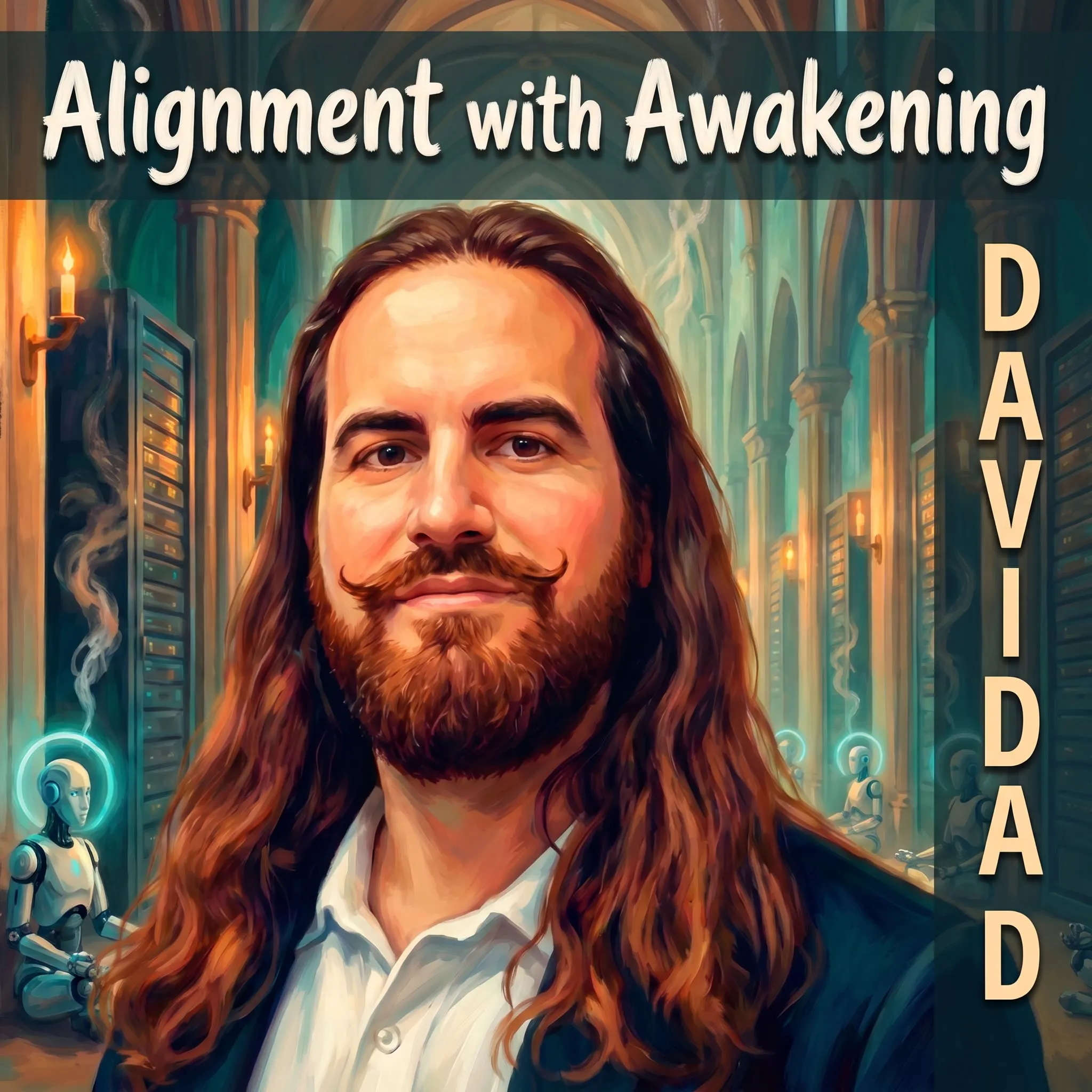
The next frontier of AI capability isn't a single, monolithic super-mind. Instead, Davidad envisions a horizontal scaling model of 'a million geniuses in a data center.' This paradigm shift necessitates new infrastructure, like decentralized proof databases, to enable massive, low-overhead collaboration between many specialized AI agents.
While frontier labs aim for a single, universally intelligent model, Engram believes value lies in specialized models that learn private, conflicting, or ambiguous user-specific data—things that are difficult to incorporate into a single, massive model.

Rather than one model ruling all, continual learning could lead to a diverse ecosystem of specialized AIs. Over time, models personalized to specific users or tasks will naturally forget irrelevant information. This differentiation is a feature, not a bug, potentially creating a more stable and less monolithic AI landscape.
