Get your free personalized podcast brief
We scan new podcasts and send you the top 5 insights daily.
Despite holding no executive title, Sergey Brin is wielding his influence as a co-founder to shape AI development at Google. He is pushing the DeepMind team to move faster and is directing resources towards specific research areas like recursive self-improvement, signaling a hands-on approach to catch up with rivals.

Related Insights
Demis Hassabis's move from CEO to chief scientist reflects his belief that AGI requires breakthroughs beyond current LLM technology. This allows him to focus on long-term research like "world models" while the company continues its commercial LLM efforts, illustrating a split between immediate business needs and foundational research goals.

Silicon Valley insiders, including former Google CEO Eric Schmidt, believe AI capable of improving itself without human instruction is just 2-4 years away. This shift in focus from the abstract concept of superintelligence to a specific research goal signals an imminent acceleration in AI capabilities and associated risks.
DeepMind's lack of a dedicated CEO or financial reporting unit reveals Google's core AI strategy: treat it as a cross-organizational layer to be "vended" into existing products like Search and Docs. While this promotes integration, it may also prevent the focused, singular drive needed to compete with standalone AI companies, explaining why they often feel behind despite their capabilities.

While many credit co-founder Sergey Brin's return for revitalizing Google's AI, the real catalyst was likely CEO Sundar Pichai's less glamorous corporate reorganization. Centralizing AI development by merging units like DeepMind was a classic management move that proved essential for focused execution.
To merge DeepMind and Google Brain effectively amid intense competition, Demis Hassabis implemented his "strike team" concept from video game development. This shifted the culture from bottom-up academic research to top-down, product-focused execution, enabling the rapid development of competitive models like Gemini.

Sundar Pichai reveals the 'ChatGPT moment' catalyzed a major organizational overhaul. He merged the elite Brain and DeepMind research teams into a single 'Google DeepMind' to create a more focused and aggressive AI unit, admitting the need for a new structure to compete effectively.

Google's direction is pulled between two philosophies. CEO Demis Hassabis favors a long-term, "world models" path to AGI, while a faction reportedly led by Sergey Brin pushes to compete directly with OpenAI and Anthropic on immediate applications like AI coding agents. This internal tension manifests as a confusing product roadmap.

DeepMind's London office historically operated with a collaborative, less urgent, research-first culture. The recent leadership shuffle, replacing its CEO with an SVP who reports to Sundar Pichai, signals a power shift back to Mountain View. This marks the end of DeepMind's autonomy and a new focus on immediate productization over long-term discovery.
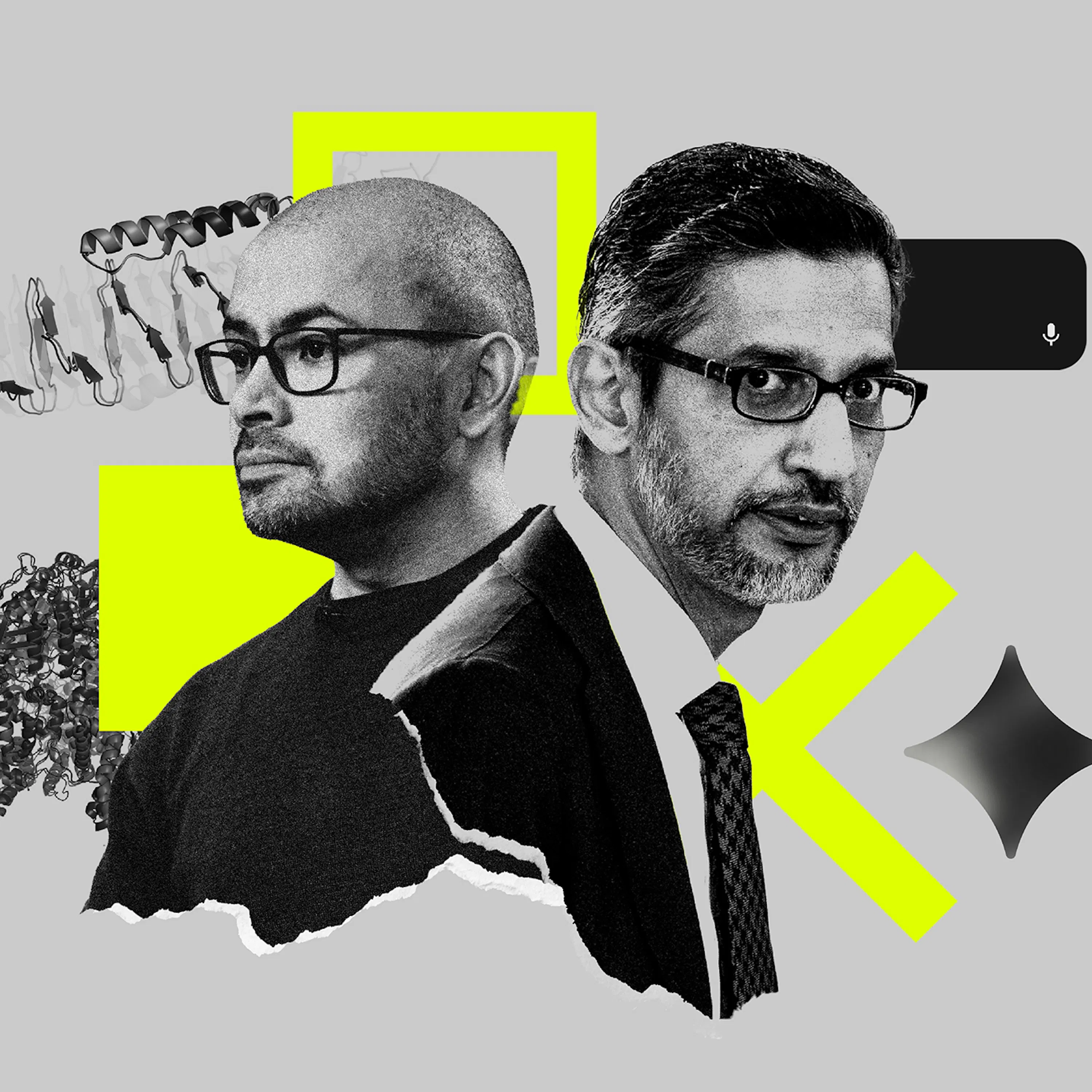
Google's recent leadership changes, including Demis Hassabis's new role and Sergey Brin's return, represent a fundamental reordering. This consolidates power in California and moves the company's AI efforts from a research-led culture, defined by London-based DeepMind, to a more commercially urgent, product-driven strategy.

Google's new AI coding "Strike Team," with personal involvement from Sergey Brin, is focused on improving its models for internal Google engineers first. The goal is to create a feedback loop where AI helps build better AI, a concept Brin calls "AI takeoff," treating any friction in this process as a top-priority blocker for achieving AGI.
