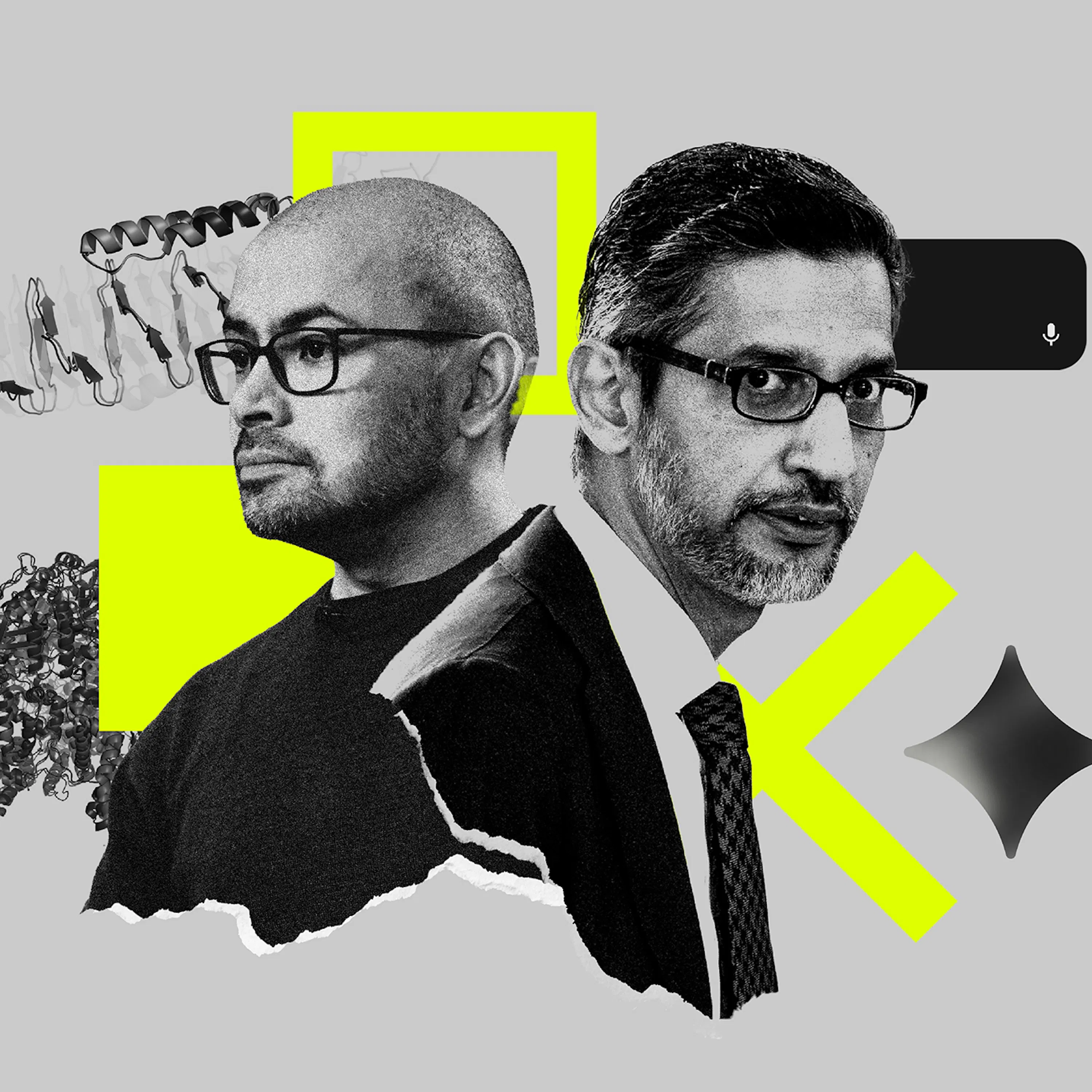
Key figures like Jeff Dean were seen by employees as moral compasses, pushing back against controversial AI applications like lethal weapons. Their departure signals a cultural shift towards prioritizing revenue over ethics, which is causing an exodus of principled talent who are now flocking to competitors like Anthropic.
DeepMind's London office historically operated with a collaborative, less urgent, research-first culture. The recent leadership shuffle, replacing its CEO with an SVP who reports to Sundar Pichai, signals a power shift back to Mountain View. This marks the end of DeepMind's autonomy and a new focus on immediate productization over long-term discovery.
Despite immense resources, data, and distribution power that should guarantee its dominance, Google lags in the AI race. This is because its core business acts as a massive safety net, fostering a lack of urgency and risk-taking compared to nimbler competitors who must innovate to survive.
OpenAI and Microsoft operate with a clear, economically-focused definition of AGI: a system outperforming humans at most economically valuable work. In contrast, Google's leadership admits they are still 'working on' a definition. This ambiguity reveals a lack of unified strategic direction and focus compared to its rivals.
The tension at Google highlights a core industry conflict. Leaders like Demis Hassabis are focused on long-term, ambitious research goals like AGI and drug discovery. However, the immediate, high-value market is in practical enterprise applications. Over-investing in research while neglecting productization can cause a company to fall behind commercially.
Google's leadership frames its constant restructuring as decisive action to compete in AI. However, undertaking a massive reorg only to have its new leaders depart months later reveals a core cultural problem of bureaucracy and strategic timidity that can't be fixed with org chart changes alone, creating instability and employee anxiety.
While the public focuses on the race for the best AI model, Google has a profitable alternative: being the 'picks and shovels' provider. By selling its powerful cloud infrastructure and TPUs to rivals like Anthropic and OpenAI, Google can generate massive revenue from the AI boom regardless of whether its own models are state-of-the-art.