Get your free personalized podcast brief
We scan new podcasts and send you the top 5 insights daily.
The founders intentionally remained self-funded, believing that investor capital leads to wasteful spending. By staying "hungry," they forced themselves to operate efficiently, ensuring growth was driven by genuine customer demand rather than by a pressure to spend outside capital.

Related Insights
By mindfully rejecting a "growth at any cost" approach and external funding, Hostinger was forced to maintain fiscal discipline from day one. This bootstrapped mindset became a competitive advantage when the market shifted, as the company was already operating under the sustainable, cash-flow positive rules its VC-backed competitors suddenly had to adopt.

The founders delayed institutional funding to protect their long-term brand strategy. This freedom allowed them to avoid paid ads, which a VC might have demanded for quick growth, and instead focus on building a more powerful and sustainable word-of-mouth engine first.

Despite making millions, Chip and Joanna never took on outside investors. They knew private equity could accelerate growth and ease operational pain, but they chose to reinvest every dollar earned back into the business. This deliberate decision ensured they maintained complete control over their brand.
To maintain product focus and avoid the 'raising money game,' the founders of Cues established a separate trading company. They used the profits from this successful venture to self-fund their AI startup, enabling them to build patiently without being beholden to VC timelines or expectations.

Instead of chasing massive, immediate growth, Chomps' founders focused on a sustainable, self-funded model. This gradual scaling allowed them to control their destiny, prove their model, and avoid the pressures of early-stage investors, which had burned one founder before.

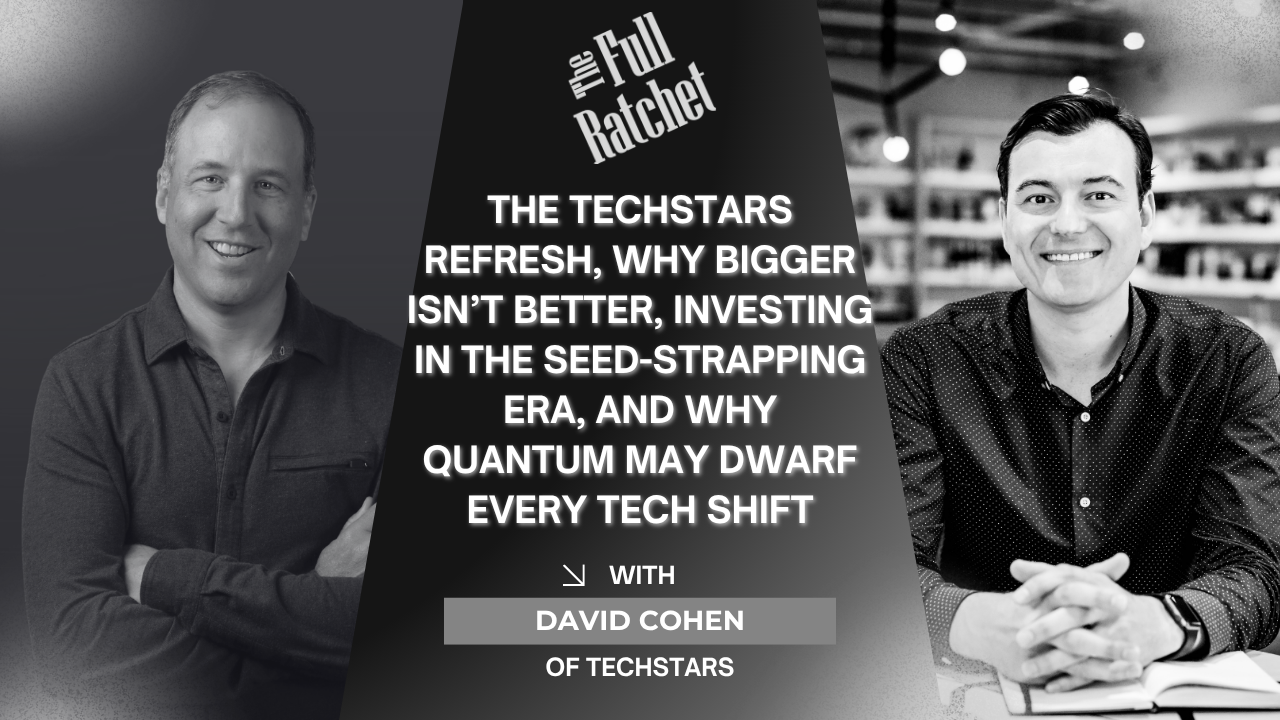
David Cohen observes that founders who are inherently frugal or "stingy" with capital—spending only when absolutely necessary—often achieve better outcomes. This mindset, focused on capital preservation and efficiency, is a more powerful indicator of success than simply raising large rounds to fuel growth, a trait he has seen in his own entrepreneurial career.
Despite a $50 million exit from their previous company, the Everflow founders intentionally limited their initial investment to a few hundred thousand dollars and didn't take salaries for two years. They believed capital scarcity forces focus and efficiency, preventing wasteful spending while they were still figuring out the product.

Venture capital can create a "treadmill" of raising rounds based on specific metrics, not building a sustainable business. Avoiding VC funding allowed Donald Spann to maintain control, focus on long-term viability, and build a company he could sustain without external pressures or risks.

Emma Hernan, who bootstrapped her company, observed funded competitors fail by spending investor money carelessly. Her advice to funded founders is to adopt a bootstrapped mentality, treating every external dollar with the same discipline as if it were their last personal dollar to ensure prudent capital allocation.

The founder deliberately avoided VC funding to build a strong foundation for his long-term vision of transforming social drinking. This approach puts the mission before money, accepting slower, more capital-constrained growth as a necessary trade-off to maintain mission purity.