Get your free personalized podcast brief
We scan new podcasts and send you the top 5 insights daily.
HubSpot's hiring success improved when they stopped hiring candidates with the fewest weaknesses (e.g., consistent 3/4 scores) and instead chose 'spiky' individuals. These candidates elicit strong positive reactions from some interviewers and weaker reactions from others, indicating exceptional strengths alongside known weaknesses.

Related Insights
To avoid the trap of hiring 'good enough' people, make the interview panel explicitly state which current employee the candidate surpasses. This forces a concrete comparison and ensures every new hire actively raises the company's overall talent level, preventing a slow, imperceptible decline in quality.

Instead of focusing solely on a candidate's current skills, Figma's CEO looks for their 'slope,' or their trajectory of rapid learning and improvement. This is assessed by analyzing their history of decision-making and growth mindset, betting on their future potential rather than just their present abilities.

Your hiring funnel has an ideal customer profile, just like sales. Analyze your top-performing employees to identify common demographics, past experiences, and behaviors. Use this 'avatar' to filter applications and target your sourcing efforts, increasing the likelihood of success for new hires.

Treat hiring as a compounding flywheel. A new employee should not only be a great contributor but also make the company more attractive to future A-players, whether through their network, reputation, or interview presence. This focus on recruiting potential ensures talent density increases over time.
Many leaders hire defensively, trying to avoid a costly mistake. This fear-based mindset leads to negative assumptions and misinterpretations of candidate signals. Shifting to an abundance mindset—believing the right person is out there—fosters curiosity and leads to better evaluation and hiring outcomes.
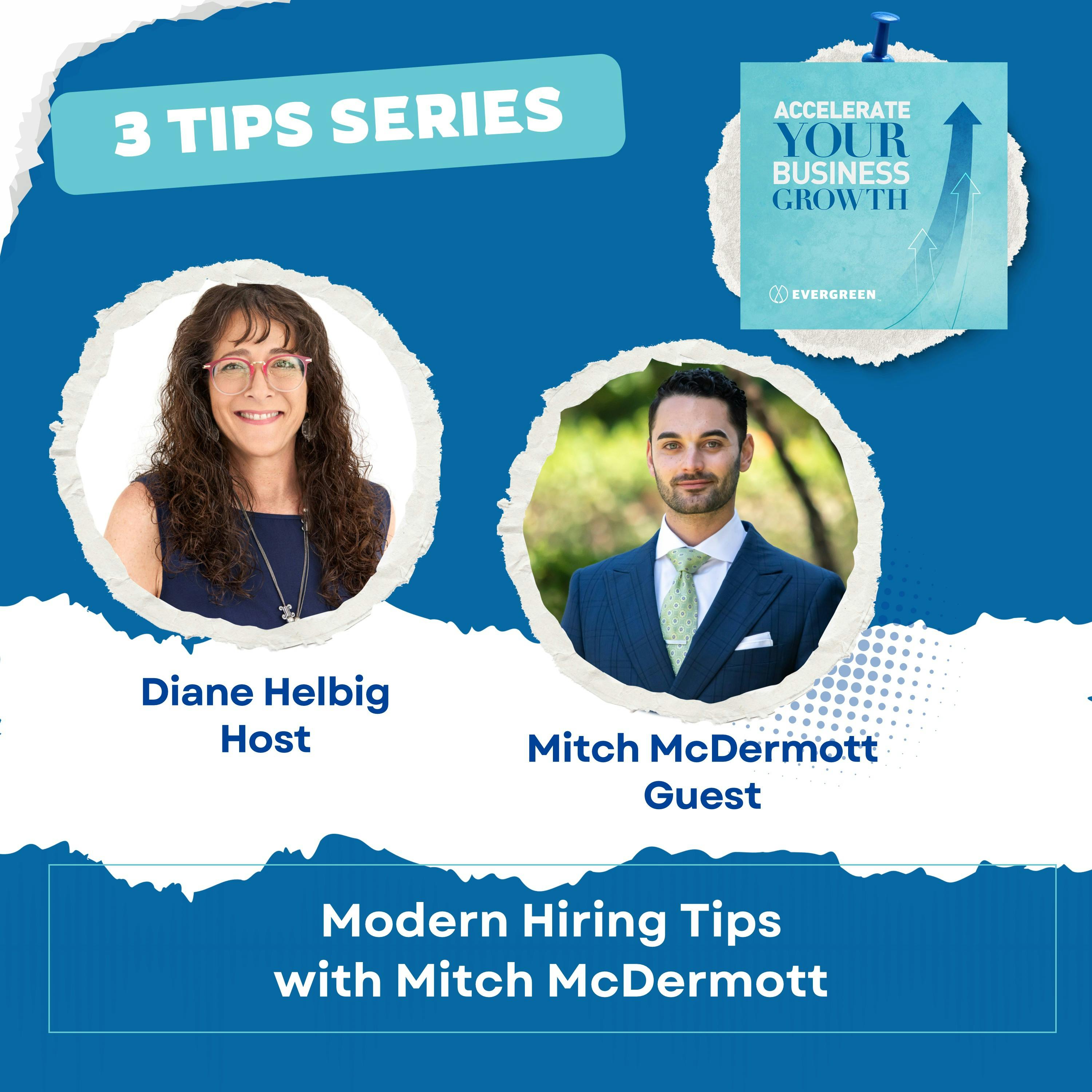
Hiring managers often dismiss strong candidates by making snap judgments based on a resume. Focusing on the person behind the paper—their drive, skills, and potential—frequently reveals that the initially overlooked individual is the perfect fit for the role, according to executive search partner Mitch McDermott.
The "attitude vs. aptitude" debate is misleading. Hire the person with the smallest skill gap for the role. For complex roles, hire for intelligence (defined as rate of learning), as smart people can bridge any skill or attitude gap faster.
Beyond IQ and EQ, interview for 'Resilience Quotient' (RQ)—the ability to persevere through setbacks. A key tactic is to ask candidates about their proudest achievement, then follow up with, 'What would you do differently?' to see how they navigated strife and learned from it.

Senior executives are, by definition, excellent at interviewing, making the process unreliable for signal. Instead of relying on a polished performance, ask to see the 360-degree performance reviews from their previous company. This provides a more honest, ground-truth assessment of their strengths and weaknesses.

Strong engineering teams are built by interviews that test a candidate's ability to reason about trade-offs and assimilate new information quickly. Interviews focused on recalling past experiences or mindsets that can be passed with enough practice do not effectively filter for high mental acuity and problem-solving skills.
